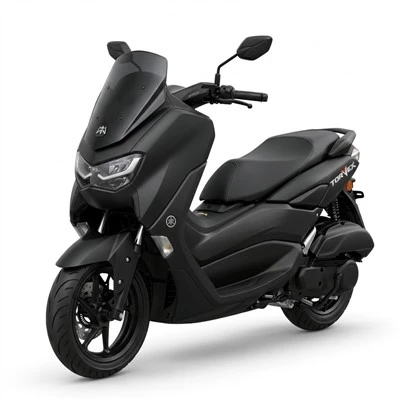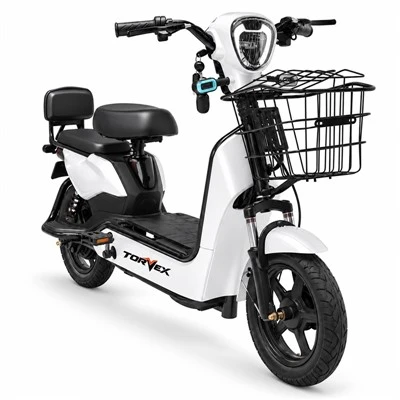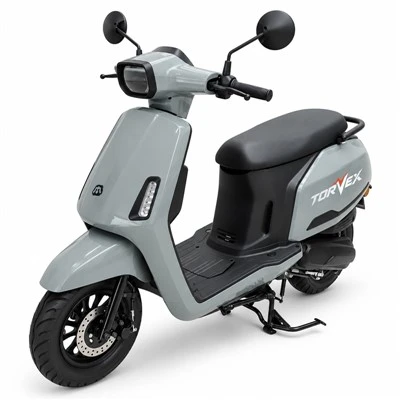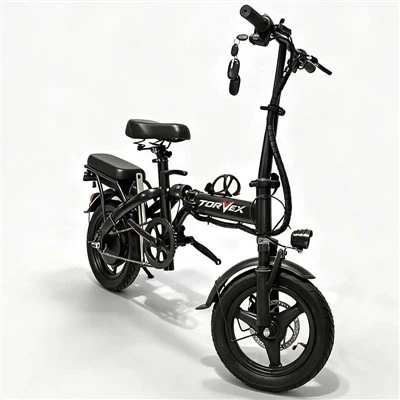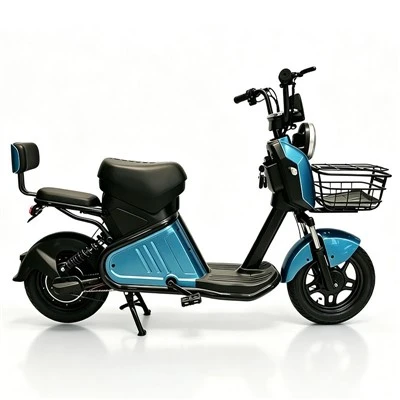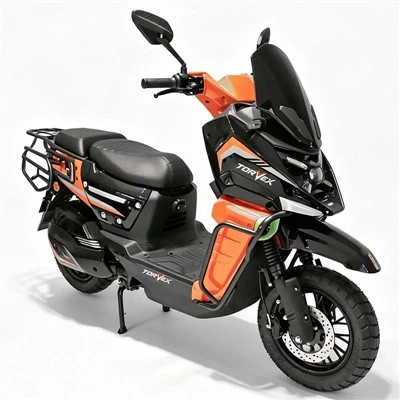
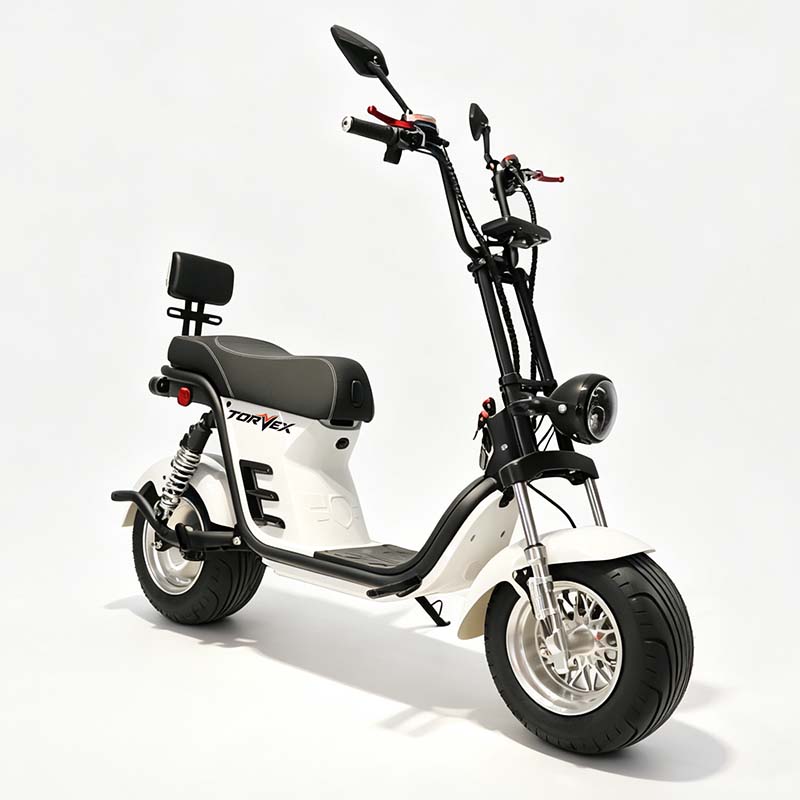
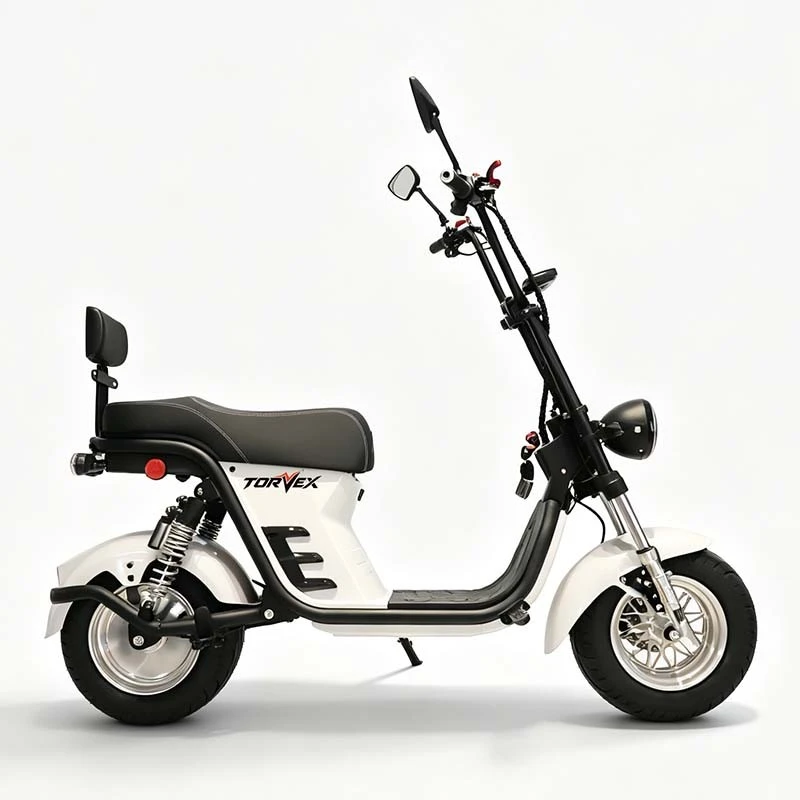
Shandong Tuowei Locomotive Co., Ltd. is one of the most reliable manufacturers and suppliers of 1000w harley style electric scooter in China. With a professional production team, we are able to meet the needs of the majority of our customers. Welcome to wholesale premium 1000w harley style electric scooter made in China here from our factory.

Product Overview
A 1000W Harley Style Electric Scooter is a throttle-driven two-wheeled electric vehicle rated at 1000 watts continuous motor output, built on cruiser geometry: a long, low chassis, a raked front end, a low saddle, forward-mounted footrests, a wide pull-back handlebar and wide-section tyres. It belongs to the powered two-wheeler class - in most jurisdictions at this output, a registration and licence category rather than an assisted bicycle - and it is engineered for riders who want cruiser presence and the capability to use it: carrying a passenger, climbing, and holding speed on open roads rather than only in town. The defining difference from our 500W cruiser is not a higher top speed but sustained capability with load, which is what a heavier cruiser chassis genuinely demands.
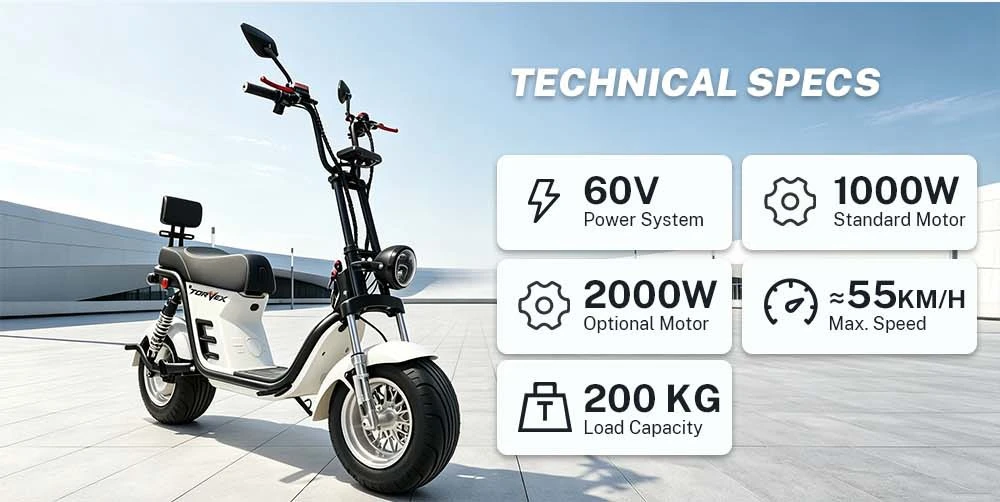
Why Doubling the Output Makes Sense on This Chassis
The relationship between power and a cruiser is often misunderstood, because a cruiser is not a machine bought for acceleration. It is bought for posture, presence and the ability to cover distance in comfort - and it is also a heavier machine than an equivalent scooter, because a long frame, more steel, a wide bar and fat tyres all add mass. Add a passenger, which is precisely what a cruiser is for, and the motor is being asked to move substantially more weight than it would on a solo urban scooter.
That is the case for 1000 watts, and it is best understood as headroom rather than as speed. To hold a given speed on a gradient with two riders aboard, a motor must produce a fixed amount of power; if that figure sits near the motor's continuous limit, the machine slows, the controller draws maximum current and both motor and battery run hot. Run the same climb with genuine reserve and the machine holds speed, draws less current and generates less heat. The practical result is a cruiser that climbs with a passenger without feeling strained, accelerates onto a faster road cleanly, and repeats that through a day of riding without the gradual fade that a smaller motor working at its limit would show.
Continuous Rating: The Number That Governs a Real Climb
Power figures in this category are frequently quoted as peaks, and the practice deserves scrutiny. A peak rating describes what a motor will deliver for a few seconds before its windings heat. The continuous rating describes what it can sustain indefinitely inside its thermal limit, and on a machine expected to carry two people up a gradient and then do it again, the continuous figure is the specification. This platform is rated at 1000 watts continuous, and the controller is programmed to limit current before the motor exceeds its thermal envelope rather than after.
Heat deserves an explanation, because it is the mechanism by which electric drivetrains age. Excess winding temperature degrades insulation and permanently reduces magnet strength in a hub motor, so a machine run regularly at its limit does not fail suddenly - it loses performance gradually over months, which is a far more damaging outcome for a brand than a clean failure. Preventing it requires three elements working together: a motor with sufficient copper and magnet mass for the rated output, a controller that manages current rather than merely switching it, and a battery and management system rated for the continuous discharge the duty cycle demands. On this machine those three are specified as a matched set.
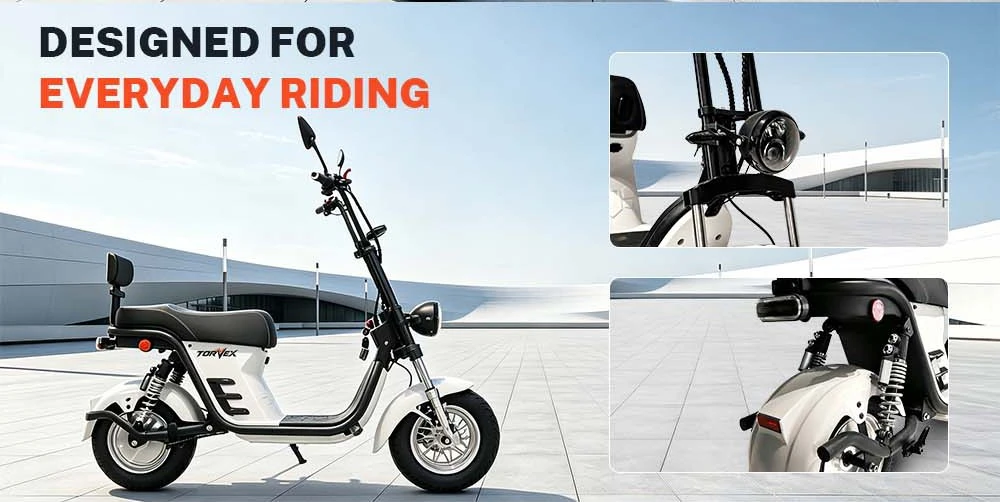
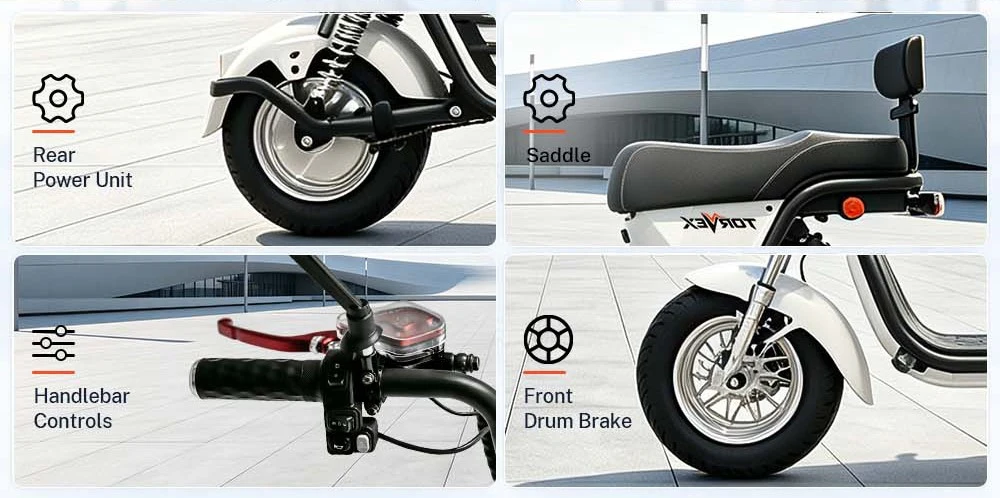
Battery: Capacity and Discharge Capability Are Different Specifications
Twice the output consumes more energy, and buyers should understand two separate battery numbers that are routinely confused. Capacity, expressed in watt-hours or ampere-hours, determines how much energy is stored. Continuous discharge capability, expressed as a current rating, determines how much of it can be drawn at once. A large-capacity pack with a modest discharge rating will not deliver strong acceleration on a climb with a passenger; a pack with a high discharge rating but modest capacity will deliver it briefly and then run out.
A cruiser used two-up on open roads requires both, which is why the pack and its battery management system are specified as a matched pair rather than assembled from separately sourced parts. When a vehicle demands more current than the pack is comfortably rated for, terminal voltage sags, low-voltage protection trips, and the machine cuts out with energy still chemically present - an experience riders describe as the vehicle dying with charge still showing, and one that damages confidence in the brand even though it is physics rather than dishonesty. Sizing for the duty cycle prevents it. We therefore ask about distance per ride, total climb, whether a passenger is carried and whether opportunity charging is possible, then recommend a pack and quote a conservative planning figure rather than a flattering one.
Cruiser Geometry: Weight Distribution That Suits a Passenger
Cruiser geometry does something specific that matters once a second rider is involved: it places the rider low and slightly rearward, with the feet forward and the hands high and behind. That posture takes the rider's weight on the saddle and lower back rather than through the wrists, which is what makes the machine comfortable over distance. It also has a useful consequence for two-up riding - the rider is seated into the machine rather than perched on it, so the additional mass of a passenger is carried by a chassis position that is already designed to bear load.
The raked front end contributes the other half. Head angle and fork offset together determine trail, the distance by which the tyre's contact point trails behind the steering axis, and trail is what makes a machine self-centre and hold a straight line. More trail means stronger self-centring: the machine tracks straight on an open road with minimal input, and it is less disturbed by the extra mass and the shifted weight distribution a passenger introduces. A cruiser is raked out to sit on the stable side of that balance, which is why a long machine carrying two people feels composed where a short, steeply steered scooter would feel nervous.
The Trade: Turning Circle, Mass and Low-Speed Honesty
Stability has a cost, and it should be stated rather than discovered. A longer wheelbase and increased rake produce a larger turning circle, and with a passenger aboard the machine is heavier still, so low-speed manoeuvring in a confined space requires more deliberate effort than on a short scooter. Filtering through stationary traffic and threading between closely parked cars are not this machine's strengths.
Two specifications compensate, and both should be checked on any cruiser of this output. Steering lock - how far the bar turns before meeting a stop - is a design decision rather than an inevitable consequence of long geometry, and we specify it generously. Saddle height matters even more with two aboard: a low seat lets the rider plant both feet firmly at a stop, which is what makes a heavier machine manageable when it is being walked rather than ridden. Combined with a wide bar giving real leverage, these turn a substantial machine into one a rider of average stature can handle with confidence. The honest guidance to distributors is to sell it for open roads, boulevards, coastal routes and suburban cruising, and to direct riders whose entire use is dense stop-start congestion toward a shorter-wheelbase model.
Braking: Kinetic Energy Rises With Mass and With Speed Squared
Braking is the specification that power and mass make non-negotiable, and the physics is unforgiving. The energy a brake must convert into heat rises with mass and with the square of speed, so a heavy cruiser carrying two people and holding open-road speeds places a demand far beyond that of a light urban scooter. Brakes specified for the lighter duty are not simply weaker in this condition; they are operating outside the range they were engineered for.
This machine therefore uses disc brakes front and rear, with rotor diameter and caliper specification chosen for the vehicle's laden mass and performance envelope. A larger rotor increases the lever arm through which the caliper acts, producing more braking torque for the same hand force, and it dissipates heat over a greater area - which is what prevents fade on a long descent rather than merely delaying it. Pad compound is selected for durability under load. The rider's manual covers using both brakes together, because the front contributes the majority of stopping force while the rear provides balance, and a passenger shifts weight rearward in a way that changes how the two should be modulated.
Tyres, Wheels and Carrying Two in Comfort
Wide-section tyres do measurable work on a machine of this mass. A larger contact patch gives the grip needed to put power down without the rear wheel spinning on a dusty or wet surface, and to scrub speed under braking with a passenger aboard. A wide tyre can also be run at lower pressure, which lets the casing absorb surface irregularities - a genuine benefit on a rigid, long-wheelbase chassis that cannot rely on suspension travel to do the work. Load index and speed rating are specified for laden mass rather than for solo use, which is the detail that separates a properly engineered two-up machine from one merely fitted with a pillion pad.
Practical provisions follow the same logic. A pillion seat and passenger footrests are fitted where the market permits two-up riding, and the seating is shaped so a passenger is carried securely rather than perched. Storage is lockable, so a helmet and a charger can be left with the machine. Security - a steering lock, a keyed ignition and a battery lock - is standard, because a machine with this presence is a theft target. Wide tyres do cost rolling resistance and therefore some energy per kilometre, and they cost more to replace; on a machine bought for comfort, stability and presence rather than maximum range, that is a reasonable trade, but it is a trade and a distributor should know it.
Compliance: A Registration-Class Machine, Documented and Equipped
At 1000 watts, this vehicle sits outside the pedal-assist bicycle class in effectively every jurisdiction and inside a powered two-wheeler category that requires registration, and in most markets a licence, insurance, helmet and minimum rider age. This is not a drawback to be minimised - it is the reason the machine can carry a passenger, climb and hold open-road speed, which an assisted bicycle cannot. Buyers attracted to the cruiser style should be told this plainly at the point of sale, because a customer who discovers it at a registration office becomes a complaint rather than a repeat buyer.
What matters commercially is that the vehicle arrives documented and equipped. Lighting is a full road set - headlamp with a defined beam pattern, tail lamp, brake lamp that brightens distinctly under braking, and direction indicators - because a powered machine must signal intent to motor traffic, not merely be visible. A mirror, a horn and a speedometer are fitted, and any equipment required for registration in your market is confirmed before production rather than discovered at the port. We would rather decline an order than ship machines that cannot be registered, because a distributor who is burned once does not reorder.
Running Cost Against a Combustion Cruiser
The comparison a buyer actually makes is not against another electric machine but against the petrol cruiser or scooter they would otherwise own, and against that benchmark the arithmetic is straightforward. There is no fuel, no oil, no air filter, no spark plug, no exhaust, no coolant and no fuel system to clean. A full charge costs a small fraction of the equivalent distance in petrol, and electricity tariffs move far less than fuel prices, which makes running cost forecastable - a genuine advantage for an operator setting rental pricing.
Servicing reduces to tyres, brake pads, drive components, suspension and fastener checks, bearings and periodic battery care, with no diagnostic computer required for routine work. For a resort or rental operator, there is a further advantage that is easy to overlook: the machine is quiet, produces no exhaust heat and requires no fuel handling, which simplifies storage, insurance and site requirements considerably. Where a market applies congestion or emissions charging, or offers incentives for electric two-wheelers, the position varies - we will confirm it for your territory rather than assert it, because these regimes change and a business case should rest on verified local rules.
Manufacturing and Export Credibility
- Torvex is manufactured by Shandong Tuowei Motorcycle Co., Ltd., established in 2000 and based in Zichuan Advanced Manufacturing Industrial City, Zibo, Shandong. Assembly covers frame welding and inspection, precision component fitting, motor and controller installation, wheel building, wiring and lighting installation, and end-of-line inspection. Battery packs are checked for cell balance, capacity and discharge performance before being matched to a vehicle, and every completed machine is tested for drive output, throttle response, braking performance, lighting and signalling, steering lock and stand operation, electrical circuits and a simulated running check before release for loading.
- We hold full import and export qualifications and ship to markets across Southeast Asia, Africa, the Middle East, South America and Eastern Europe, with battery and charger configurations specified for the destination's voltage and plug standard. Lighting, mirrors, speedometer and any registration-dependent equipment are confirmed against destination requirements before production. OEM and ODM programmes cover body colour, seat material and finish, decal design, logo application and accessory packages, with packing configured for efficient container loading.
Typical Applications
Two-up leisure riding on open roads, boulevards and coastal routes
Resort, seaside and holiday-destination rental fleets
Hilly and mountainous territories where gradients define the route
Riders wanting cruiser presence with genuine load-carrying capability
Experience-led rental and event mobility businesses

Call to Action
Supplying riders who want cruiser presence and the power to use it two-up? Source it from the factory. Torvex supplies the 1000W Harley Style Electric Scooter with destination-specific lighting, battery and charger configuration, OEM/ODM colour, seat and branding programmes, and consolidated container loading. Tell us your annual volume, target retail price and the licence and registration class that applies in your market, and our export team will return a specification sheet, an FOB quotation and a recommended spare parts package - or arrange a live video walkthrough of the assembly line.
FAQ
How is this different from your 500W cruiser?
Not top speed - a cruiser is not bought for outright velocity. The difference is sustained capability with load. A motor working near its limit on a climb with a passenger slows, draws maximum current and runs hot; one with genuine reserve holds speed, draws less and stays cool. On a heavier cruiser chassis carrying two people, on gradients and on open roads, that headroom is felt constantly.
Is the 1000W figure a peak or a continuous rating?
Continuous, which is the number that governs real performance. A peak rating only describes what a motor delivers for a few seconds before its windings heat. Sustained heat is what degrades insulation and permanently reduces magnet strength, so a machine run regularly at its limit loses performance over months rather than failing cleanly. Our controller limits current before the motor exceeds its thermal envelope.
Will it carry two people up a gradient?
Yes, where local rules permit two-up riding, and that is precisely what the output is specified for. A pillion seat and passenger footrests are fitted, and tyres are specified by load index and speed rating for laden mass rather than solo use - the detail that separates a properly engineered two-up machine from one merely fitted with a pillion pad.
What range should our customers expect?
It depends on distance, total climb, whether a passenger is carried, rider mass, temperature and whether opportunity charging is possible. Capacity and continuous discharge capability are different specifications and both matter: one determines stored energy, the other how much can be drawn at once. Send us your duty cycle and we will recommend a pack and quote a conservative planning figure rather than a flattering one.
Does it require a licence, registration or insurance?
Yes, in effectively every market. At 1000 watts this vehicle sits outside the assisted bicycle class and inside a powered two-wheeler category, which typically requires registration, a licence, insurance, a helmet and a minimum rider age. We confirm the compliant configuration and required equipment before production, and we would rather decline an order than ship machines that cannot be registered.
What customisation do you support?
OEM and ODM programmes cover body colour, seat material and finish, decal design, logo application and accessory packages. Because this is a style-led product, finish quality matters more than on a utilitarian model, and we will discuss colour, seat and trim with you in detail before production rather than treating them as a final detail.
Hot Tags: 1000w harley style electric scooter, China 1000w harley style electric scooter manufacturers, suppliers, factory