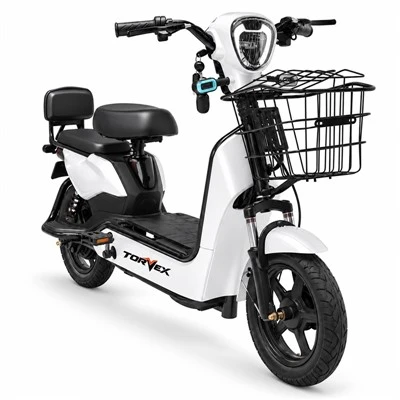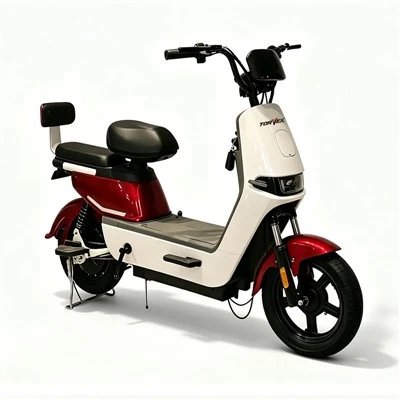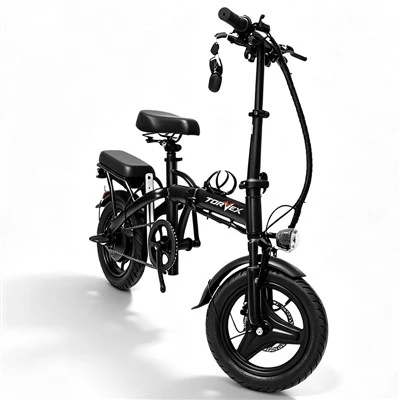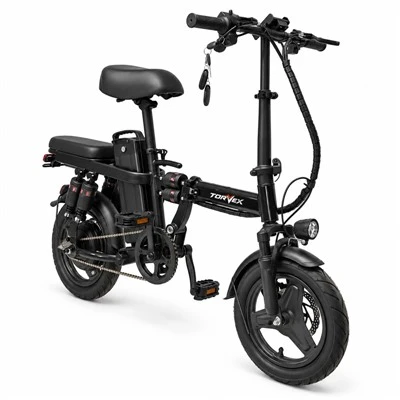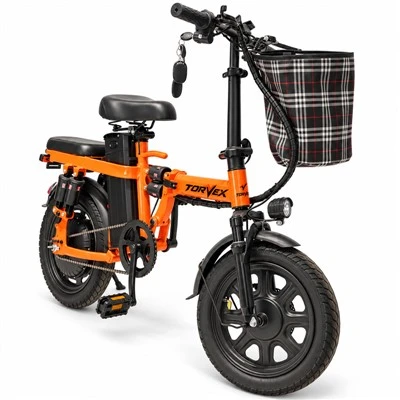
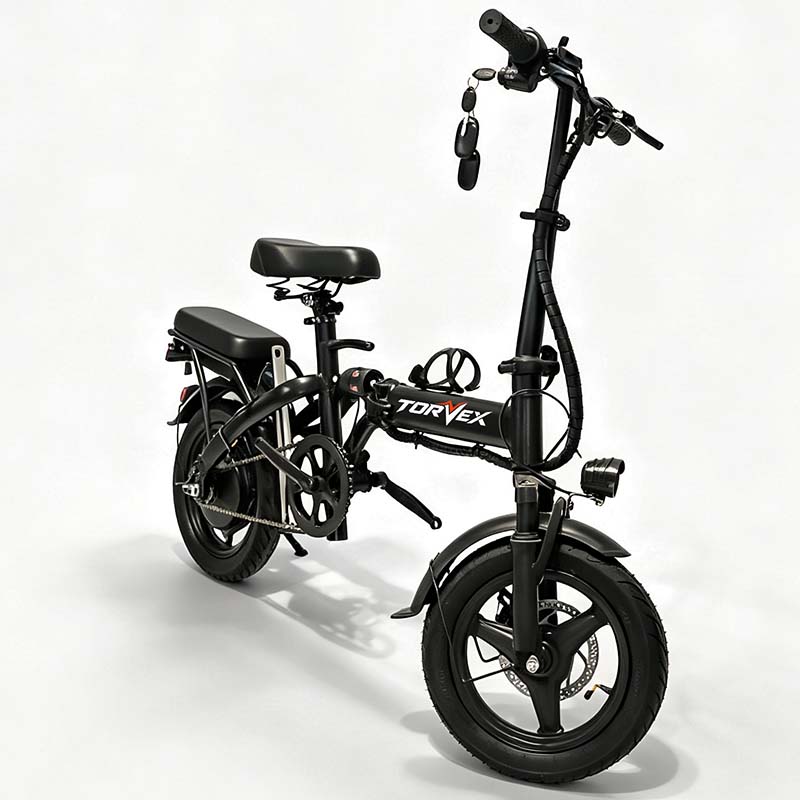

Shandong Tuowei Locomotive Co., Ltd. is one of the most reliable manufacturers and suppliers of 350w front suspension electric bicycle in China. With a professional production team, we are able to meet the needs of the majority of our customers. Welcome to wholesale premium 350w front suspension electric bicycle made in China here from our factory.
A 350W Front Suspension Electric Bicycle - known in the trade as a hardtail - is a pedal-assisted bicycle fitted with a 350-watt drive motor, a rechargeable lithium battery, a telescopic suspension fork at the front and a rigid rear triangle with no pivots, linkage or rear shock. It occupies the middle of the suspension spectrum: it isolates the rider from the impacts arriving through the front wheel while keeping the rear end a direct, efficient path for pedal and motor torque. For a rider whose route is mostly paved but punctuated by broken edges, kerb drops, cobbled sections and the occasional gravel short cut, this is usually the correct specification.
Why the Front Wheel Is Where Suspension Matters First
On a bicycle travelling forward, the front wheel meets every obstacle before anything else does. It strikes the pothole rim, the raised drain cover, the kerb edge and the broken tarmac lip first, and the shock travels along the only path available - up the fork, through the headset and into the handlebar, and from there into the rider's hands, wrists, elbows and shoulders. This is why riders on rigid bicycles describe numb fingers and aching forearms after a ride on rough streets, while their lower body is comparatively comfortable.
A suspension fork interrupts that path. A spring - coil or air, depending on specification - allows the wheel to move upward relative to the frame instead of driving the frame upward with it, and a damper controls the speed of both the compression and the return. Without damping, a spring simply stores the impact and releases it as a rebound, which feels lively in a showroom and unsettling on the road. With it, the wheel absorbs the hit and settles back under control. On a pedal-assisted machine travelling faster than a conventional bicycle, the fork also does something a rider notices but rarely names: it keeps the front wheel tracking the intended line across a rough surface rather than skittering across it, which is what makes speed feel safe rather than nervous.
The Hardtail Trade: What a Rigid Rear End Buys
Every engineering choice has a bill, and the honest comparison is against a full-suspension frame. A pivoting rear end keeps the rear wheel in contact with the ground over successive bumps, which is a genuine advantage on badly broken surfaces. What it costs is measurable: the pivots, bearings, bolts and shock add mass and purchase price; the linkage absorbs a small share of the rider's pedalling input on every stroke; and the assembly introduces a scheduled service regime of play inspection, torque checks and periodic bearing and seal replacement.
A rigid rear triangle avoids all of it. Pedal and motor torque reach the rear wheel through a direct structural path, so nothing is lost to linkage movement - which is why a hardtail on a paved or moderately rough route typically extracts more distance from the same battery than a full-suspension machine of identical specification. There are fewer pivots to develop play, fewer seals to fail and fewer service items to stock. The rider gives up rear-end isolation and gains efficiency, lower weight, lower acquisition cost and a service schedule that any bicycle workshop can carry out without specialist tools. For the majority of urban and peri-urban routes - broken, but not genuinely off-road - this is the better side of the trade.
Reading a Fork Specification Properly
Two numbers on a fork specification deserve scrutiny, because they determine how the machine behaves rather than how it looks on a catalogue page. The first is travel, measured in millimetres, which sets how large an impact the fork can absorb before it reaches the end of its stroke. Too little travel on a route with sharp pothole edges means the rider still feels a hard stop through the bar; too much on an entirely smooth route adds weight and a little unwanted movement for no benefit. A city hardtail sits in the moderate range, tuned for kerb drops and broken edges rather than for trails.
The second is stanchion diameter, and it is the one most often overlooked. The fork is a structural member as well as a spring: it carries braking loads, steering loads and the rider's weight transfer, and it must do so without bending. A larger-diameter stanchion resists that bending, so steering input reaches the front wheel accurately instead of being lost to flex - a rider perceives it as precision, particularly when braking hard or turning at speed. Adjuncts matter too: a preload adjuster lets the fork be set for rider mass, and a lockout lets a rider firm the fork on smooth tarmac so pedalling input is not partly absorbed by fork movement. Used well, a lockout effectively gives one machine two characters.
Where the 350W Drive Fits a Hardtail
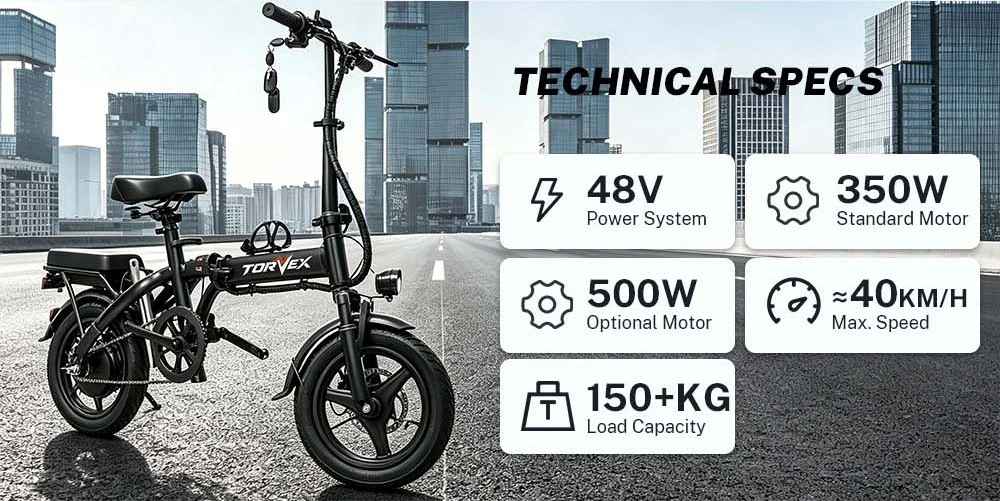
A hardtail is lighter than a full-suspension frame, and that matters more than it appears, because an electric bicycle is a machine the owner lifts - up stairs, over thresholds, onto a rack. It is also a machine that must accelerate from a standstill repeatedly in traffic, and every kilogram saved is a kilogram the motor does not have to move at each junction. Three hundred and fifty watts is specified because it sits inside the pedal-assist legal category in most markets, keeping the machine licence- and registration-exempt, while still delivering roughly twice the sustained output a rider needs to cruise on the flat. The surplus is what pays for acceleration, gradients and the extra mass of a fork and a battery.
Assistance is metered from the rider's own pedalling input through a cadence or torque sensing system, so the motor amplifies rather than replaces the rider. Torque is shaped for low-speed response, because that is what a rider feels pulling away from a stop with the added mass of a bicycle built for rougher ground. Assistance cuts out under braking and at the regulated assisted speed. The drivetrain remains fully geared, so the machine can be ridden home under pedal power alone if the battery is exhausted - not merely pushed, which is a distinction first-time electric buyers care about more than any specification figure.
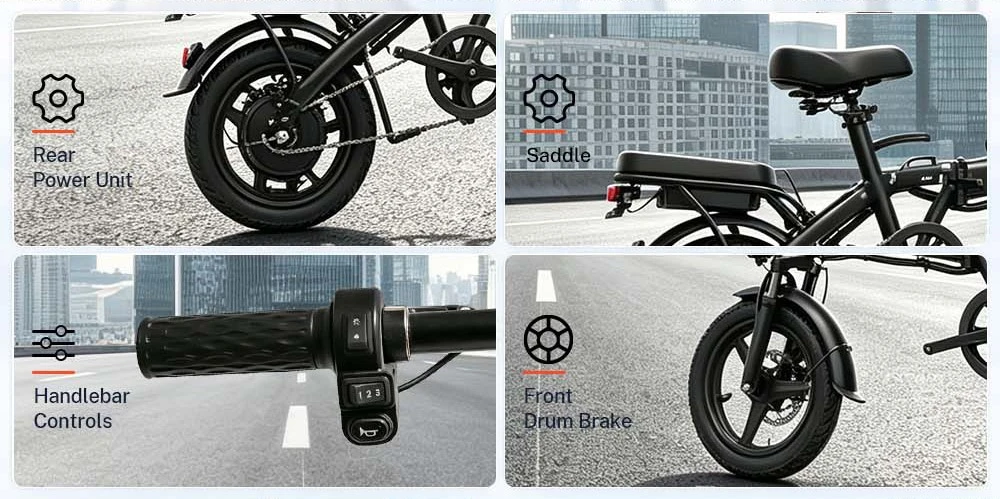
Tyres, Wheels and Braking on Mixed Surfaces
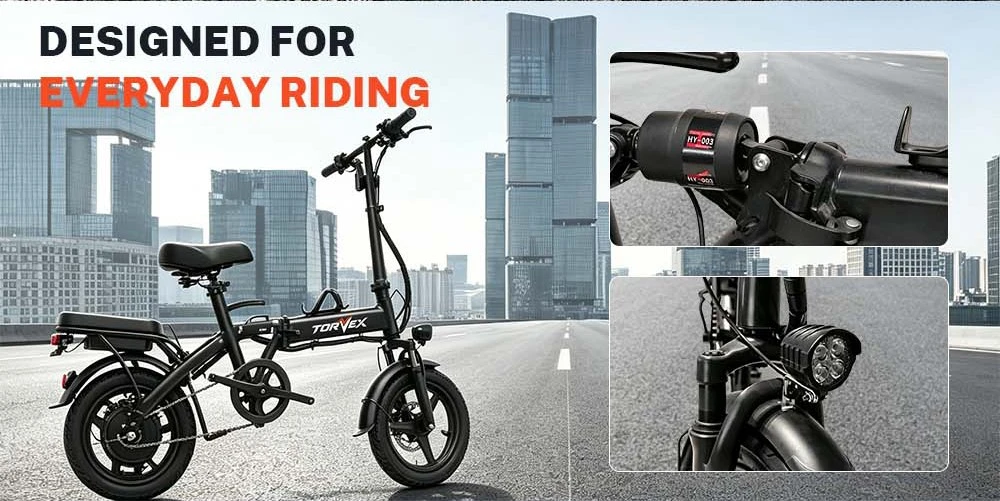
A fork works together with the tyre, and the tyre is in fact the first suspension element in the chain. Its sidewall flex absorbs the small, high-frequency chatter that a fork is too slow to respond to, which is why wheel and tyre choice on a hardtail carries more importance than on a suspended frame. This platform uses wheels with a moderate internal rim width and tyres of a volume that can be run at a sensible pressure: enough air to keep rolling resistance low on tarmac, enough casing to take the sting out of a broken edge without pinching.
Tyre pressure becomes the rider's own adjustment. Lower within the safe range enlarges the contact patch and softens the ride over cobbles and gravel; higher reduces rolling resistance and sharpens the response on clean asphalt. It is a change the owner can make with a foot pump, and it is the single most effective tuning tool on a hardtail. Braking is by mechanical or hydraulic disc brakes rather than rim brakes, because a rim brake depends on a clean, dry, true rim and degrades immediately in rain, mud or after a wheel is knocked out of true by a pothole. A rotor mounted at the hub sits away from the worst of the spray and gives consistent lever feel on a long descent.
Typical Applications
Closed-course motocross and amateur racing
01
Off-road training camps and rider coaching programs
02
Trail riding, ranch and farm commuting
03
Mountain patrol and forestry inspection routes
04
Scenic-area rental fleets and off-road event operations
05
Key Specifications
|
||||||||||||
Call to Action

Need the middle specification that most cities actually require? Source it from the factory. Torvex supplies the 350W Front Suspension Electric Bicycle with OEM/ODM colour, saddle, accessory and branding programmes, destination-specific battery and charger configuration, and consolidated container loading. Send us your annual volume, target retail price and a description of the worst section of your typical route, and our export team will return a specification sheet, an FOB quotation and a recommended spare parts package - or arrange a live video walkthrough of the assembly line.
FAQ
Q: How is a front suspension bicycle different from a full suspension one?
A: A hardtail has a suspension fork and a rigid rear triangle; a full-suspension frame adds pivots, linkage and a rear shock. The hardtail is lighter, cheaper, more efficient per charge because no pedal input is lost to linkage movement, and simpler to service. The full-suspension machine keeps the rear wheel in contact over sustained broken ground. On mostly paved routes with occasional rough sections, the hardtail is usually the better value.
Q: How much maintenance does the fork add?
A: One scheduled item beyond a rigid bicycle: periodic stanchion cleaning plus oil or seal attention at the interval stated in the manual. There is no pivot play to inspect, no linkage bearings and no shock to service. Fork bushings and seals are specified in standard dimensions, so a local workshop is not locked to a single parts source.
Q: Is a lockout worth specifying?
A: Yes, if the route mixes smooth and rough sections. A locked fork stops fork movement absorbing part of the rider's pedalling input on clean tarmac, and opening it for the broken section restores the isolation. It is one lever movement and effectively gives the machine two characters, which is why we recommend it for mixed-surface markets.
Q: Does it need a licence, registration or insurance?
A: In most markets a 350W pedal-assist bicycle falls inside the legally assisted pedal-cycle category and requires none of these, though the power ceiling, assisted speed limit and throttle rules vary by country and sometimes by region. We configure motor output and assist cut-off speed to the destination's regulation before quoting.
Q: Which of your three 350W models should my market import?
A: Match it to the worst twenty per cent of the route. Smooth paved ground at the lowest price: the Basic City rigid model. Mostly paved with broken edges, kerb drops and cobbles: this front suspension model. Sustained broken asphalt, gravel or rural dirt: the Dual Suspension model. Many distributors stock two or all three, sharing motors, batteries, chargers and consumables across one parts inventory.
Q: Can it be customised for our market?
A: OEM and ODM programmes cover frame colour, saddle and grip material, decal design, logo application and accessory packages including racks, baskets, mudguards and lighting. As a China-based electric bike supplier, we can also specify battery capacity, gearing, brake type and fork travel to suit your terrain, regulations and price point.
Hot Tags: 350w front suspension electric bicycle, China 350w front suspension electric bicycle manufacturers, suppliers, factory