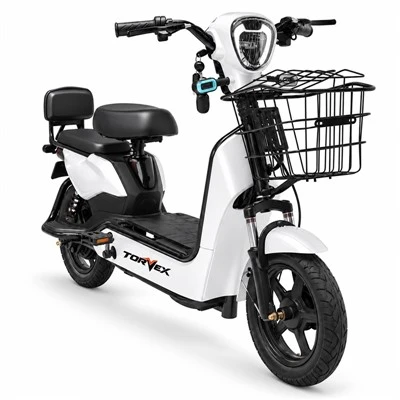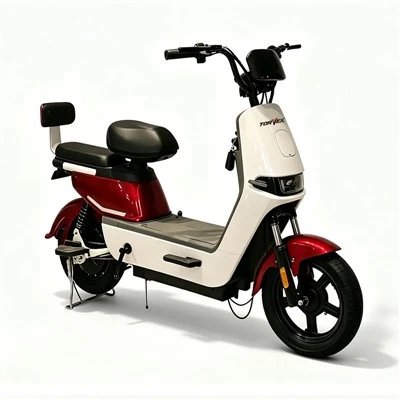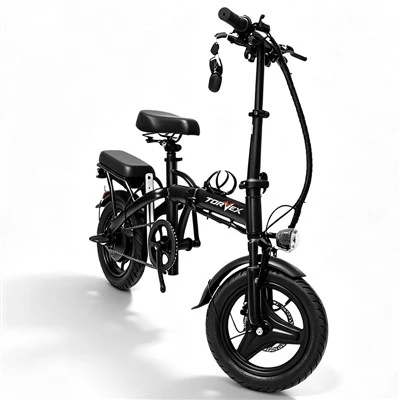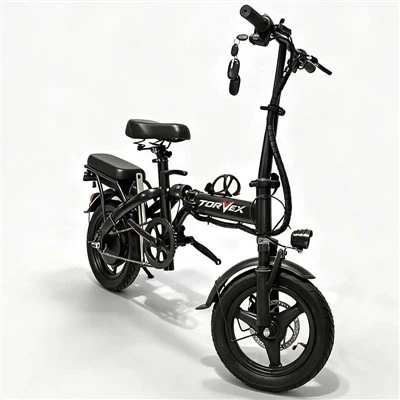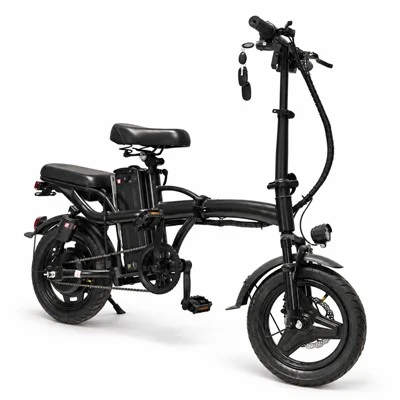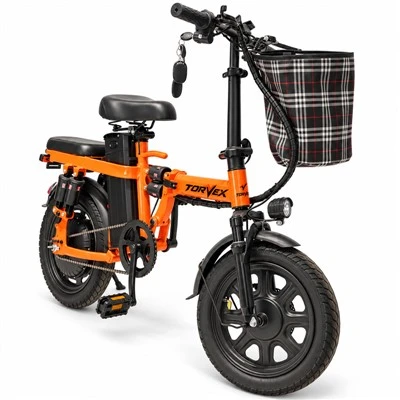
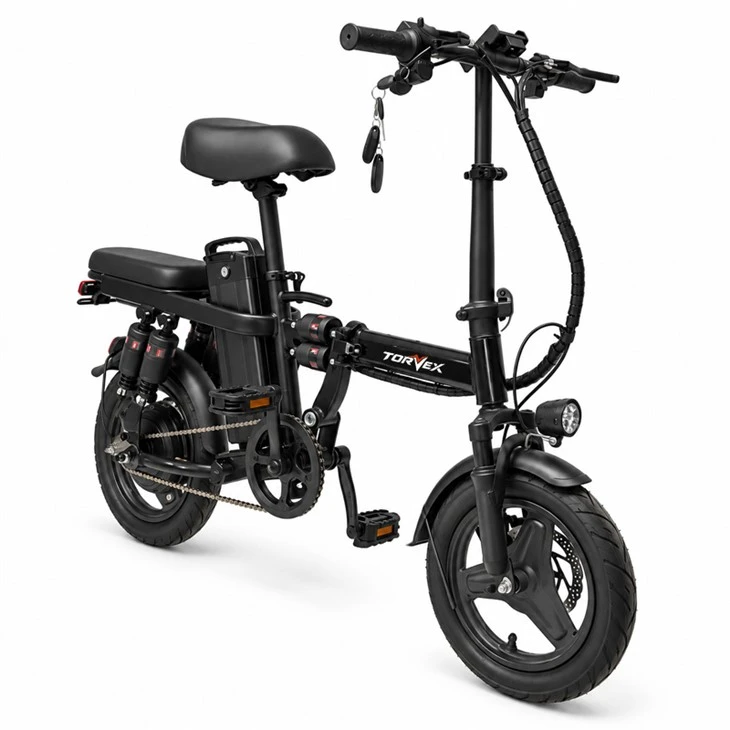

Shandong Tuowei Locomotive Co., Ltd. is one of the most reliable manufacturers and suppliers of 350w heavy duty electric bicycle in China. With a professional production team, we are able to meet the needs of the majority of our customers. Welcome to wholesale premium 350w heavy duty electric bicycle made in China here from our factory.
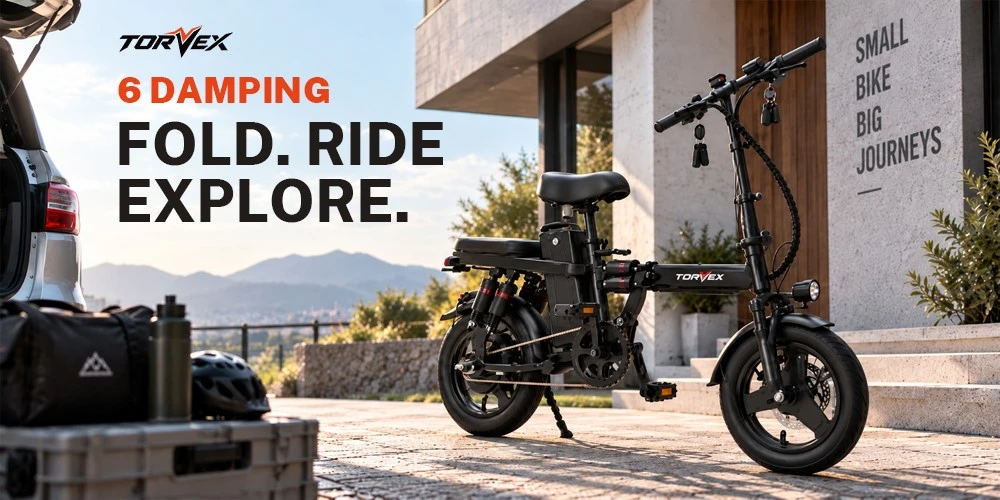
Product Overview
A 350W Heavy Duty Electric Bicycle is a pedal-assisted machine engineered around payload rather than around speed or lightness. Its distinguishing features are structural: a reinforced frame with additional gusseting at the high-stress joints, cargo-rated wheels built with heavier-gauge spokes and a wider rim, higher load-index tyres, a rack mounted to the frame rather than to the mudguard, and brakes specified for the increased kinetic energy that comes with mass. Motor output remains 350 watts, keeping the machine inside the pedal-assist legal category in most markets while delivering the low-speed torque that moving a laden bicycle actually requires.

Payload Changes Every Load Path on the Machine
Adding weight to a bicycle does not simply make it heavier; it changes the direction and magnitude of forces through almost every component, and that is why a load-carrying machine cannot be produced by fitting a rack to a standard frame. A laden rear rack applies a downward and rearward force at a point far behind the rear axle, which the frame must carry as a bending load through the seat tube and rear triangle. Add the dynamic component - a laden bicycle hitting a pothole generates several times the static load for a fraction of a second - and the forces at the rear dropouts and the seat tube junction rise far beyond what a lightweight frame is designed to absorb.
This machine is specified for that reality. Wall thickness and tube profile are selected for load rather than for minimum weight, and reinforcement is concentrated where failures actually originate: the head tube junction, the bottom bracket shell, the seat tube and the rear dropouts. Welds at these points are dressed and inspected, because a weld is only as strong as its penetration and a cosmetic bead over an incomplete joint is a failure waiting for a kerb. The result is a frame that is heavier than a city machine and deliberately so - mass in the structure is what allows a rider to carry weight every day without the frame becoming the consumable part.
Wheels: The Component Most Often Under-Specified on Cargo Bikes
If there is one component that separates a genuine heavy duty electric bicycle from a standard machine with a basket, it is the wheels, and it is worth explaining why. A bicycle wheel is not a solid disc; it is a tension structure. The rim is held in shape by spokes under tension, and the wheel carries load by reducing tension in the spokes at the bottom of the rotation while the hub effectively hangs from those above. Overload, or a rim too light for the load, leads to spoke fatigue and then to a wheel that repeatedly goes out of true - the most common reason a working bicycle is taken off the road in fleet service.
The specification responds directly. Rims are double-wall alloy with a wider profile to resist the bending and braking loads a laden machine generates, and spokes are heavier gauge and higher in count than on a city wheel, because spoke count is what distributes load and provides redundancy when one spoke loses tension. Tyres are specified with a load index and a reinforced casing rather than chosen for low rolling resistance alone; a tyre whose sidewall is too light for the payload will pinch, wear unevenly and eventually fail at the bead. Tyre pressure then becomes a setting the operator manages: higher within the safe range for a heavy load on tarmac, reduced slightly for a rough surface, always within the limit marked on the sidewall.
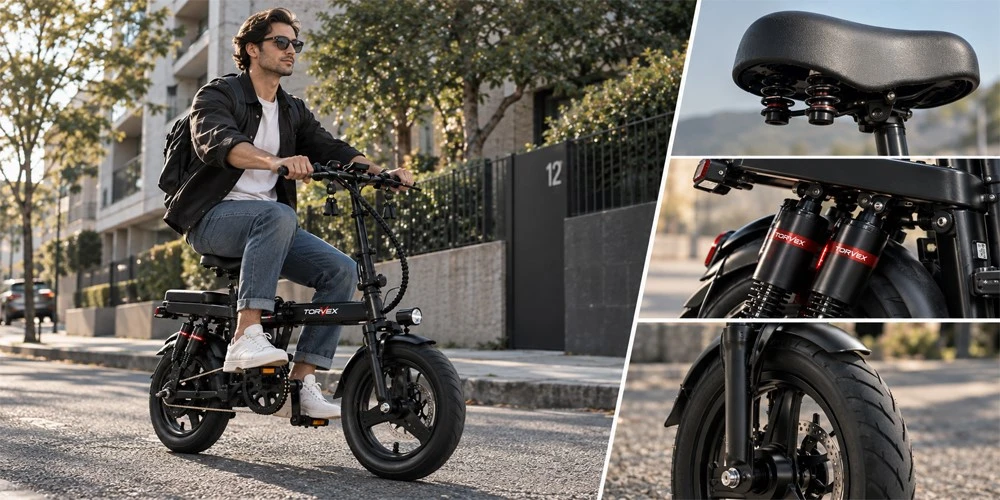
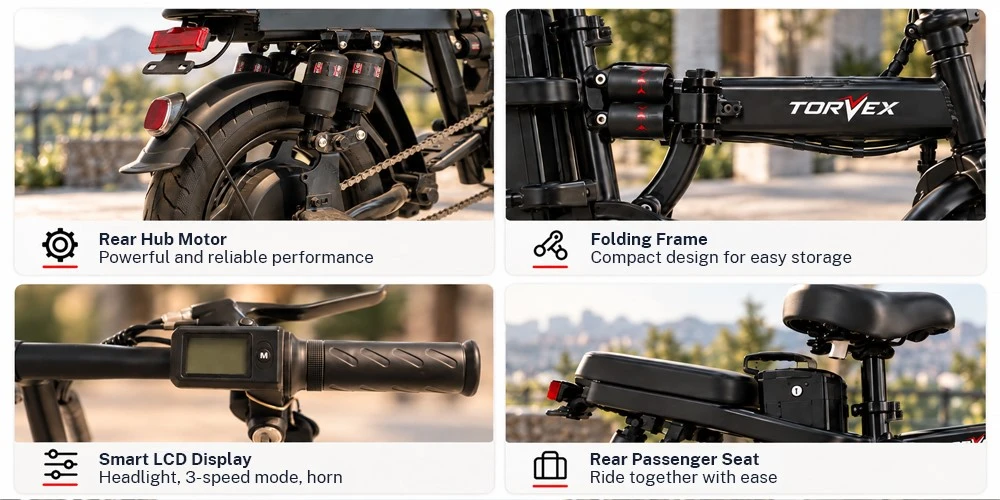
Braking: Kinetic Energy Scales With Mass
Stopping is the safety specification that payload most affects, and the physics is unforgiving. The energy a brake must convert into heat rises with mass and with the square of speed, so a rider and machine carrying an additional thirty kilograms needs substantially more braking capacity at the same velocity - and on a long descent, more capacity to shed heat repeatedly without fading. Brakes specified for an unladen bicycle are not merely weaker in this condition; they are operating outside the range they were engineered for.
This machine therefore uses disc brakes rather than rim brakes, and larger rotors than a city model would carry. A disc rotor mounted at the hub sits away from the spray and grit that degrade a rim brake, and a larger rotor increases the lever arm through which the caliper acts, which produces more braking torque for the same hand force. Heat dissipation is the other half of the argument: more rotor area sheds the heat generated by repeated heavy stops instead of transferring it into the rim and the tyre. Pad compound is selected for durability under load, and we treat pad wear as a scheduled inspection item for fleet operators rather than as something discovered on the road.
Why 350 Watts Is Sufficient for a Laden Machine
Buyers reasonably ask whether a load-carrying bicycle needs more power, and the answer requires separating two quantities that are routinely confused. Power determines how fast work is done; torque is the turning force that gets a mass moving. Pulling a laden bicycle away from a standstill, or sustaining it on a gradient, is predominantly a torque demand at low speed, and that is where this drive is tuned. A rider carrying weight does not need a higher top speed - in most markets the assisted speed limit is regulated anyway - they need the machine to move off cleanly at a junction and hold a climbing pace without the rider standing on the pedals.
Three hundred and fifty watts is also, importantly, a regulatory choice. In most jurisdictions it is the ceiling that keeps a machine classified as an electrically assisted pedal cycle rather than a moped, which means no licence, no registration and no insurance for the rider. Raising motor power to move load more quickly would push the product out of that category and into a vehicle class with a far smaller addressable market and a heavier compliance burden. Staying at 350 W and specifying torque delivery for low-speed work is what lets a courier or a trader operate legally and cheaply, which is the entire commercial proposition.
Battery Discharge, Real Range Under Load and Honest Numbers
Carrying weight costs range, and this is the specification area where inflated claims do the most damage to a distributor's reputation. Moving additional mass requires more energy on every gradient and every acceleration, and a loaded delivery route with frequent stops is the most demanding duty cycle a battery faces. A rider who plans on the unladen figure will run out of charge mid-shift, and the blame lands on the brand rather than on the arithmetic.
We therefore specify the pack for the duty rather than for the brochure. Cells and battery management are rated for a continuous discharge current appropriate to sustained loaded work, because a pack asked to deliver more current than it is rated for will sag in voltage, trigger protection cut-outs and age prematurely. Range is published on a stated test basis, and we advise distributors to plan on a substantially discounted figure for loaded, stop-start commercial use - the honest guidance being to size the battery from the rider's longest shift rather than from their average one. Charging between shifts is normal practice in delivery work, and the removable pack and destination-specific charger are specified to make that practical.
Rack, Stands and the Details That Decide Whether It Works
Load-carrying hardware is where cheap machines fail first, and the failure mode is always the same: the rack is mounted to the mudguard or to a single seat-stay boss, and under repeated dynamic load the mounting fatigues and the rack parts company with the bicycle. On this platform the rack is mounted to the frame at load-bearing points, and the mounting hardware is specified for the rated payload rather than for the weight of a shopping bag. Pannier or box mounting is designed so that load sits low and close to the machine's centre line, because load carried high or wide makes the bicycle unstable in a way no amount of motor power can compensate for.
A centre stand is fitted rather than a side stand alone, and this is a working decision rather than a convenience. A side stand cannot support a laden bicycle safely - the machine leans, the load pulls it further over, and it falls. A centre stand holds the bicycle upright on both wheels, which is what allows an operator to load a box, secure a strap, check tyre pressure or tension the chain before setting off. Combined with a kickstand plate wide enough not to sink into soft ground, it turns loading from a two-person job into a one-person routine, several times a day.
Service Regime for Commercial Duty
A working bicycle accumulates wear far faster than a leisure one, and operators who plan for it keep machines earning. The inspection intervals we recommend are short and specific: spoke tension and wheel true, because a laden wheel is the first thing to go out of alignment; brake pad thickness, because a loaded machine consumes pads faster than an unloaded one; tyre wear and pressure, because an under-inflated tyre under load fails at the sidewall; chain wear and tension, because drive loads are higher; and rack and fastener torque, because vibration from loaded riding loosens what was correctly tightened at assembly.
None of this needs diagnostic equipment, and all of it is within the scope of a competent bicycle workshop, which is deliberate. Wear items are specified in common formats - standard tyre and tube sizes, generic brake pads, a conventional chain, standard bearings - so an operator is never waiting on a proprietary part to return a machine to service. We supply a wear-parts schedule and parts catalogue with bulk orders, and our technical team supports fleet operators remotely with inspection checklists and fault diagnosis, because the cost of a machine standing idle is what actually determines whether a fleet purchase was worth making.
Who Should Specify This Model
This machine is built for riders whose livelihood depends on carrying things: couriers and last-mile delivery operators, market traders moving stock, farm and workshop users carrying tools and produce, maintenance staff moving equipment across a site, and households for whom the bicycle is the primary vehicle. It also suits operators running a mixed fleet, where a proportion of machines need to handle loads that would quickly destroy a standard model.
The counter-case is worth stating so that distributors specify correctly. A rider who never carries more than a small bag is paying for capability they will not use, in a machine that is heavier, marginally less efficient per charge and slightly more expensive than our Basic City or Comfort models. Where a fleet has mixed duties, the economical answer is usually a mixed fleet: standard machines for the light routes and heavy duty machines for the loaded ones, sharing motors, controllers, batteries, chargers and consumables across one parts inventory.
Manufacturing and Export Credibility
Torvex is manufactured by Shandong Tuowei Motorcycle Co., Ltd., established in 2000 and based in Zichuan Advanced Manufacturing Industrial City, Zibo, Shandong. Assembly covers frame welding and inspection, precision component fitting, motor and controller installation, wheel building and tensioning, and end-of-line inspection. Battery packs are checked for cell balance and capacity before being matched to a frame, and every completed bicycle is tested for drive function, braking performance, electrical circuits, lighting, rack mounting integrity and a simulated loaded running check before release for loading.
We hold full import and export qualifications and ship to markets across Southeast Asia, Africa, the Middle East, South America and Eastern Europe, with battery and charger configurations specified for the destination's voltage and plug standard. OEM and ODM programmes cover frame colour, rack and box configuration, saddle and grip specification, decal design, logo application and accessory packages, with packing configured for efficient container loading.
Typical Applications
Last-mile delivery, courier and postal routes with daily loads
Market traders and small businesses moving stock or goods
Farm, workshop and site use carrying tools, produce or equipment
Maintenance and facilities staff covering large premises
Household use where the bicycle is the primary load-carrying vehicle

Call to Action
Supplying riders who carry weight for a living? Source a machine built for payload rather than adapted to it. Torvex supplies the 350W Heavy Duty Electric Bicycle with OEM/ODM rack, box, colour and branding configuration, destination-specific battery and charger specification, and consolidated container loading. Tell us your annual volume, target retail price and the payload your riders actually carry, and our export team will return a specification sheet, an FOB quotation and a recommended wear-parts package - or arrange a live video walkthrough of the assembly line.
FAQ
Why not fit a higher-powered motor for carrying loads?
Because power and torque are different things. Moving a laden bicycle away from a stop or up a gradient is primarily a low-speed torque demand, and that is where this drive is tuned. Raising motor output would also push the machine out of the 350W pedal-assist category in most markets and into a vehicle class requiring licence, registration and insurance - a far smaller addressable market and a heavier compliance burden for your dealers.
How much does carrying load reduce the range?
Substantially, and this is the figure we insist on setting honestly. Additional mass costs energy on every gradient and every acceleration, and stop-start delivery work is the most demanding duty a battery faces. We publish range on a stated test basis and advise sizing the battery from the rider's longest shift rather than their average one, with the pack rated for a continuous discharge current appropriate to sustained loaded work.
What makes the wheels suitable for heavy loads?
A bicycle wheel is a tension structure, and overload shows up first as spoke fatigue and a wheel that repeatedly goes out of true. This platform uses double-wall alloy rims with a wider profile, heavier-gauge spokes in higher count to distribute load and provide redundancy, and tyres specified by load index and casing strength rather than by rolling resistance alone.
Can the rack really carry a delivery box?
Yes, because it is mounted to the frame at load-bearing points rather than to the mudguard or a single seat-stay boss, which is where cheap racks fatigue and fail. Load is positioned low and close to the machine's centre line, because weight carried high or wide makes the bicycle unstable in a way no amount of motor power can compensate for.
What maintenance does commercial duty require?
Short, specific intervals: spoke tension and wheel true, brake pad thickness, tyre wear and pressure, chain wear and tension, and rack and fastener torque - loaded riding loosens what was correctly tightened at assembly. All of it is within a competent bicycle workshop with no diagnostic equipment, and wear items are standard formats so no machine waits on a proprietary part.
Should our whole fleet be heavy duty?
Usually not. A rider who never carries more than a small bag pays for unused capability in a heavier, marginally less efficient machine. The economical answer is typically a mixed fleet - standard models for light routes, heavy duty for loaded ones - sharing motors, controllers, batteries, chargers and consumables across one parts inventory.
Hot Tags: 350w heavy duty electric bicycle, China 350w heavy duty electric bicycle manufacturers, suppliers, factory