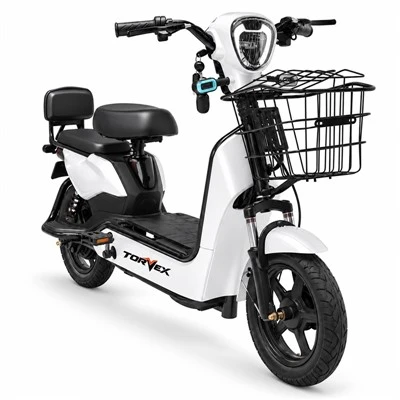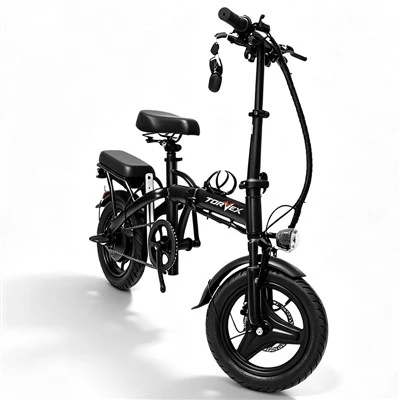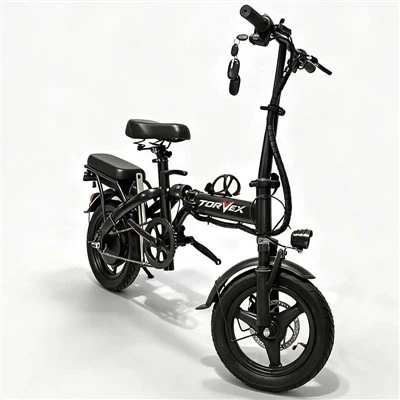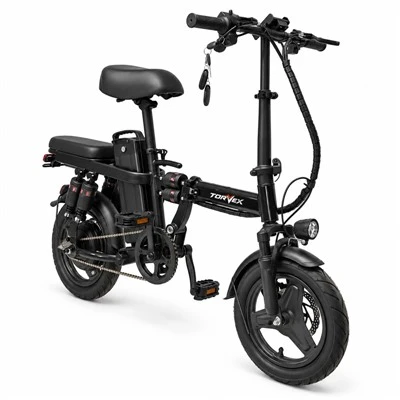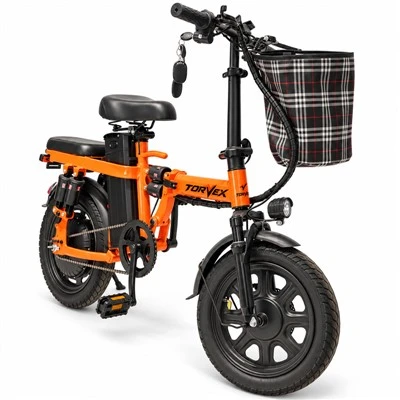
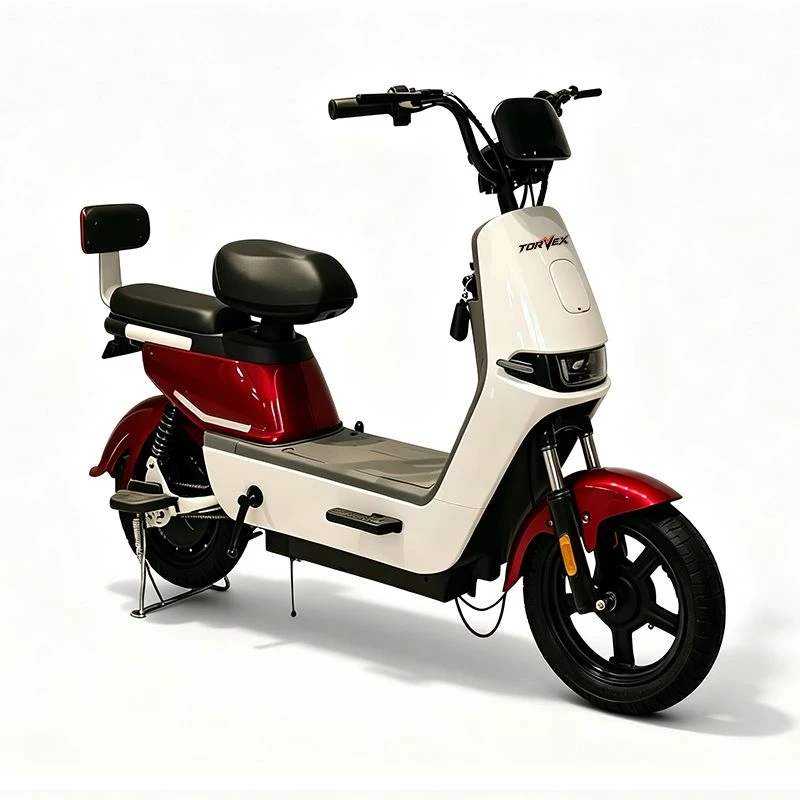

Shandong Tuowei Locomotive Co., Ltd. is one of the most reliable manufacturers and suppliers of 350w dual suspension electric bike in China. With a professional production team, we are able to meet the needs of the majority of our customers. Welcome to wholesale premium 350w dual suspension electric bike made in China here from our factory.
A 350W Dual Suspension Electric Bike is a pedal-assisted bicycle fitted with a 350-watt electric drive motor and suspension at both ends of the frame - a telescopic or air-sprung fork at the front and a pivoting rear triangle with a spring and damper unit at the rear. Unlike a rigid city machine or a front-suspension-only hybrid, which deflect off sharp edges and lose contact with the ground, a dual suspension layout isolates the frame from the surface on both axles. The Torvex 350W platform is built for riders whose daily route includes broken asphalt, cobbles, kerb drops, gravel paths and the kind of poorly maintained road that defines commuting in much of the world.
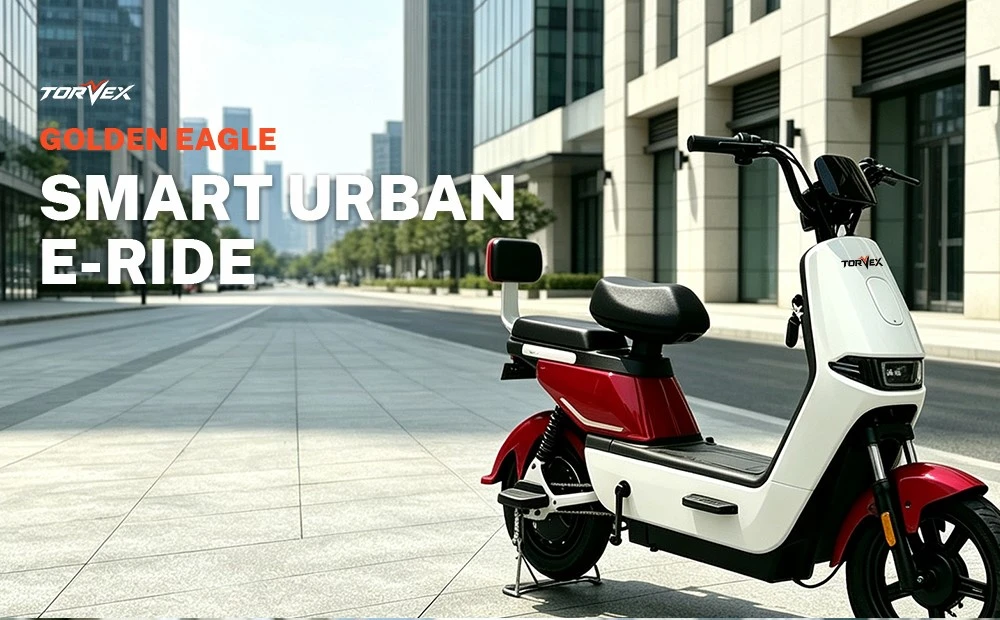
Suspension Is a Traction Device, Not Just a Comfort Feature
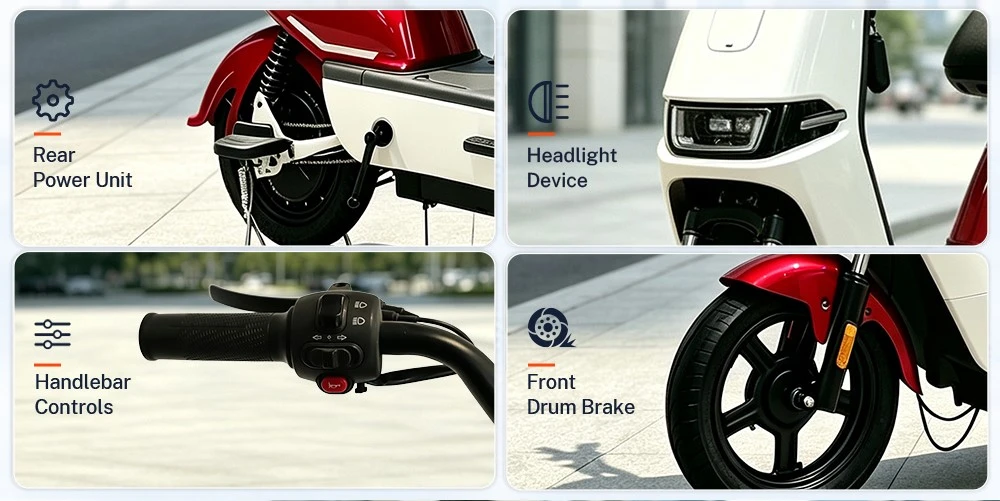
The most common misunderstanding about suspension on an electric bicycle is that it exists to cushion the rider. Comfort is real, but the engineering gain that matters more is contact. An unsprung wheel hitting a sharp edge is momentarily thrown upward with enough force to leave the ground; while it is airborne it transmits no drive, no steering and no braking. On a rigid bicycle that happens constantly on rough surfaces, and the rider unconsciously slows down because the machine feels skittish.
Rear suspension in particular keeps the driven wheel planted. Because the motor delivers torque through the wheel, any moment the wheel is off the ground is a moment of wasted assistance - the rider feels it as a surge and a drop, and the battery is spent without forward progress. A rear damper controls the wheel's return to the surface after a compression, so the tyre is loaded rather than bouncing. This is why a dual suspension electric bike on a poor road often feels faster than a lighter rigid machine ridden over the same route: it converts more of the available 350 W into distance.
Front Fork: What the Specification Actually Means
The front fork carries two jobs at once - absorbing impact and keeping the steering accurate - and those jobs pull in opposite directions, which is why fork specification deserves scrutiny. Travel determines how large a hit the fork can absorb before it reaches the end of its stroke; too little travel on a badly broken road means the rider feels a hard stop through the handlebar on every pothole rim. Stanchion diameter determines stiffness: a larger-diameter tube resists bending under braking and cornering loads, so the front wheel points where the rider aims it instead of deflecting.
A preload adjuster lets the fork be set for rider mass, so a light rider is not sitting high in the travel with the fork effectively rigid, and a heavier rider is not riding through the available stroke. A lockout is worth specifying for a machine that also sees smooth tarmac, because a fork that cannot be locked wastes a small amount of the rider's pedalling input as the fork compresses under each pedal stroke. Riders commuting on mixed routes use lockout on the smooth section and open it for the broken part - a habit that takes one lever movement and makes the machine feel like two different bicycles.
Rear End: Pivot Layout, Sag and Pedal Interaction
The rear of a dual suspension frame pivots so that the rear axle can move relative to the main frame, with a spring resisting that movement and a damper controlling the speed of compression and rebound. Spring rate and preload determine where the suspension sits under the rider's weight - known as sag - and correct sag is what leaves travel available in both directions. Set it too soft and the bike wallows and the rear tyre drags through its stroke; set it too firm and the rear end skips across successive bumps instead of absorbing them.
On a pedal-assisted machine there is one further consideration, and buyers deserve it stated plainly: any rear suspension absorbs a small proportion of pedalling energy as the linkage responds to each stroke. Quality frames control this through pivot placement and damper tuning, and a lockout or a firm low-speed compression setting removes it on smooth ground. What the rider receives in exchange is decisive on bad surfaces - continuous contact, predictable braking and less of the jarring that makes riders abandon long routes. Frames are specified with sealed cartridge bearings at the pivots, because pivot play is the failure mode that turns a good-handling machine into a vague one after a season of hard use.
The 350W Drive in a Suspended Chassis
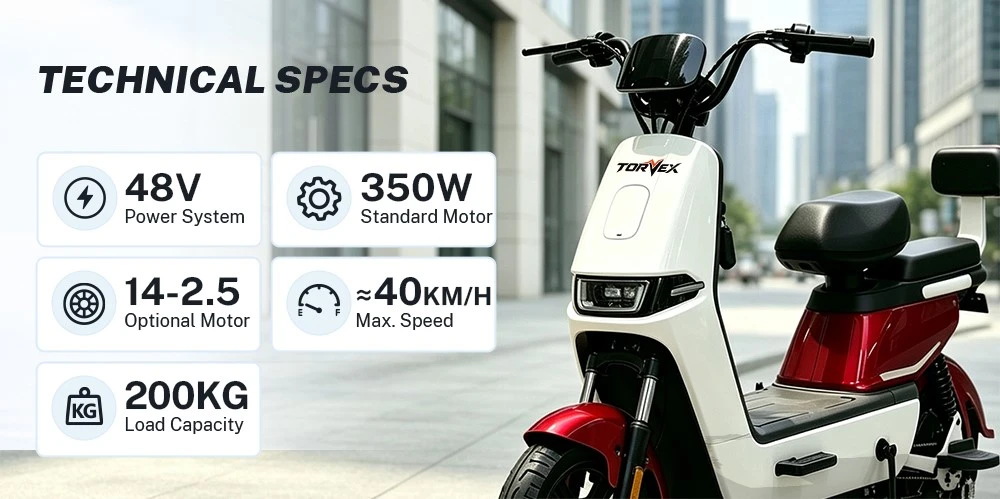
A dual suspension frame is heavier than a rigid one, and it is worth addressing directly: more mass needs more energy to accelerate, and a heavier machine climbs more slowly on motor power alone. This is precisely why the drive is specified where it is. Three hundred and fifty watts sits inside the pedal-assist regulatory category in most markets, which keeps the machine licence- and registration-exempt, while still delivering roughly twice the sustained output a rider needs to cruise on the flat. The surplus is spent on acceleration from a stop, on gradients and on the rolling resistance of wider, lower-pressure tyres that suspended bikes use.
Torque delivery is tuned for low-speed response rather than top-end rush, because that is what a rider feels when pulling away at a junction with the extra mass of a suspended frame and a pair of panniers. Assistance is metered from pedalling input through a cadence or torque sensing system, so the motor amplifies the rider rather than replacing them; the rider continues to contribute, and the machine continues to behave like a bicycle. Assistance cuts out under braking and at the regulated assisted speed, and the drivetrain remains fully geared so the bike can be pedalled home without power.
Wheels, Tyres and Braking on Loose or Wet Surfaces
Suspension works with the tyre, not instead of it. Wheels on this platform are specified with wider rims and higher-volume tyres that can be run at lower pressure, because the tyre is the first and most effective suspension element - its sidewall absorbs the small, high-frequency chatter that a fork and shock are too slow to respond to. Lower pressure also enlarges the contact patch, which is what gives grip on gravel, wet cobbles and the polished stone surfaces that catch riders out in older city centres.
Braking is by mechanical or hydraulic disc brakes rather than rim brakes, and the reason is specific to this category. A rim brake's performance depends on a clean, dry, true rim; mud, rain and a slightly buckled wheel after a pothole strike all degrade it immediately. A disc rotor sits nearer the hub, away from the worst of the spray and grit, and delivers consistent lever feel on a long descent where rim brakes would heat the rim and fade. On a heavier machine that descends faster than a rigid bicycle, consistency under repeated braking is a safety specification, not a premium feature.
Typical Applications
Closed-course motocross and amateur racing
01
Off-road training camps and rider coaching programs
02
Trail riding, ranch and farm commuting
03
Mountain patrol and forestry inspection routes
04
Scenic-area rental fleets and off-road event operations
05
Key Specifications
|
|||||||||||||||
Call to Action

Selling into a market where the roads are the objection? Source a suspended platform built for it. Torvex supplies the 350W Dual Suspension Electric Bike with OEM/ODM colour, saddle, accessory and branding programmes, destination-specific battery and charger configuration, and consolidated container loading. Tell us your annual volume, target retail price and typical road conditions, and our export team will return a specification sheet, an FOB quotation and a recommended spare parts package - or arrange a live video walkthrough of the assembly line.
FAQ
Q: Is dual suspension worth the extra weight on a 350W bike?
A:It depends entirely on the road surface. If the route is smooth, a rigid or front-suspension machine is lighter, cheaper and slightly more efficient per charge. If the route includes broken asphalt, cobbles, kerb drops or gravel, dual suspension keeps both wheels in contact so the 350W drive converts into distance instead of being lost to wheel bounce. Tell us the road conditions in your market and we will advise honestly which platform to import.
Q: How much maintenance does the suspension add?
A: Forks need periodic stanchion cleaning and oil or seal service at a stated interval, rear pivots need play inspection and bolt torque checks, and a damper may need a seal service over a long ownership. All of it is within a competent bicycle workshop and none of it requires diagnostic equipment. Pivot bearings, bushings and seals are specified in common sizes, and we supply a wear-parts schedule with bulk orders.
Q: Does rear suspension waste pedalling effort?
A: A small amount, yes - the linkage responds to each pedal stroke. Quality frames control it through pivot placement and damper tuning, and a lockout or a firmer low-speed compression setting removes it on smooth ground. We state this plainly because the trade is deliberate: the rider gives up a little efficiency on good tarmac to gain continuous contact and control on bad surfaces.
Q: Does the bike need a licence or registration?
A: In most markets a 350W pedal-assist bicycle falls inside the legally assisted pedal-cycle category and requires neither, though the power ceiling, assisted speed limit and throttle rules vary by country and sometimes by state or province. We configure motor output and assist cut-off speed to the destination's regulation before quoting.
Q: Can it carry panniers, a rack or a delivery box?
A: Yes, and suspension helps rather than hinders - it controls the extra mass over bumps instead of letting it bounce. Rack and mudguard mounts are provided, and accessory packages including rear racks, front baskets and lighting can be specified under OEM or ODM terms.
Q: What is the realistic range per charge on rough ground?
A: Lower than on smooth tarmac, because softer surfaces and wider, lower-pressure tyres raise rolling resistance. Our published figures are measured on a stated test basis, and we advise distributors to plan on roughly two thirds of the flat-road figure for mixed riding with stops, gradients and a typical rider. Riders who pedal consistently rather than relying on throttle alone will exceed that.
Hot Tags: 350w dual suspension electric bike, China 350w dual suspension electric bike manufacturers, suppliers, factory