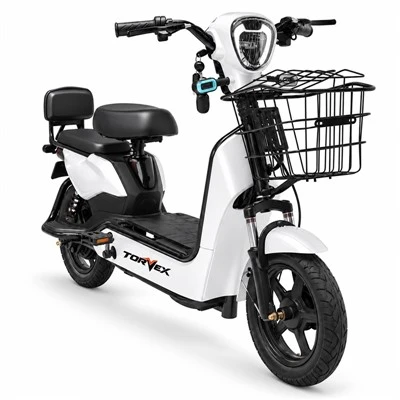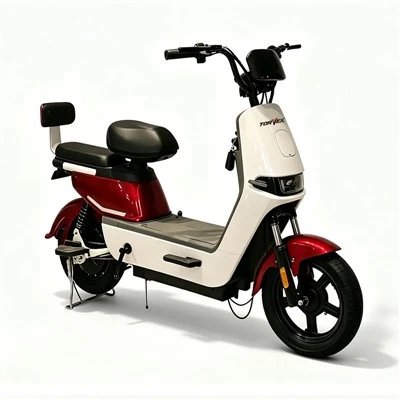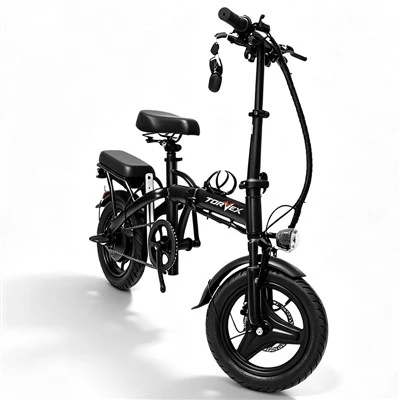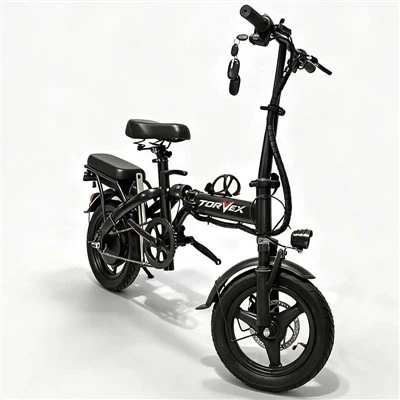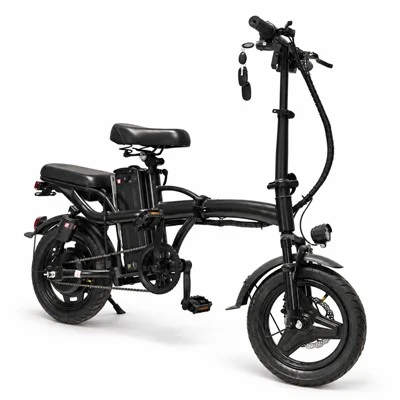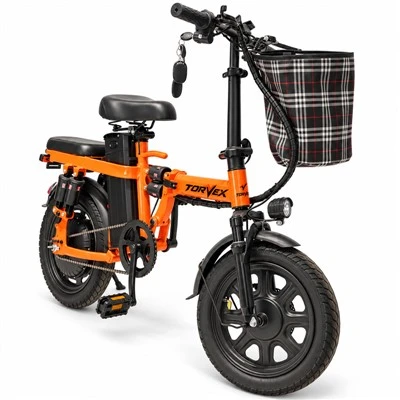
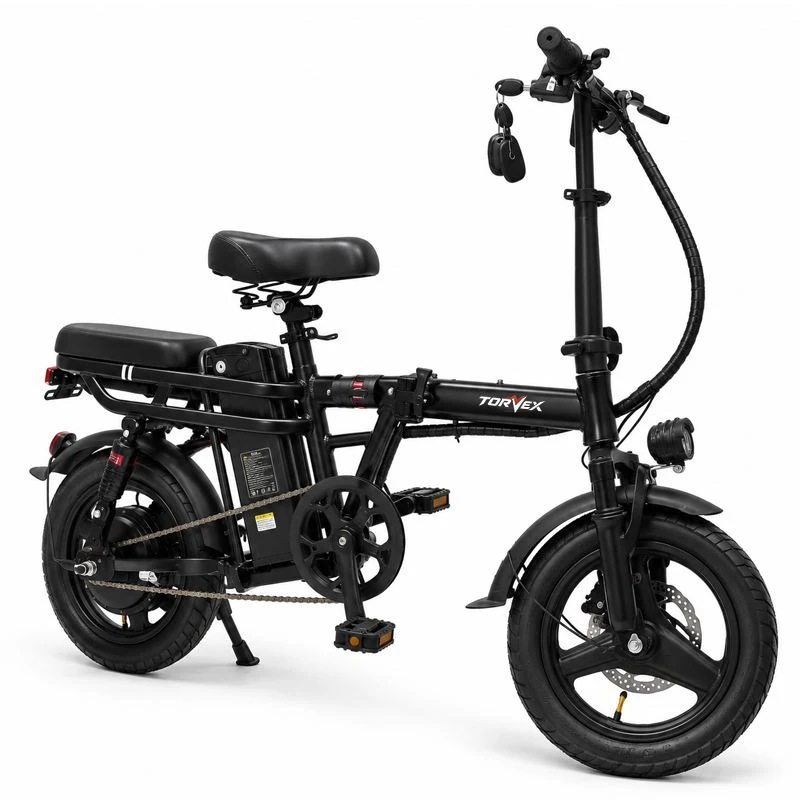

Shandong Tuowei Locomotive Co., Ltd. is one of the most reliable manufacturers and suppliers of 350w comfort electric bicycle in China. With a professional production team, we are able to meet the needs of the majority of our customers. Welcome to wholesale premium 350w comfort electric bicycle made in China here from our factory.
A 350W Comfort Electric Bicycle is a pedal-assisted machine whose design priority is the physical ease of the rider rather than speed, weight or off-road capability. Its defining features sit at the contact points and in the frame geometry: an upright riding position with the handlebar brought back and up, a wide sprung saddle on a suspension seatpost, ergonomic grips, a suspension fork and higher-volume tyres run at moderate pressure. Motor output remains 350 watts, which keeps the machine inside the pedal-assist legal category in most markets. What distinguishes this specification is that comfort is treated as a set of measurable engineering decisions - load distribution, joint angles, vibration transmission and adjustability - rather than as a softer saddle bolted onto an ordinary frame.
Comfort Is an Engineering Problem, Not a Softness Problem
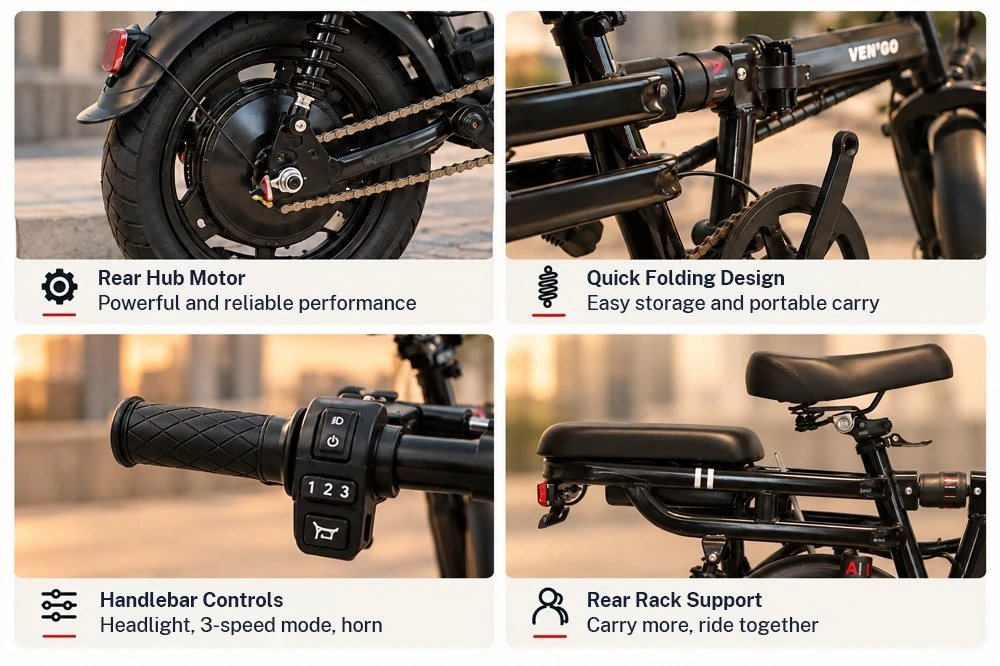
The word comfort is often used to mean padding, and that misunderstanding is why so many riders buy a comfortable bicycle and still hurt after twenty minutes. Discomfort on a bicycle almost never comes from a lack of cushioning; it comes from load applied in the wrong place, through the wrong joint angle, for too long. A rider's weight is carried at three contact points only - the saddle, the handlebar grips and the pedals. Every ache a rider reports originates at one of them, and each can be addressed by geometry and specification rather than by adding foam.
This is the framework we design to, and it is worth setting out because it changes what a buyer should look at. A sore lower back usually means the rider is reaching forward and down, so the spine is flexed and the muscles of the lower back are holding the torso up. Numb or tingling hands mean pressure on the palm where nerves run close to the surface, usually because too much weight has migrated forward onto the bar. Saddle soreness means pressure on soft tissue rather than on the sit bones, which is a question of saddle width, tilt and rider posture. Each of these has a specific cause and a specific fix, and a genuinely comfortable machine addresses all three at once.
The Saddle and Seatpost: Where the Weight Actually Rests
On an upright bicycle the majority of the rider's mass is carried through the saddle, so this is the contact point that deserves the most attention. The load should be taken by the ischial tuberosities - the sit bones - which are structurally meant to bear weight. A saddle that is too narrow places pressure between them, on soft tissue, which compresses nerves and blood vessels and produces the numbness that stops riders cycling altogether. Width, therefore, is not a comfort preference; it is a fit dimension, and it is why we offer saddle widths and specify a saddle shaped to support the sit bones with a relieved centre section rather than a continuous padded surface.
Beneath the saddle, a suspension seatpost does work that a padded saddle alone cannot. A seatpost is a long lever pivoting at the frame clamp, so a few millimetres of travel at the post absorbs a noticeable proportion of the vertical shock from a pothole rim or a broken edge before it reaches the rider's spine. It is a simple, serviceable device - an elastomer or coil spring with a preload adjustment for rider mass - and on a comfort machine it is specified alongside, not instead of, a correctly shaped saddle. Tilt adjustment matters too: a saddle nose pitched slightly down transfers pressure forward onto the hands, which is how a saddle problem becomes a wrist problem.
Handlebar, Grips and the Wrist Problem
Numb hands are the single most common comfort complaint among adult riders, and the mechanism is straightforward. When a rider leans forward, weight moves onto the palms; sustained pressure across the base of the palm compresses the ulnar nerve, and the hand goes to sleep. The fix is not a thicker grip - a larger diameter grip can in fact increase pressure area problems if the hand is small - but a change in rider position so that less weight rests on the hands at all.
On this machine that is achieved with a swept-back handlebar that brings the grips rearward and upward, so the rider sits behind the hands rather than over them and the wrists sit in a neutral angle rather than being bent outward. Grips are specified with a broad, flat contact area that spreads load away from the nerve, and with a shape that gives the hand a consistent reference so the rider is not gripping tightly to stay in place - tension in the forearms is itself a cause of fatigue. An adjustable stem allows bar height to be raised or lowered to suit the individual rider without altering cable runs, which is what turns a fixed geometry into a machine that can actually be fitted.
Frame Geometry: Upright by Design, Not by Compromise
An upright riding position is the result of a deliberate relationship between two frame dimensions, and it is worth explaining plainly because it is the difference between a comfort bicycle and a road bicycle with a raised bar. Vertical height from the bottom bracket to the top of the head tube sets how high the rider's hands sit; horizontal distance from the seat to the head tube sets how far they must reach. Raise the first relative to the second and the rider sits up, with the spine in a natural curve and the neck angled comfortably enough to see ahead without craning.
The consequences go beyond comfort. A rider sitting upright sees over parked cars and can make eye contact with drivers, which measurably improves safety in dense traffic. Weight sits on the sit bones rather than the wrists. Breathing is easier, which matters to older riders and to anyone returning to cycling after a long break. A low-step or step-through frame option is available on this platform for riders with limited hip or knee mobility, and it changes nothing about the contact-point specification - it simply makes mounting and dismounting unhurried. The trade is honest: an upright position presents more frontal area to the wind, so at higher speeds the rider works harder into a headwind. On an assisted machine travelling at urban speeds, that cost is small and the benefit is large.
Vibration: The Chain From Road to Rider
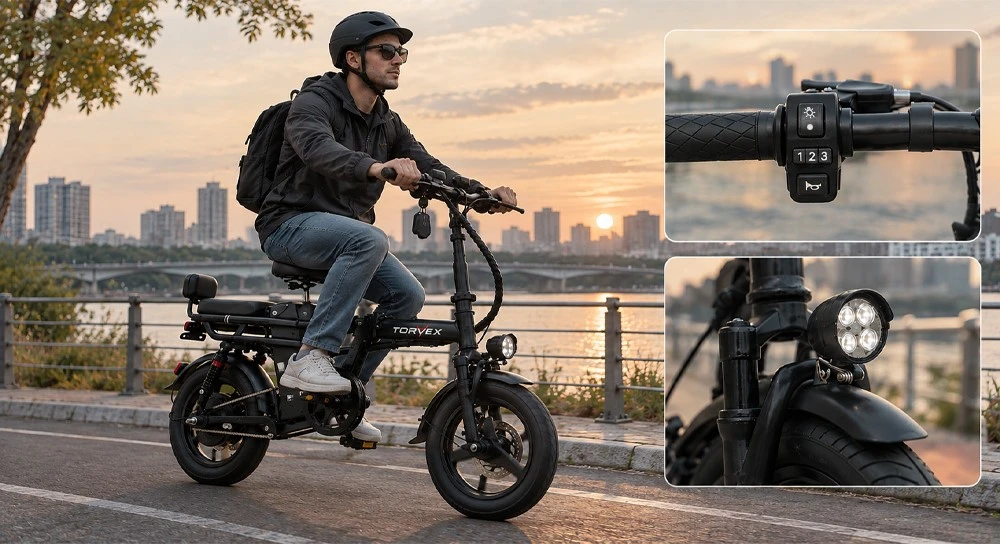
Vibration is the comfort factor riders notice least consciously and feel most at the end of a ride. It travels in a chain: from the road surface into the tyre, through the fork and frame, and out through the saddle, grips and pedals. Break the chain at any link and the rider feels less. This machine works on several links simultaneously rather than relying on one. A higher-volume tyre at moderate pressure absorbs the small, high-frequency chatter that suspension is too slow to respond to. A suspension fork handles the larger impacts arriving through the front wheel. A suspension seatpost interrupts what remains before it reaches the spine, and ergonomic grips damp the last of it at the hands.
The reason this layered approach matters is that no single component can do the whole job. A very soft saddle on a rigid frame still transmits the sharp component of every impact; a fork alone does nothing for what arrives at the rear. Addressing several points in the chain is what produces the quality riders describe as a machine feeling calm rather than busy - and on an electric bicycle, which is inherently heavier and travels faster than an unassisted one, that calmness is what makes higher average speeds feel safe.
Typical Applications
Closed-course motocross and amateur racing
01
Off-road training camps and rider coaching programs
02
Trail riding, ranch and farm commuting
03
Mountain patrol and forestry inspection routes
04
Scenic-area rental fleets and off-road event operations
05
Key Specifications
|
||||||||||
Call to Action

Serving riders who gave up cycling because it hurt? Source the machine built to fix that. Torvex supplies the 350W Comfort Electric Bicycle with OEM/ODM saddle, grip, bar and colour specification, destination-specific battery and charger configuration, and consolidated container loading. Tell us your annual volume, target retail price and the rider profile you sell to, and our export team will return a specification sheet, an FOB quotation and a recommended spare parts package - or arrange a live video walkthrough of the assembly line.
FAQ
Q:How is this different from your Classic City model?
A: Both are upright, but they optimise different things. The Classic City model is defined by its step-through access and retro styling - it solves the problem of mounting in work clothing and riding in traffic in a city suit. This comfort model is defined by contact-point engineering: saddle width and shape, a suspension seatpost, swept-back bars, ergonomic grips and a wide fit range. A step-through frame can be specified on a comfort build where a market wants both.
Q: Will a comfort specification actually stop the aches?
A: It addresses the three causes: load on the sit bones rather than soft tissue, wrists in a neutral angle with less weight on the hands, and vibration interrupted at several points before it reaches the spine. Saddle shape is individual, so we recommend stocking two saddle widths and offering a short exchange period - fit is the single highest-value service a dealer can perform, and we supply the guidance and parts to make it a five-minute job.
Q: Does the upright position make it slower or less efficient?
A: Marginally, and honestly so. An upright rider presents more frontal area to the wind, so at higher speeds more effort goes into overcoming air resistance, and the suspension components add mass. On an assisted machine at urban speeds that cost is small, and what the rider gains - an easier back, unstressed wrists and a better view over traffic - is what determines whether the bicycle gets used at all.
Q: Can one frame size serve riders of different heights?
A: Yes, and this is a design priority. An adjustable stem sets bar height, and a quick-release seatpost with clear height markings sets saddle height for correct knee angle, so a single stock-keeping unit fits a broad span of riders properly. For rental, sharing and corporate fleets, that is usually the specification that decides whether the fleet gets ridden or sits in the rack.
Q: Does it need a licence, registration or insurance?
A:In most markets a 350W pedal-assist bicycle falls inside the legally assisted pedal-cycle category and requires none of these, though the power ceiling, assisted speed limit and throttle rules vary by country and sometimes by region. We configure motor output and assist cut-off speed to the destination's regulation before quoting.
Q: What can we customise for our market?
A: OEM and ODM programmes cover frame colour, saddle specification and width, grip material, handlebar sweep, decal design, logo application and accessory packages including racks, baskets and mudguards. As a China-based electric bike supplier, we can also specify battery capacity, gearing, brake type and whether a step-through or low-step frame suits your riders best.
Hot Tags: 350w comfort electric bicycle, China 350w comfort electric bicycle manufacturers, suppliers, factory