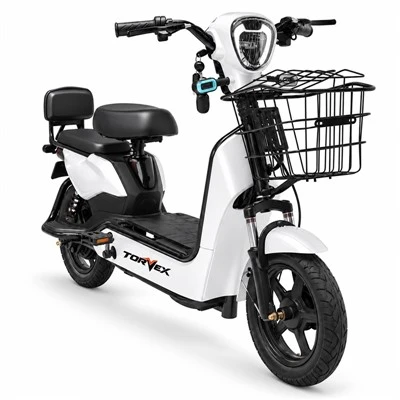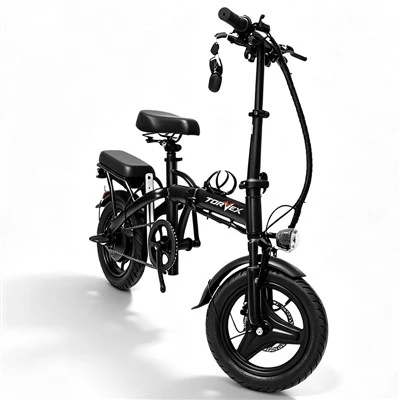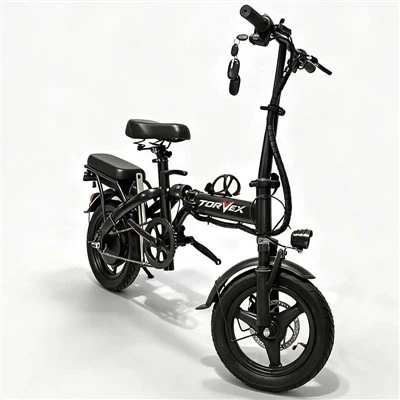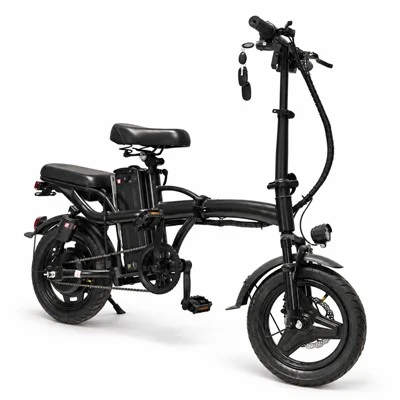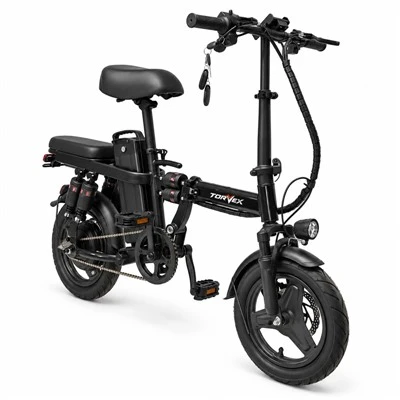
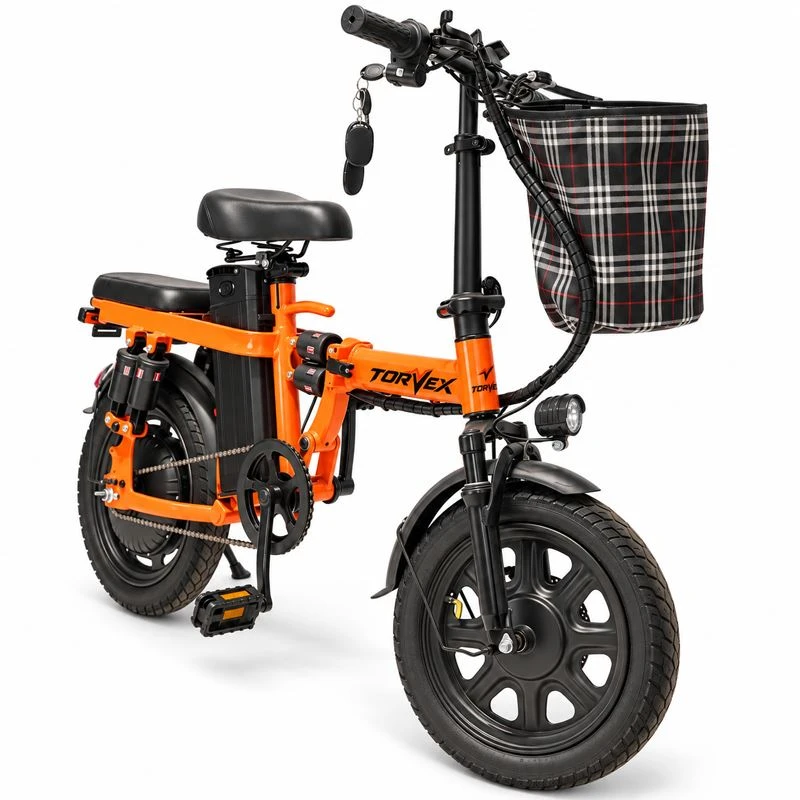

Shandong Tuowei Locomotive Co., Ltd. is one of the most reliable manufacturers and suppliers of 350w 16 inch electric bicycle in China. With a professional production team, we are able to meet the needs of the majority of our customers. Welcome to wholesale premium 350w 16 inch electric bicycle made in China here from our factory.
Product Overview
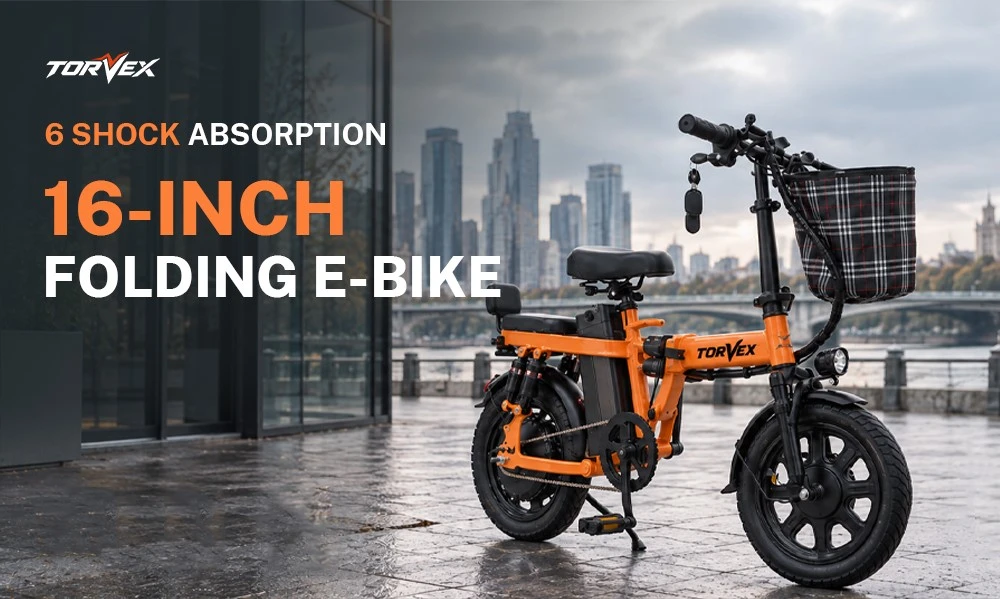
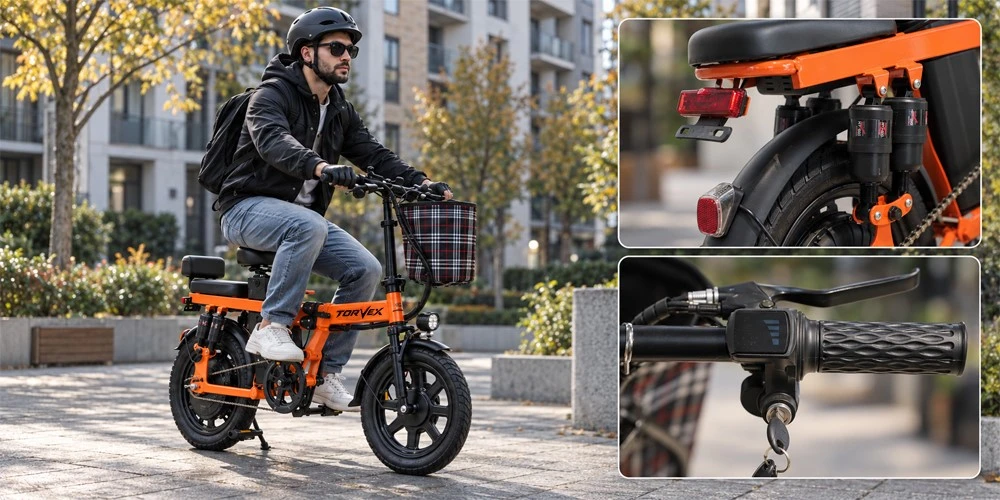
A 350W 16 Inch Electric Bicycle is a pedal-assisted machine built on wheels of sixteen-inch diameter rather than the twenty-six to twenty-nine inch sizes used on conventional bicycles. Wheel size is not a cosmetic variation; it determines the machine's overall length, its storage volume, its turning circle, how quickly it accelerates and how it reacts to surface irregularities. The Torvex 16-inch platform is engineered for the use case that small wheels serve best: dense urban trips, mixed-mode commuting where the bicycle is carried on a train or stowed in a vehicle, storage in apartments without a garage, and riders of smaller stature for whom a full-size frame has always been slightly too large.
What Sixteen Inches Actually Changes
Reducing wheel diameter sets off a chain of consequences that a buyer should understand before specifying, because they are not all advantages and they are not all drawbacks. The first is dimensional. A smaller wheel lowers the height of the hub, which lowers the top of the frame, the saddle and the handlebar, and shortens the wheelbase. The whole machine becomes shorter and lower, and that is what allows it to fit through a doorway, into a lift, under a desk or across a car boot - the practical benefit that motivates most purchases in this category.
The second is mechanical, and it favours the rider. A smaller wheel has a smaller circumference, so for a given motor speed the wheel turns more revolutions per minute; equivalently, the same drive torque produces more thrust at the contact patch. This is why a small-wheel machine feels notably brisk away from a junction - it accelerates rather than building up speed gradually, and it climbs in a way that surprises riders used to larger wheels. Rotating mass is lower too, so less energy is spent spinning the wheels up at every stop. On a stop-start urban route, these effects are felt constantly, and they make a compact electric bike feel more responsive than its power rating suggests.
The Trade: Small Wheels Read the Road Differently
The same geometry that improves acceleration also makes the machine more sensitive to the surface, and this is the trade buyers must be told about rather than sold around. A small wheel meets an obstacle at a steeper effective angle than a large one: a twenty-nine inch wheel rolls over a given edge, while a sixteen inch wheel has to climb it. The result is that pothole rims, kerb lips, gravel and broken asphalt are felt more sharply, and a small wheel drops into a depression rather than bridging it.
Good engineering manages this rather than ignoring it, and there are two levers. The first is tyre volume: fitting a wider tyre with a taller sidewall restores some of the compliance lost with the diameter, because the tyre is the first suspension element in the chain and its casing absorbs exactly the small, sharp impacts a small wheel transmits most harshly. The second is pressure - a wider tyre can be run at a lower pressure without pinch risk, and correct pressure is the single most effective adjustment a rider can make. Where a market's roads are genuinely poor, a suspension fork or a suspended seatpost can be specified, but the honest guidance is that sustained rough ground belongs to a larger-wheel machine. Small wheels reward good surfaces with agility and punish bad ones with harshness.

Stability, and Why Wheelbase and Geometry Compensate
A common objection to small wheels is that they feel unstable, and it deserves a precise answer. Straight-line stability on a bicycle comes largely from the wheel's gyroscopic effect and from trail - the distance by which the front wheel's contact point trails behind the steering axis. Reduce the wheel and the gyroscopic contribution falls, which is why badly designed small-wheel bicycles feel nervous at speed. The compensation is geometric: trail is set by fork rake, head angle and offset rather than by wheel size, so a properly designed sixteen-inch machine can be made stable by specification rather than by compromise.
In practice this means the steering geometry on this platform is deliberate rather than inherited from a larger model. Head angle and fork offset are selected to give light, predictable low-speed steering - which is what a rider needs filtering through traffic or manoeuvring in a lift lobby - while retaining enough trail to track straight at assisted speed. The short wheelbase that comes with small wheels then becomes an advantage rather than a liability: the machine turns tightly, threads through gaps and can be walked and manoeuvred in spaces where a full-size bicycle simply will not go.
Fit: Who a Sixteen-Inch Machine Actually Suits
Wheel size determines the range of riders a frame can accommodate, and this is where the category earns its place. Because the whole machine sits lower, saddle height can be set low enough for a rider of small stature to place both feet firmly on the ground at a stop, while the handlebar is close enough to reach without stretching. For a rider around five feet tall, a full-size frame with twenty-nine inch wheels is a compromise no amount of adjustment fully resolves; a sixteen-inch machine is proportioned for them from the outset.
That same characteristic serves three further groups. Younger riders, and riders moving up from a child's bicycle, gain a machine they can control rather than one they perch on. Older riders value the low mount and the certainty of a foot down at every stop, which is the difference between cycling and not cycling. And riders with limited hip or knee mobility benefit from the low step-over height, particularly where a step-through or low-step frame is specified. Adjustability remains important - an adjustable seatpost and a height-adjustable bar let one frame span a useful range of riders - which is what makes the model viable for a rental or sharing fleet serving a mixed population.
Storage, Mixed-Mode Commuting and the Car Boot Test
For a large share of buyers, the decisive feature is not how the machine rides but where it goes when the ride ends. A full-size electric bicycle is a bulky object: it needs a garage, a hallway, a secure court or a wall-mounted rack, and in dense cities that requirement alone ends the purchase. A sixteen-inch machine occupies a fraction of the volume, can be carried up a flight of stairs in one hand, and fits into the boot of a saloon car rather than requiring a tow-bar carrier.
This is what makes mixed-mode commuting practical. The rider cycles to the station, folds or carries the machine onto the train, and rides the last leg at the other end - a journey pattern that a full-size bicycle makes awkward and that a car makes slow and expensive. It also opens the leisure and recreational market: caravans, motorhomes and boats, where the machine is carried rather than ridden from home. Where a folding frame or a folding handlebar and pedals are specified, the folded footprint becomes the number buyers compare, and we publish it alongside the unfolded dimensions so your sales team can answer the boot question before it is asked.
Power, Gear Range and Realistic Use
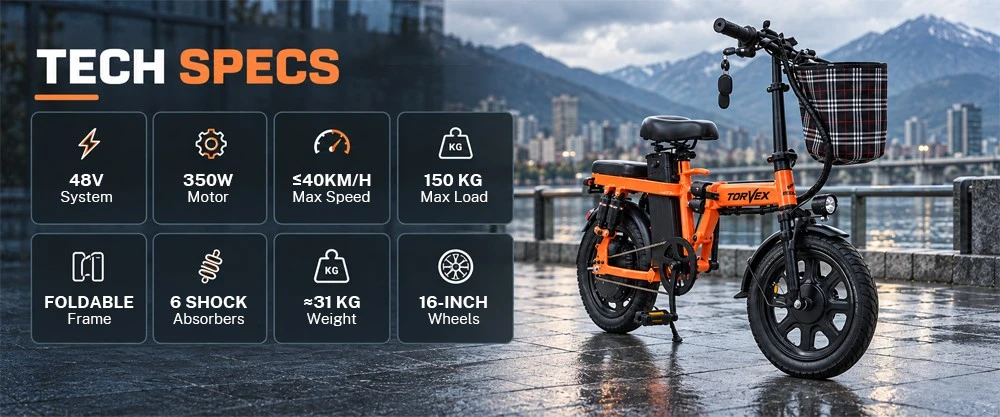
Motor output is 350 watts, which in most jurisdictions is the ceiling that keeps a machine classified as an electrically assisted pedal cycle rather than a moped - no licence, no registration, no insurance for the rider, and a far larger addressable market as a result. On a sixteen-inch wheel that output translates into brisk acceleration rather than high top speed, which is the right characteristic for urban work. Assistance is metered from the rider's own pedalling input through a cadence or torque sensing system with selectable levels, cutting out under braking and at the regulated assisted speed.
Gearing deserves a note, because it is where small-wheel machines are frequently got wrong. A small wheel turns faster for a given road speed, so a drivetrain carried over from a large-wheel bicycle leaves the rider spinning without enough ratio at the top end. This platform is geared for the wheel, giving a usable spread across the assisted speed range rather than an over-low bottom gear the rider never uses. The drivetrain remains fully functional without power, so the machine can be ridden home under pedal alone - on a compact machine with modest speeds and distances, that is a realistic fallback rather than a theoretical one.
Serviceability and Specification in Common Formats
Small-wheel machines attract a reputation for proprietary parts, and we design against it deliberately. Tyres and tubes are specified in the standard sixteen-inch sizes carried by bicycle shops and tyre distributors rather than in an odd dimension that only one factory supplies. Brake pads, chains, cables and bearings are conventional formats, and where a folding mechanism is specified the hinge and latch are mechanical assemblies that a workshop can service and that we supply spares for.
Servicing is within the scope of any competent bicycle workshop and requires no diagnostic equipment. Because small wheels rotate faster at a given road speed, two items deserve slightly shorter inspection intervals than on a large-wheel machine: tyre wear, since the tread passes the contact patch more often per kilometre, and wheel bearing condition, for the same reason. We state this in the maintenance schedule rather than leaving an operator to discover it, and we supply a wear-parts schedule with bulk orders so a fleet is never waiting on a consumable.
Where It Sits Among Our 350W Models
This platform shares its motor, controller, battery platform, chargers, brakes and consumables with the rest of the 350W range, so it extends an existing import programme without adding a parts inventory. The distinction is rider and route, not build quality. The Basic City and Comfort models suit riders wanting a full-size frame for longer paved routes and a more relaxed, upright ride. The Front Suspension and Dual Suspension models address rough surfaces. The Heavy Duty model is built around payload. The LED Headlight model leads with night visibility.
This sixteen-inch model is the one to lead with where the constraint is space or stature rather than road surface: dense apartment living, mixed-mode commuting, caravan and leisure markets, younger and smaller riders, and rental or sharing fleets serving a mixed population. It is also the easiest to demonstrate in a showroom, because the entire argument can be made in ten seconds by picking the machine up.
Manufacturing and Export Credibility
Torvex is manufactured by Shandong Tuowei Motorcycle Co., Ltd., established in 2000 and based in Zichuan Advanced Manufacturing Industrial City, Zibo, Shandong. Assembly covers frame preparation, precision component fitting, motor and controller installation, wheel building and tensioning, and end-of-line inspection. Battery packs are checked for cell balance and capacity before being matched to a frame, and every completed bicycle is tested for drive function, braking, electrical circuits, lighting and a simulated running check before release for loading.
We hold full import and export qualifications and ship to markets across Southeast Asia, Africa, the Middle East, South America and Eastern Europe, with battery and charger configurations specified for the destination's voltage and plug standard. OEM and ODM programmes cover frame colour, saddle and grip specification, folding hardware where required, decal design, logo application and accessory packages such as racks, baskets and mudguards, with packing configured for efficient container loading.
Typical Applications
Dense urban commuting with storage in an apartment or office
Mixed-mode journeys combining cycling with train, metro or bus
Leisure and recreational use carried in a caravan, motorhome or boat
Younger riders, smaller riders and riders with limited mobility
Rental and sharing fleets serving a mixed rider population

Call to Action
Selling to riders whose problem is space, not distance? Source the machine sized for it. Torvex supplies the 350W 16 Inch Electric Bicycle with OEM/ODM colour, saddle, folding hardware and branding specification, destination-specific battery and charger configuration, and consolidated container loading. Tell us your annual volume, target retail price and the rider profile you serve, and our export team will return a specification sheet, an FOB quotation and a recommended spare parts package - or arrange a live video walkthrough of the assembly line.
FAQ
Q: Is a 16 inch electric bike stable enough to ride safely?
A: Yes, when the geometry is designed for the wheel rather than inherited from a larger model. Straight-line stability comes from trail - set by head angle, fork rake and offset - and from the gyroscopic effect of the wheel. Trail is a geometric choice, so a properly specified sixteen-inch machine tracks straight at assisted speed while gaining genuinely tighter low-speed manoeuvrability.
Q: Does the small wheel make the ride harsh?
A: It is more sensitive to the surface, and we would rather say so than have a rider discover it. A small wheel climbs an edge rather than rolling over it. We manage this with a wider, higher-volume tyre whose casing absorbs sharp impacts, and with pressure guidance the rider can act on. On sustained rough ground a larger-wheel model is the better specification.
Q: Who is it best suited to?
A: Riders of smaller stature, who can place both feet firmly down and reach the bar without stretching; younger riders moving up from a child's bicycle; older riders who value a low mount and a certain foot at every stop; and riders with limited hip or knee mobility, particularly with a step-through frame. Adjustable seatpost and bar height let one frame span a useful range.
Q: Will it fit in a car boot or a small flat?
A: That is the design target. The short wheelbase and low overall height mean it occupies a fraction of the volume of a full-size machine, can be carried upstairs in one hand, and fits into a saloon boot rather than requiring a tow-bar carrier. Where a folding frame or folding bar and pedals are specified, we publish both folded and unfolded dimensions so the question can be answered before purchase.
Q: How does it compare with your other 350W models?
A: Motors, controllers, battery platforms, chargers, brakes and consumables are shared, so it joins an existing programme without new parts. The difference is the constraint it solves: this model addresses space and rider stature, while the Basic, Comfort, Front Suspension, Dual Suspension, Heavy Duty and LED Headlight models address route conditions, payload and night visibility.
Q: Are tyres and spare parts easy to source?
A: Yes. Tyres and tubes are specified in standard sixteen-inch sizes carried by bicycle shops and tyre distributors, and brake pads, chains, cables and bearings are conventional formats rather than proprietary ones. Tyre wear and wheel bearings warrant slightly shorter inspection intervals, because a small wheel rotates more often per kilometre, and both are covered in the maintenance schedule.
Hot Tags: 350w 16 inch electric bicycle, China 350w 16 inch electric bicycle manufacturers, suppliers, factory