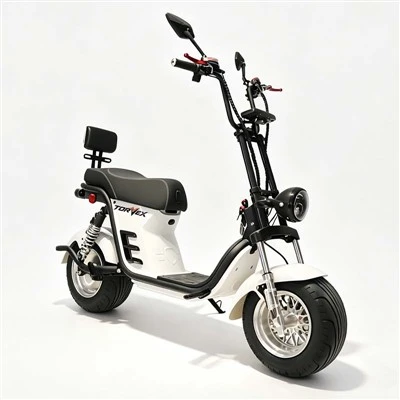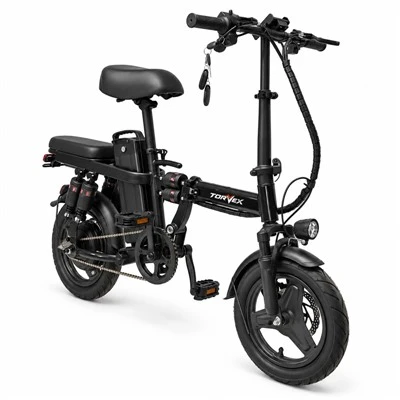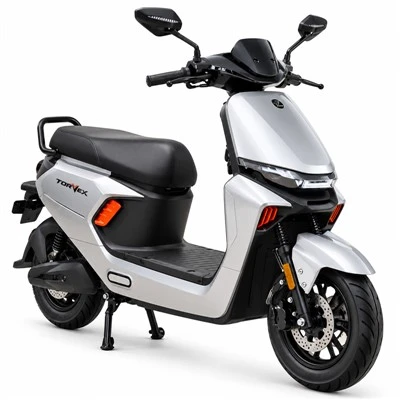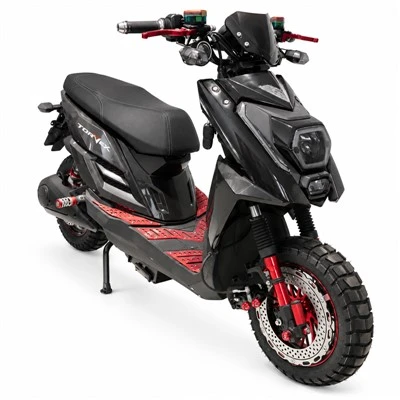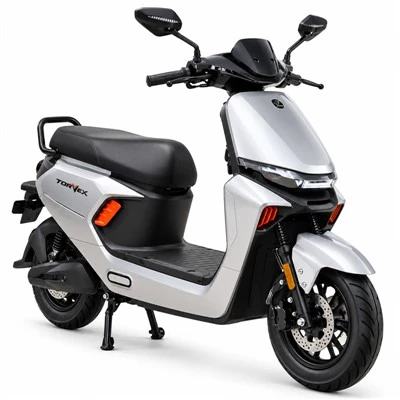
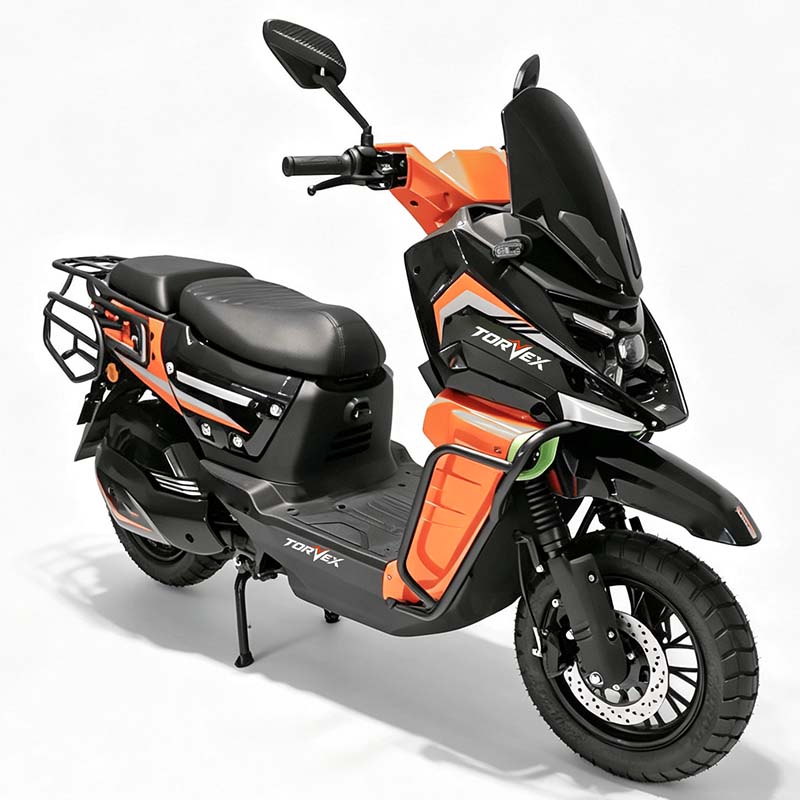
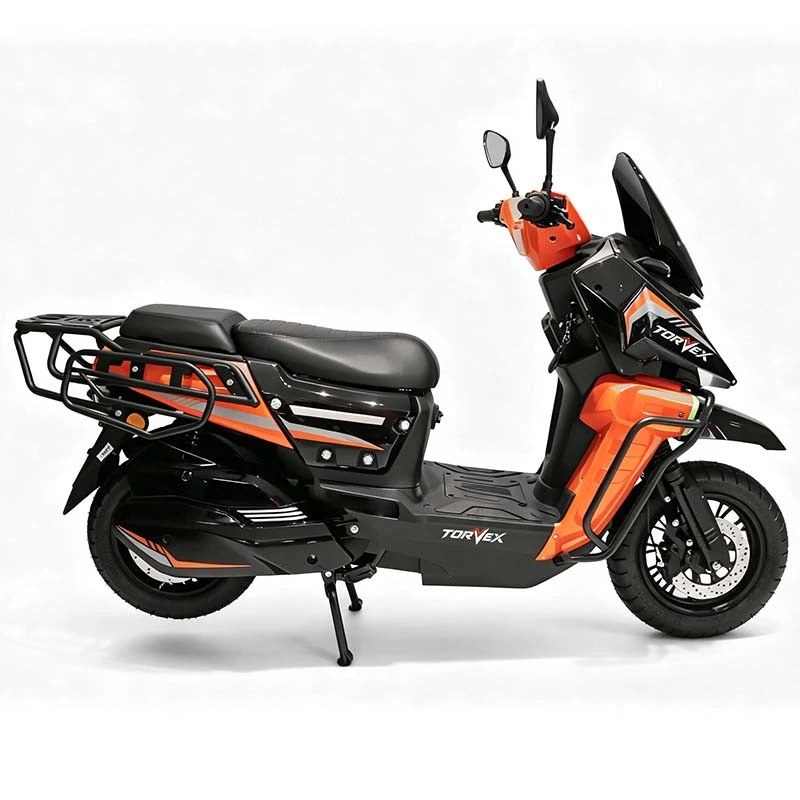
Shandong Tuowei Locomotive Co., Ltd. is one of the most reliable manufacturers and suppliers of 1500w racing electric motorcycle in China. With a professional production team, we are able to meet the needs of the majority of our customers. Welcome to wholesale premium 1500w racing electric motorcycle made in China here from our factory.
Product Overview
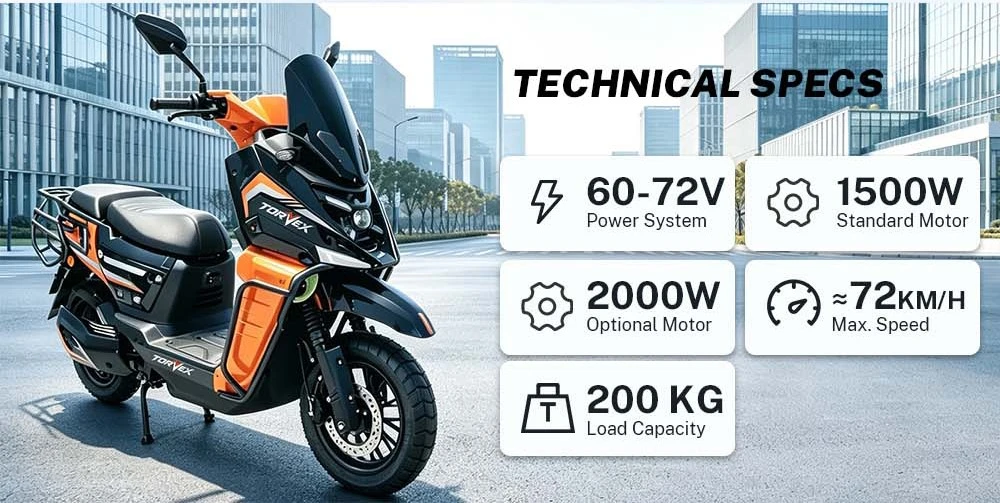
A 1500W Racing Electric Motorcycle is a closed-course competition machine rated at 1500 watts continuous motor output, engineered for circuit racing, track days, sprint events and rider training rather than for road use. It is distinct from an off-road race bike in purpose and specification: where a motocross machine is built for suspension travel, impact absorption and loose surfaces, a circuit machine is built for braking stability, precise steering feedback, low centre of gravity and repeatable output. It is also distinct from a fast road machine in the condition it is designed for - not a single acceleration, but sustained high load repeated for an entire session, which is the condition that exposes inadequate thermal design.
What a Circuit Actually Tests: Repeatability, Not Peak
Riders and buyers are drawn to peak figures, and on a circuit they are close to irrelevant. What matters is whether the machine produces the same performance on the fifteenth lap as it did on the first, because a lap time is built from a sequence of identical demands - brake hard from speed, turn, drive out - repeated for the length of a session. A machine whose output, battery voltage or braking performance degrades as heat accumulates produces lap times that quietly get slower, and the rider usually attributes it to their own fading concentration rather than to the machine.
Heat accumulation is the mechanism, and on an electric race bike it acts in three places at once. In the motor, sustained winding temperature degrades insulation and permanently weakens the magnets, so output falls away gradually rather than failing outright. In the battery, high discharge current raises cell temperature, which raises internal resistance, which generates more heat in a self-reinforcing cycle until the management system limits current to protect the pack - the rider experiences it as power being quietly taken away mid-session. In the brakes, repeated hard stops from speed load the discs and fluid with more heat than road riding ever generates. Engineering a race machine means addressing all three, which is why thermal capacity, not headline power, is what separates a genuine circuit machine from a fast road machine with race bodywork.
Instant Torque and the Drivetrain That Does Not Interrupt
An electric machine has a characteristic that is worth more on a circuit than any power figure: maximum torque is available from zero rotational speed. A combustion engine must be kept inside a rev band, which is why a rider downshifts, matches engine speed on the downshift and works a clutch to leave a corner cleanly. Every one of those actions interrupts drive, shifts the rider's weight and disturbs the chassis at precisely the moment it is most loaded in a turn.
Remove the gearbox, the clutch and the need to keep the engine on the boil, and corner exit changes character entirely. Drive is available the instant the rider opens the throttle, with no delay, no drivetrain shunt and no weight transfer from a shift. For a developing rider this is a genuine advantage: it removes two of the skills that take longest to learn and lets them concentrate on line, braking point and throttle control. For an experienced rider it means the chassis stays settled through the whole exit phase. It also removes the clutch and gearbox from the maintenance schedule and from the list of components that fail under race conditions.
Mass Centralisation and a Low Centre of Gravity
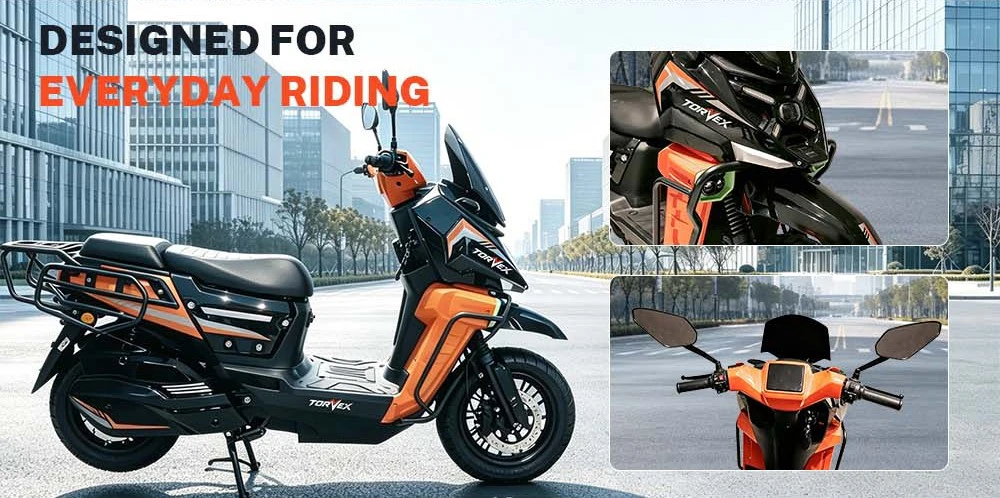
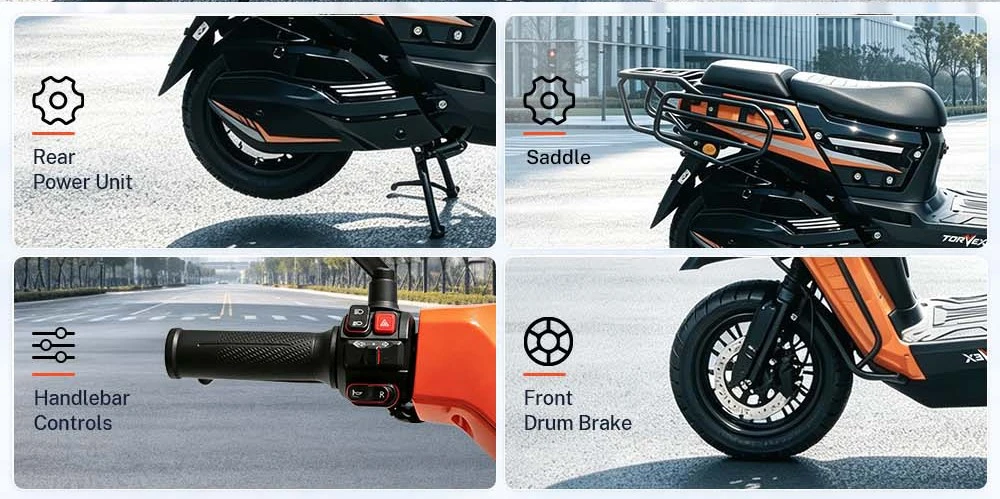
On a circuit, the battery is not merely an energy store - it is the heaviest single component on the machine, and where it sits determines how the machine changes direction. Placing it as low as ground clearance allows, and as close to the machine's centre as the layout permits, lowers and concentrates the centre of mass. Both effects matter, and they are distinct.
Lowering the centre of mass reduces the effort required to tip the machine from one side to the other, so direction changes through a sequence of turns need less physical work from the rider and can be made later and more precisely. Concentrating mass near the centre reduces the machine's resistance to rotation, which is what makes it feel willing to turn rather than resistant. The rider perceives the combination as a machine that is lighter and more responsive than its actual weight suggests - and on a circuit, where a rider may make dozens of direction changes per lap, that responsiveness is worth more than a marginal gain in straight-line power.
Chassis Stiffness and the Feedback a Rider Trusts
A race chassis has a job that a road chassis does not: it must tell the rider precisely how much grip is available. Any flex between the handlebar and the contact patches - in the frame, the swingarm, the fork or the steering head - is information lost, and a rider who cannot feel the front tyre loading up will not brake or turn with confidence. Stiffness is therefore specified rather than assumed, with material and section chosen for torsional rigidity at the steering head and along the swingarm, and with reinforcement concentrated where racing loads are highest.
There is a limit, and it is worth stating because the fashion for absolute stiffness is not always correct. A chassis with no controlled compliance transmits every surface irregularity directly to the tyres, which can reduce grip on a bumpy circuit and make the machine tiring and skittish. The objective is not maximum stiffness but predictable stiffness - a structure that responds consistently so the rider can trust what they feel and build on it lap after lap. Geometry follows the same principle: wheelbase, head angle and trail are set to give stability under hard braking and enough agility to change line, a balance that is deliberately biased toward predictability.
Suspension: Adjustability That Lets a Team Tune
Circuit work differs from road use in one practical respect - the machine is set up for a specific circuit, a specific rider and a specific day, and then changed again. That requires genuine adjustability rather than a nominal adjuster. Preload sets sag, which positions the chassis in its travel; correct sag is what leaves suspension available to absorb both braking load and acceleration rather than running out of travel in one direction.
Damping adjustment is then split in a way worth understanding, because it is where good suspension separates from merely adjustable suspension. Low-speed damping governs how the machine responds to rider inputs - braking, acceleration, weight transfer - and is what controls dive and squat. High-speed damping governs how it responds to surface inputs - kerbs, bumps, changes of camber - and is what determines whether the wheel stays in contact over a rough section. A machine that only offers a single adjustment cannot be tuned for both, and riders end up compromising one for the other. This platform is specified with adjustment at both ends and in both ranges, so a team can set the machine up rather than accept it.
Tyres, Temperature and an Honest Warning
Circuit tyres behave differently from road tyres in a way that catches out riders new to track riding, and it deserves a direct explanation. A road tyre is designed to work across a wide temperature range from cold, because a rider may need full grip within seconds of setting off. A circuit tyre is designed to produce its best grip inside a narrower temperature window, which it reaches only after being worked. Until it is warm, it offers substantially less grip than the rider expects - and the first laps of a session are exactly when this matters.
This is compounded on an electric machine by the torque characteristic described earlier: because full torque is available immediately, a rider can demand more from a cold rear tyre than they would on a combustion machine building up through the rev range. The honest guidance we give to teams and training operators is to treat the first laps as a warm-up phase deliberately, build tyre temperature progressively, and check pressures when hot rather than cold, because pressure rises with temperature and a pressures set cold will be wrong for the working condition. We state this plainly rather than leaving a rider to discover loss of grip at the first corner.
Braking Heat: The Load a Circuit Generates
Braking on a circuit is a different duty from braking on the road, in kind rather than in degree. On the road, stops are separated by periods of cruising that allow discs and fluid to cool. On a circuit, a rider brakes from high speed to a much lower speed at the end of every straight, lap after lap, with only the following corners in between. The brakes are being asked to absorb a large amount of energy repeatedly with very little recovery time, and that is the condition which causes fade.
The response is specification rather than optimism. Disc diameter and mass are chosen for thermal capacity as well as for torque; pad compound is selected for stable friction at high temperature rather than for initial bite, which means the brakes may feel less aggressive on the first cold application - a deliberate trade that pays off from the second lap onward; and fluid with a high boiling point is specified, because fluid that boils produces compressible vapour in the line and a lever that travels towards the bar. Where a market or a series requires a specific braking configuration, we supply it. Teams should also treat pad and fluid condition as a pre-session check rather than a post-season one.
Energy Management Per Session
On a circuit, the battery is the fuel tank, and the same tension that governs a race car's fuel load applies here. More capacity means more laps but more mass, and more mass costs lap time in acceleration, braking and direction change. Less capacity means a lighter, faster machine that may not finish the session. Sizing it is a decision about the event rather than a specification chosen from a catalogue.
Continuous discharge capability matters as much as capacity, because a circuit demands high current for extended periods. A pack asked to deliver more current than it is rated for heats, and as cell temperature rises so does internal resistance, which produces more heat - the cycle that ends with the management system limiting output to protect the pack. The specification therefore pairs a pack rated for the discharge duty with thermal management and a controller that manages current deliberately. We ask about session length, circuit length, ambient temperature and whether charging between sessions is available, then recommend a configuration and quote a realistic number of laps rather than an optimistic range figure.
Track Compliance and Safety Equipment
A machine built for closed-course use is prepared for the requirements circuits actually impose, and these are worth knowing before specifying because they vary between series and venues. Lighting and mirrors are typically removed or taped for track use, since glass and protruding fittings are a hazard in a fall and serve no purpose in daylight on a closed circuit. Frame sliders, case protection and rear spool or stand provision are expected, because they limit damage in a low-side and allow the machine to be worked on in the paddock.
Safety items are then fitted rather than assumed. A lanyard or tether cut-out switches the drive off if the rider separates from the machine. A brake lever guard reduces the risk of an accidental application in close racing. Where a series requires it, a charge-state indicator or a visible readiness light tells marshals and other riders whether the machine is live. Tyre condition, brake function and fastener torque are checked before every session, and we supply the pre-session checklist with bulk orders. We confirm what your series or venue requires and supply the machine prepared accordingly rather than leaving a team to modify it in the paddock.
A silent machine opens venues that a combustion motorcycle cannot use. Noise limits exclude many circuits, kart tracks and urban or indoor facilities from combustion running, and an electric machine removes that constraint entirely - which is why training operators, experience businesses and rental fleets increasingly find they can access venues their competitors cannot, often at lower cost and closer to population centres.
The drawback is genuine and should be stated rather than glossed over. Engine noise is a cue other riders use: on a circuit, riders are partly aware of a machine approaching from behind by its sound, and a silent machine reduces that awareness. For novice track sessions in particular, that matters. The practical mitigations are organisational - briefing riders, managing group sizes and on-track spacing, and using a visible indicator where a series allows it - and we raise it because an operator who plans the session around it will have a safer event than one who assumes silence is purely an advantage.
For a track-day operator, a riding school or a rental fleet, the economics of an electric race machine are compelling for a reason that goes beyond fuel. There is no petrol, no oil, no filter, no spark plug, no clutch and no gearbox to maintain, no valve clearance to check and no engine rebuild interval to budget for. Consumables reduce to tyres, brake pads, fluid and occasionally chain and bearings, and the pre-session check is short enough to run between groups.
The second advantage is consistency, and for a training operator it is the more valuable one. A fleet of identical electric machines delivers identical performance, session after session, with no variation between units and no degradation as the day goes on if the thermal specification is right. Students can be compared against each other and against their own earlier sessions meaningfully, because the machine is not a variable. That is difficult to achieve with a fleet of combustion machines at different states of tune and wear, and it is the reason schools that convert tend not to go back.
Torvex is manufactured by Shandong Tuowei Motorcycle Co., Ltd., established in 2000 and based in Zichuan Advanced Manufacturing Industrial City, Zibo, Shandong. Assembly covers frame welding and inspection, precision component fitting, motor and controller installation, wheel building, brake installation and bleeding, wiring and safety equipment fitting, and end-of-line inspection. Battery packs are checked for cell balance, capacity and discharge performance before being matched to a machine, and every completed unit is tested for drive output, throttle response, braking performance at both wheels, cut-out function, electrical circuits and a simulated running check before release for loading.
We hold full import and export qualifications and ship to markets across Southeast Asia, Africa, the Middle East, South America and Eastern Europe, with battery and charger configurations specified for the destination's voltage and plug standard. Closed-course machines are supplied prepared to your series or venue requirements, and we confirm those requirements before production. OEM and ODM programmes cover body colour, seat material, decal design, logo application and accessory packages, with packing configured for efficient container loading.
Products Description
Circuit racing, sprint events and club-level competition
Track-day fleets and experience-day operators
Rider training schools and advanced coaching programmes
Indoor, urban and noise-restricted venues closed to combustion machines
Rental fleets requiring consistent performance between units

Call to Action
Building a track fleet, a school or a race programme? Source a machine engineered for the session, not for the specification sheet. Torvex supplies the 1500W Racing Electric Motorcycle with series-specific safety equipment, battery and charger configuration, OEM/ODM colour, seat and branding programmes, and consolidated container loading. Tell us your annual volume, session length and the venue or series rules that apply, and our export team will return a specification sheet, an FOB quotation and a pre-session checklist - or arrange a live video walkthrough of the assembly line.
FAQ
How is this different from a fast road machine with race bodywork?
The condition it is designed for. A road machine is built for single accelerations separated by cruising; a circuit machine is built for sustained high load repeated for an entire session. That is the condition that exposes inadequate thermal design in the motor, the battery and the brakes - which is why thermal capacity, chassis stiffness and adjustment range are specified rather than styling.
Will the performance drop off during a session?
It is engineered not to, and this is the specification that matters most on a circuit. Heat accumulates in three places: motor windings, battery cells and brakes. We address all three - motor and controller thermal management, a pack rated for the discharge duty with managed current, and brakes specified for thermal capacity with high-temperature pad compound and high-boiling-point fluid.
Is the instant torque difficult for novice riders?
It is an advantage once understood, and a risk if not. Because full torque is available immediately, it removes the clutch and gearbox skills that take longest to learn - but it also means a rider can demand more from a cold rear tyre than they would on a combustion machine. We advise treating the first laps as a deliberate warm-up and setting pressures hot rather than cold.
What safety equipment is required for track use?
It varies by series and venue, and we confirm it before production rather than leaving a team to adapt in the paddock. Typically: lighting and mirrors removed or taped, frame sliders and case protection, a lanyard or tether cut-out, a brake lever guard, and where required a visible charge-state or readiness indicator. We supply a pre-session checklist with bulk orders.
How many laps will it run per charge?
We quote laps rather than a generic range, because capacity and mass are in direct tension on a circuit: more battery means more laps but more mass, and mass costs lap time. Send us session length, circuit length, ambient temperature and whether charging between sessions is available, and we will recommend a configuration with a realistic figure.
Does silence create a safety problem on track?
It creates one that should be managed rather than denied. Riders partly rely on engine noise to sense a machine approaching from behind, and a silent machine reduces that cue - particularly in novice sessions. The mitigations are organisational: briefing riders, controlling group size and spacing, and using a visible indicator where the series allows it.
Hot Tags: 1500w racing electric motorcycle, China 1500w racing electric motorcycle manufacturers, suppliers, factory