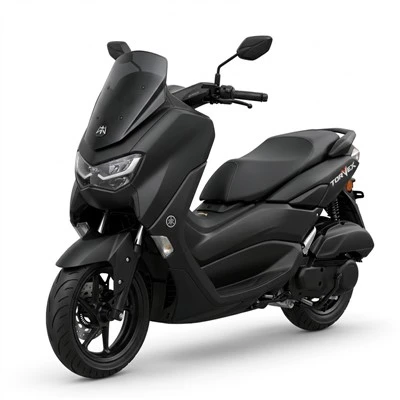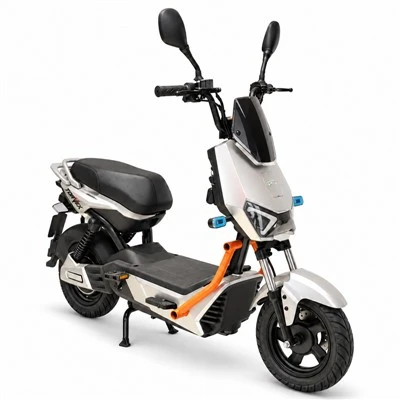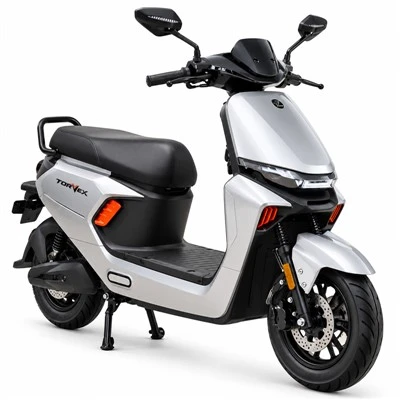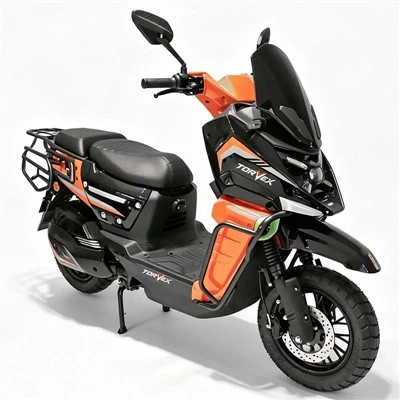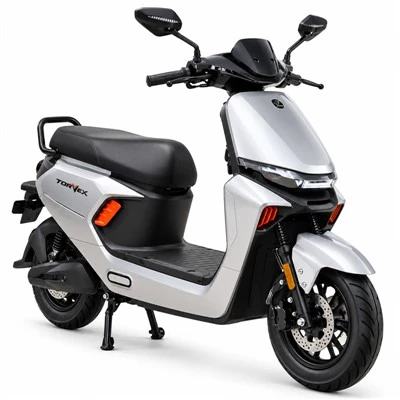
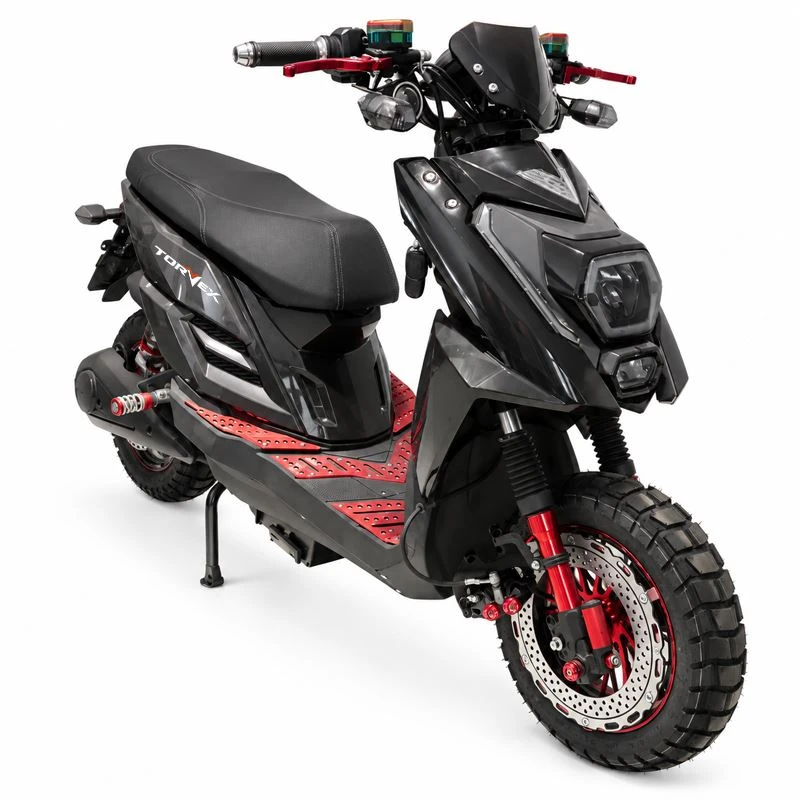

Shandong Tuowei Locomotive Co., Ltd. is one of the most reliable manufacturers and suppliers of 1500w off road electric motorcycle in China. With a professional production team, we are able to meet the needs of the majority of our customers. Welcome to wholesale premium 1500w off road electric motorcycle made in China here from our factory.
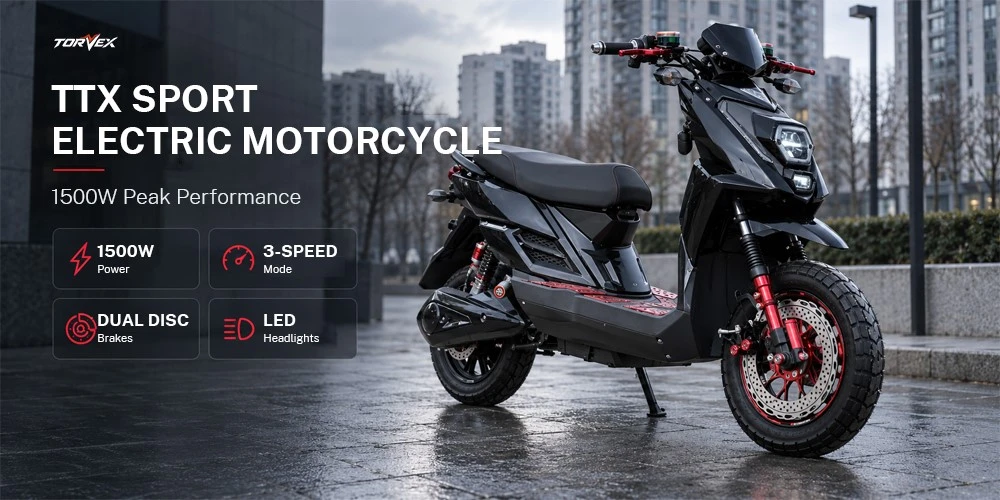
Product Overview
A 1500W Off Road Electric Motorcycle is a closed-course and trail machine rated at 1500 watts continuous motor output, built for motocross, enduro, trail riding and off-road training rather than for road use. It differs from a circuit race machine in every specification that matters off road: long-travel suspension and high ground clearance instead of low-slung stiffness, a chassis designed to absorb impact rather than only to resist flex, knobby tyres and substantial suspension travel instead of slicks and minimal travel, and sealing and protection designed for water, mud, dust and stone impact. It also differs from a combustion off-road machine in the characteristic that changes how it is ridden - full torque from a standstill with no clutch, no gearbox and no need to keep the engine on the boil.
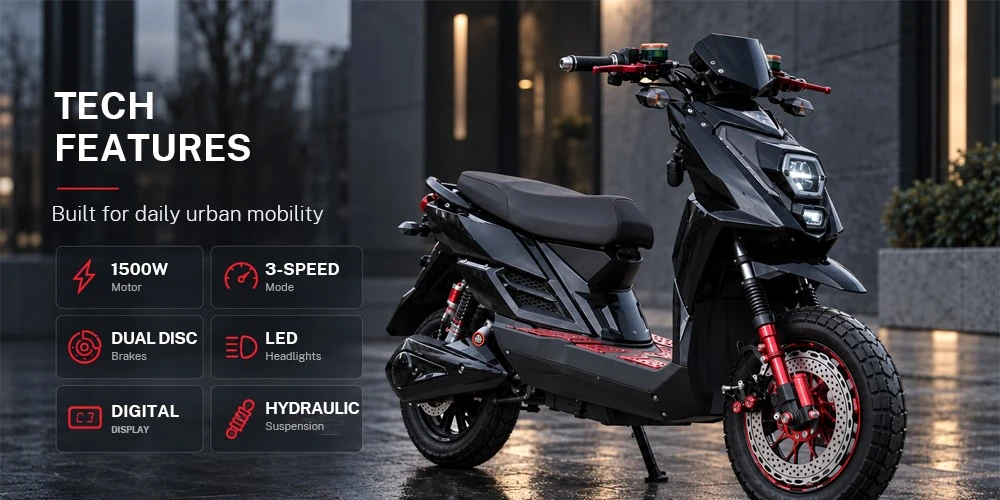
Torque From Zero: Why It Changes How Off-Road Is Ridden
Off-road riding is dominated by low-speed control. A rider picks a line through rocks, climbs a loose slope, or balances through a rutted corner at little more than walking pace, and in every one of those situations what matters is not peak power but whether the machine responds the instant the rider asks for it, cleanly and without disturbing the chassis. This is precisely where an electric drivetrain differs from a combustion one.
A combustion engine produces usable torque only inside a rev band. Below it, the rider slips the clutch to keep the engine from stalling; to accelerate, they change gear, and every gear change is a moment of interruption and weight transfer at exactly the point where the tyre is most loaded. On a loose climb, a mistimed shift breaks traction and stops the machine. An electric motor produces maximum torque from zero rotational speed and delivers it continuously, so the rider modulates drive with the throttle alone. There is no clutch to slip, no gear to select, and no interruption to the contact patch. For a rider learning off-road technique, that removes the two skills that take longest to master and leaves them free to work on line choice, body position and throttle control - which is why training operators find students progress faster on these machines than on equivalent combustion bikes.
Traction on Loose Surfaces: Control, Not Just Power
Fifteen hundred watts on a loose surface sounds like too much, and on a poorly specified machine it is. Power that arrives abruptly breaks traction and the machine slides rather than driving forward. What makes output usable off road is the shape of its delivery and the precision with which the rider can meter it, which is why the controller mapping on this platform is as important as the motor rating.
Delivery is mapped for progressive, predictable response rather than for a hard initial hit, so a rider can feel the point at which the rear tyre is about to lose grip and hold the machine just beneath it. Selectable ride modes let the machine be softened for a novice, for a muddy section or for technical low-speed work, and opened up for faster, more open terrain - a genuine advantage for a rental fleet or a training school, where one machine must serve riders of very different ability across a single day. The mechanical result is that available output becomes something the rider can use rather than something they must manage, and on loose ground that difference is the whole experience.
Chassis: Built to Absorb, Not Only to Resist
An off-road chassis faces loads a road chassis never sees. Landings from jumps, square-edged rocks, ruts that deflect the wheel sideways and sustained vibration from corrugations all impose forces that a stiff, low-slung machine would either transmit to the rider or eventually fail under. The frame is therefore specified with a controlled amount of compliance: rigid enough to steer accurately, yet able to absorb repeated impact rather than resisting it entirely and passing it on.
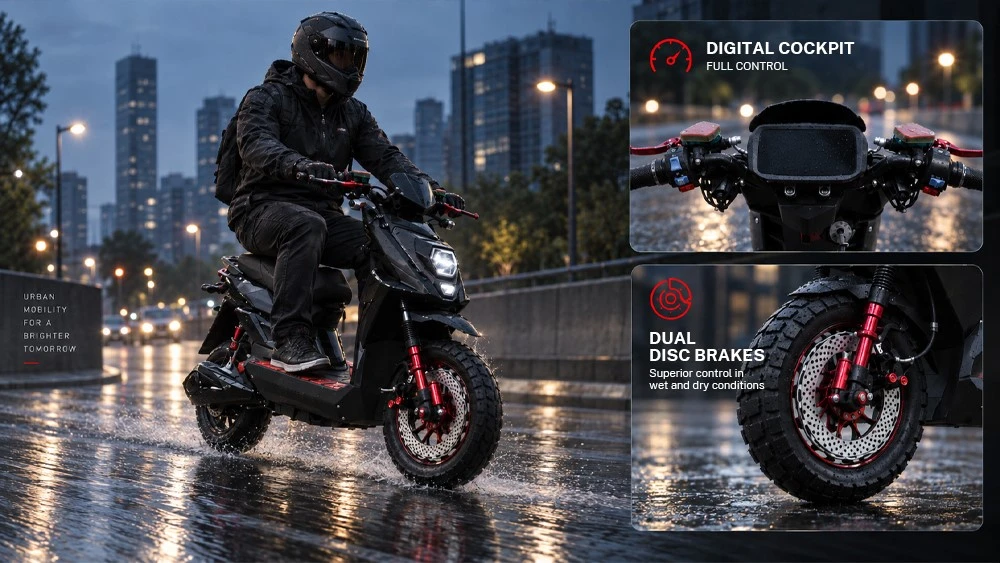
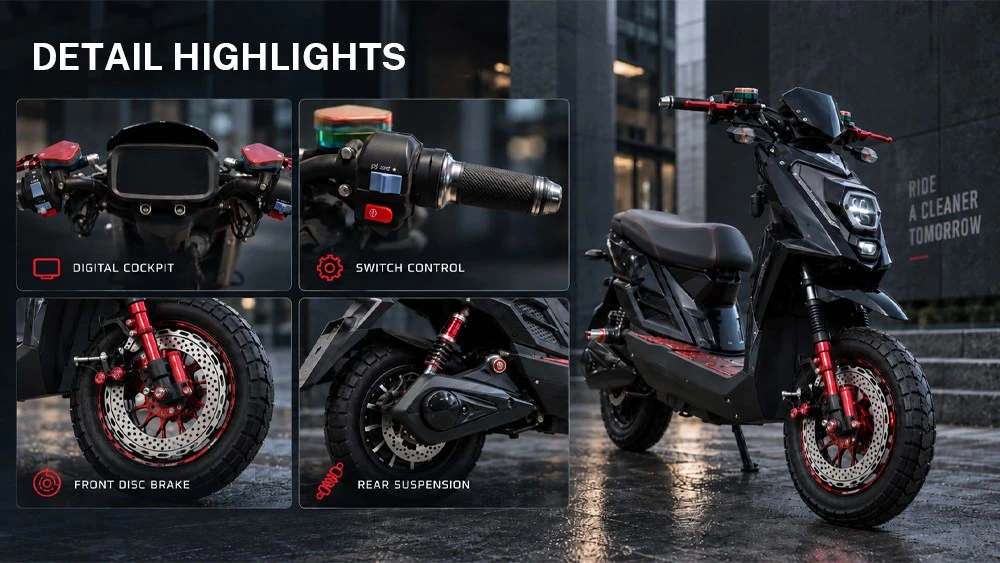
Ground clearance and suspension travel are the visible part of that specification, and both are substantial. Clearance keeps the chassis off rocks, ruts and logs instead of grounding on them; long travel lets the wheels move over an obstacle rather than driving the whole machine over it, which is what keeps the tyres in contact and therefore keeps drive, steering and braking available. The swingarm and rear linkage are specified for strength and for progressive response - stiffening through the stroke so the machine resists bottoming on a hard landing rather than collapsing through its travel. Protection is then built in: a skid plate or bash plate under the motor and battery, because on rocky ground the lowest component is the one that gets struck.
Suspension: Travel, Damping and Setting Up for Rider Mass
Suspension is the specification that most determines how an off-road machine behaves, and two numbers matter more than any other. Travel determines how large an obstacle the wheels can absorb before the suspension reaches the end of its stroke; too little on rocky or rutted ground means the machine is deflected by the terrain rather than riding over it. Damping determines how quickly the suspension moves and returns, and it is split in a way worth understanding because it is where good suspension separates from merely adjustable suspension.
Low-speed damping governs the machine's response to rider inputs - braking, acceleration and weight transfer - and is what controls dive under braking and squat under power. High-speed damping governs its response to terrain - rocks, roots, square edges and landings - and is what prevents the suspension from either blowing through its travel on a hard landing or packing down and losing travel over a series of hits. Both ends of this machine are adjustable across both ranges, and preload is adjustable so sag can be set for rider mass. That matters commercially as well as dynamically: a rental fleet or a training school serving riders with a wide weight spread can set one machine up correctly for each rider rather than stocking multiple chassis specifications.
Sealing: The Specification That Decides Whether It Survives
Off-road is a hostile environment for electrics in a way buyers frequently underestimate. Water crossings, mud, pressure washing, dust and stone impact attack the three things a road machine can largely take for granted: connectors, the battery enclosure and the motor. A machine with good sealing and a poorly sealed connector is a machine that stops in the first deep puddle, and the failure is intermittent and difficult to diagnose, which is the worst kind.
This platform is specified accordingly. Connectors are sealed multi-pin types with positive latches rather than open spade terminals, wiring is routed away from impact and abrasion points and secured against the vibration that loosens everything, and the battery and motor enclosures carry an ingress protection rating appropriate to submersion and pressure washing rather than to light rain. The battery is mounted low and protected, because it is both the heaviest and the most expensive component on the machine. Sealing is also a maintenance item rather than a permanent condition - seals and gaskets age, and a pressure washer held too close will force water past a seal that would survive a river crossing - so the maintenance schedule covers inspection rather than leaving an operator to discover it at the worst moment.
Battery: Discharge Duty, Range and the Reality of Off-Road Use
Off-road riding places a demanding and unusual load on a battery. Unlike road riding, where current draw is relatively steady, trail and motocross use produces repeated high-current bursts - every acceleration out of a corner, every climb, every recovery from a stall - separated by periods of low demand. That is a hard duty cycle, and it is why the pack is specified for continuous discharge capability rather than for capacity alone. A pack that cannot supply the current will sag in voltage, trip its protection and cut out with energy still in the cells, which on a hill is both frustrating and unsafe.
Range then depends on terrain far more sharply than on a road machine. Soft ground, sand, repeated climbs and low-speed technical work all consume energy disproportionately because the machine is constantly accelerating its own mass and fighting rolling resistance that a road rider never meets. We publish figures on a stated test basis and advise operators to plan conservatively - for a training school or a rental fleet, the practical approach is to specify capacity from the longest session rather than the average one and to charge between sessions as routine. The pack is removable so it can be charged away from the machine, and a second pack turns a single machine into a full day of operation without a long charging pause.
Weight Distribution and the Low-Speed Balance Question
An electric off-road machine carries its mass differently from a combustion one. The heaviest component - the battery - sits low in the frame rather than high in a fuel tank, and there is no engine mass high in the chassis. That lowers the centre of gravity, which is a genuine advantage off road: the machine is easier to balance at walking pace, less prone to falling into a turn, and more forgiving when a rider has to put a foot down on a slope.
The honest counterweight is total mass. A battery pack with usable capacity weighs more than a tank of fuel, and on a machine that must be picked up after a fall, lifted onto a stand and manhandled over obstacles, that is felt directly. Good design mitigates it - mass placed low and central, a slim layout that does not obstruct the rider's movement, and enough clearance that the extra weight does not ground the chassis - but it should be stated rather than denied. Riders who come from lightweight combustion machines notice it in the first ten minutes and adapt to it within the first hour; the trade they accept is the absence of a gearbox, the absence of a clutch and the delivery characteristics described earlier.
Noise, Access and the Venue Argument
Silence is often presented as an environmental benefit, and it is, but the commercial argument is stronger and more immediate than that. Noise is the single most common reason off-road venues are restricted, curtailed or closed. Combustion machines are excluded from land near residential areas, from many forestry and estate routes, from indoor and urban facilities entirely, and from a growing number of outdoor venues with noise limits or restricted hours. A silent machine removes that constraint at a stroke.
For a training school, a rental operator or an experience business, this is frequently the decisive commercial factor: it opens venues that competitors cannot access, and those venues are often closer to population centres, available more days a week and cheaper to secure. It also improves the working environment for instructors, who can speak to a student without shouting or radio equipment, which materially improves how quickly a novice learns. The one drawback is worth stating plainly: in a group, riders can no longer hear a machine approaching from behind. On a shared trail or training loop that is a real consideration, and it is managed by briefing riders, controlling group spacing, and using a visible indicator where a venue requires one.
Running Cost and Fleet Duty
For an operator running machines every day, the maintenance argument is decisive and easily quantified. There is no fuel to buy, store or handle; no oil or filter changes; no air filter to clean after every dusty ride, which on a combustion off-road machine is the single most frequent service task; no spark plug, no carburettor jetting for altitude or temperature, no clutch plates, no gearbox oil and no top-end rebuild interval. A combustion off-road machine used commercially is a high-maintenance asset; an electric one is not.
What remains is straightforward and largely predictable: suspension service at stated intervals, chain and sprocket or drive components, brake pads, tyres, bearings and periodic battery care. Air filter cleaning disappears entirely, which in dusty off-road conditions removes the most labour-intensive item on the schedule. Consumables are specified in common formats, and we supply a wear-parts schedule with bulk orders so an operator can plan rather than react. For a fleet, the combination of far lower servicing, no fuel logistics and the ability to access restricted venues is what determines whether the operation is viable in a given location at all.
Manufacturing and Export Credibility
- Torvex is manufactured by Shandong Tuowei Motorcycle Co., Ltd., established in 2000 and based in Zichuan Advanced Manufacturing Industrial City, Zibo, Shandong. The company has concentrated on off-road motorcycles for more than two decades, and assembly covers frame welding and inspection, precision component fitting, motor and controller installation, wheel building, suspension installation, wiring and sealing, and end-of-line inspection. Battery packs are checked for cell balance, capacity and discharge performance before being matched to a machine, and every completed unit is tested for drive output, throttle response, braking performance at both wheels, suspension operation, electrical circuits and a simulated running check before release for loading.
- We hold full import and export qualifications and ship to markets across Southeast Asia, Africa, the Middle East, South America and Eastern Europe, with battery and charger configurations specified for the destination's voltage and plug standard. Machines are supplied prepared for closed-course or trail use as your market requires, and we confirm the applicable requirements before production. OEM and ODM programmes cover body colour, seat material, decal design, logo application and accessory packages such as skid plates, handguards and racks, with packing configured for efficient container loading.
Typical Applications
Motocross and enduro training schools and coaching programmes
Trail riding, forestry and estate routes with noise restrictions
Off-road rental fleets and experience-day operations
Indoor, urban and noise-restricted off-road facilities
Ranch, farm and large-site patrol and utility work

Call to Action
Running an off-road operation where noise, maintenance or venue access is the constraint? Source a machine built for those conditions. Torvex supplies the 1500W Off Road Electric Motorcycle with ride-mode mapping, destination-specific battery and charger configuration, OEM/ODM colour, seat and branding programmes, and consolidated container loading. Tell us your annual volume, session length, terrain and rider profile, and our export team will return a specification sheet, an FOB quotation and a recommended wear-parts package - or arrange a live video walkthrough of the assembly line.
FAQ
Is 1500W too much power for loose or muddy ground?
Not when delivery is mapped for it, which is the specification that matters off road. Power that arrives abruptly breaks traction; power that arrives progressively lets a rider feel the limit and hold the machine just beneath it. This platform offers selectable ride modes, so one machine can be softened for a novice or a technical section and opened up for faster terrain - which is why rental fleets and schools find it serves a wide ability range in a single day.
How does it compare with a combustion off-road bike to ride?
The defining difference is drivability at low speed. A combustion engine needs clutch slip and gear selection to stay in its power band, and each shift interrupts drive and disturbs the chassis. An electric motor gives maximum torque from zero, so drive is metered with the throttle alone - no clutch, no gearbox, no interruption. Students typically progress faster because the two hardest skills are removed.
Can it handle water, mud and pressure washing?
Yes, by design rather than by chance. Connectors are sealed multi-pin types with positive latches, wiring is routed away from abrasion and secured against vibration, and the battery and motor enclosures carry an ingress protection rating appropriate to submersion and washing. Sealing is also a maintenance item - gaskets age, and a pressure washer held too close will force water past a seal that would survive a river crossing, so inspection is scheduled.
What range can we expect in off-road conditions?
Materially less than an equivalent road machine, because soft ground, sand, repeated climbs and low-speed technical work consume energy disproportionately. Off-road draw is also bursty rather than steady, so the pack is specified for discharge capability as well as capacity. Plan from the longest session rather than the average one, charge between sessions as routine, and consider a second pack for continuous operation.
Is it heavier than a combustion machine, and does that matter?
Yes, and we would rather say so. A usable battery weighs more than a tank of fuel, and it is felt when picking the machine up after a fall or lifting it onto a stand. Mass is placed low, which lowers the centre of gravity and improves low-speed balance, and the slim layout does not obstruct rider movement. Most riders notice it in the first ten minutes and adapt within the first hour.
What maintenance does it need compared with a petrol bike?
Far less, and this is the strongest argument for fleet use. There is no fuel, oil, filter, spark plug, carburettor jetting, clutch or gearbox oil - and no air filter cleaning after every dusty ride, which is the most frequent service task on a combustion off-road machine. What remains is suspension service, drive components, brake pads, tyres, bearings and periodic battery care.
Hot Tags: 1500w off road electric motorcycle, China 1500w off road electric motorcycle manufacturers, suppliers, factory