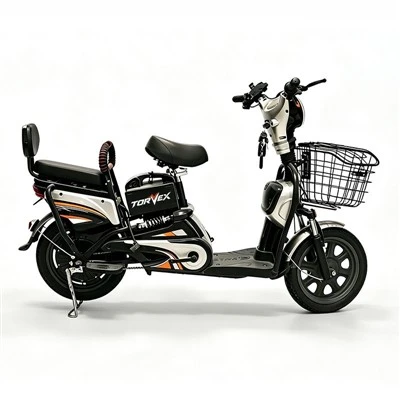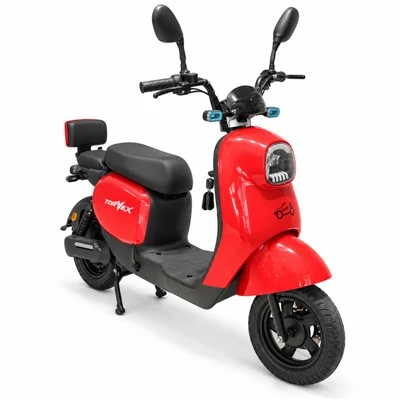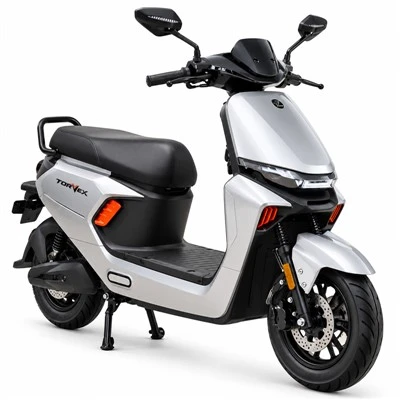
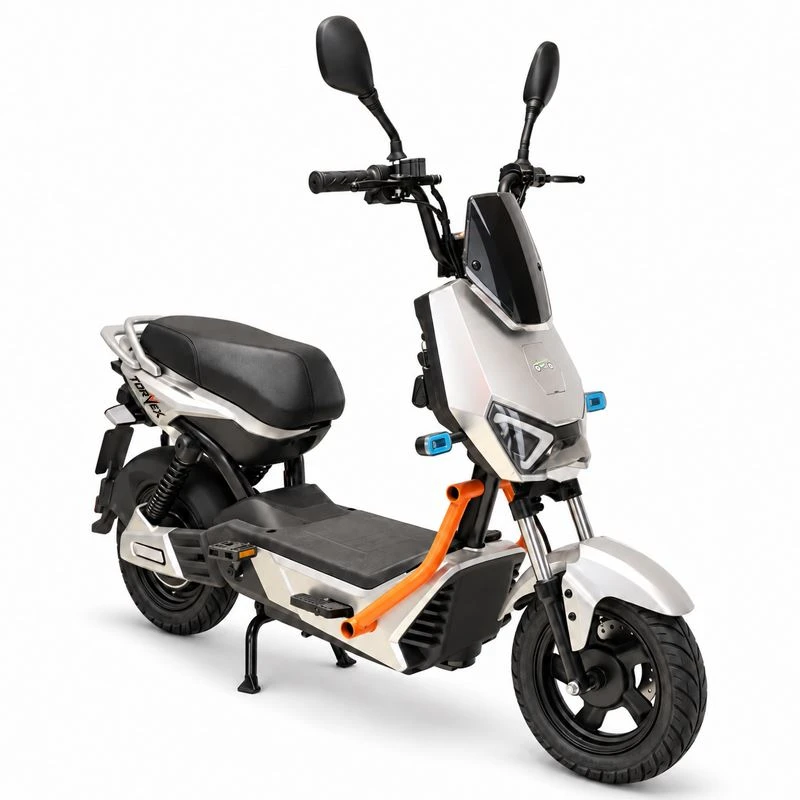

Shandong Tuowei Locomotive Co., Ltd. is one of the most reliable manufacturers and suppliers of 500w long range electric moped in China. With a professional production team, we are able to meet the needs of the majority of our customers. Welcome to wholesale premium 500w long range electric moped made in China here from our factory.
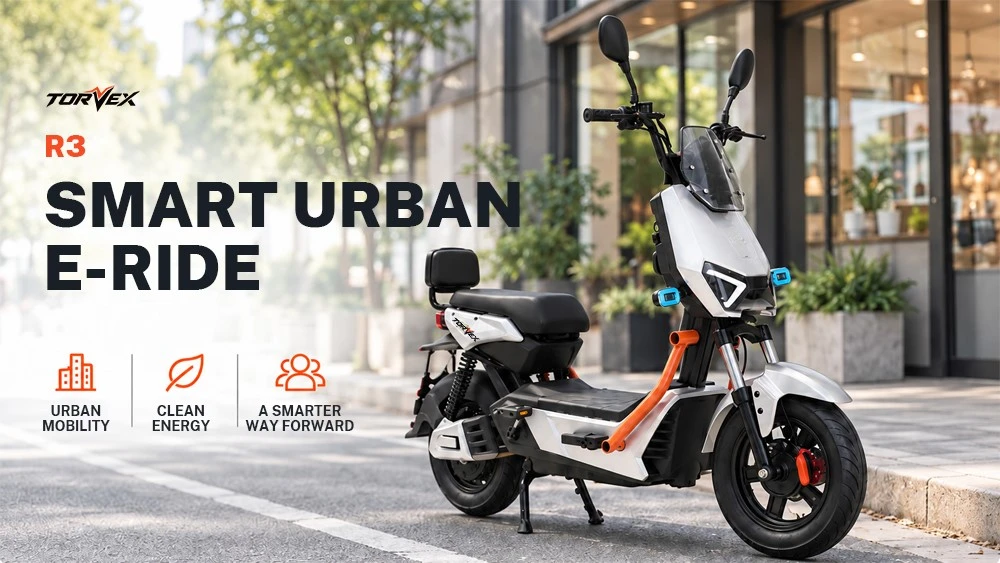
Product Overview
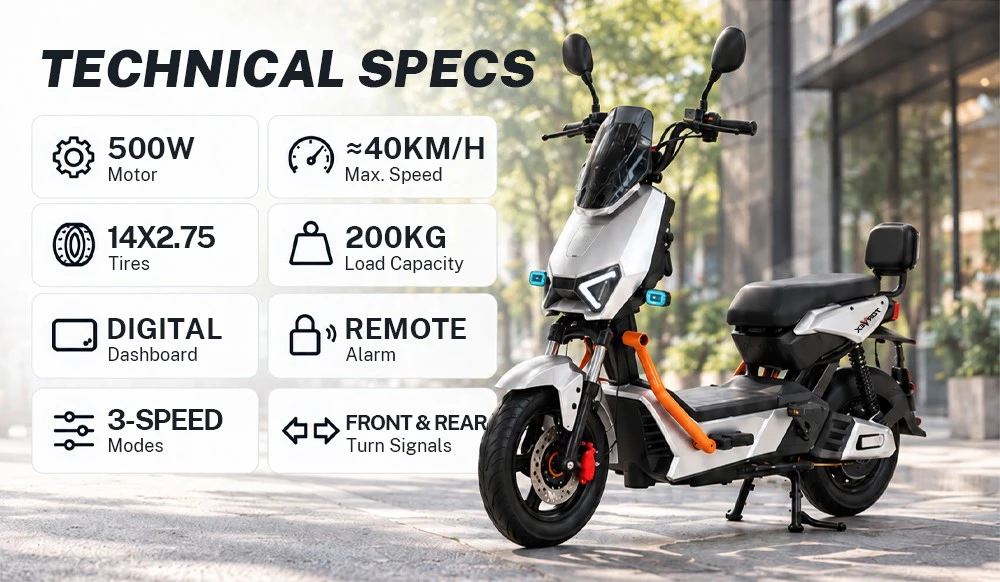
A 500W Long Range Electric Moped is a throttle-driven two-wheeled electric vehicle rated at 500 watts continuous motor output, specified around maximum distance per charge rather than around acceleration or top speed. Achieving that objective requires more than fitting a larger battery: it requires the whole vehicle to be engineered for low energy consumption per kilometre - a pack sized with genuine usable capacity, a battery management system that allows that capacity to be accessed safely, gearing and tyres chosen for low rolling resistance, and a motor operated inside its efficient band. It sits in the powered two-wheeler class rather than the pedal-assist bicycle class, and it is aimed at long commutes, peri-urban routes and delivery shifts where recharging mid-day is impractical.
Range Is Won Four Times Over, Not Bought Once
The most common mistake in this category is treating range as a battery specification. It is not; it is a vehicle specification. Distance is determined by how much energy the pack can deliver and by how much the vehicle consumes per kilometre, and consumption is set by four things in combination: the mass that must be accelerated, the rolling resistance of the tyres, the aerodynamic drag at the speed actually ridden, and the efficiency with which the motor and controller convert stored energy into motion. Improving only the first while ignoring the other three produces a heavier vehicle whose extra battery is partly spent carrying itself.
This platform is therefore engineered on all four. The pack is high capacity, but the vehicle is also specified with low-rolling-resistance tyres at correct pressure, gearing that lets the motor sit inside its efficient band at the speeds a rider actually holds, and conservative mass elsewhere in the build. The compounding is what matters: a modest saving in each of four areas produces more real distance than a large gain in one. It is also why a long-range machine with a slightly smaller battery can out-perform a standard machine with a larger one - and why we quote range against a stated duty cycle rather than as a single flattering number.
Usable Capacity: Depth of Discharge, and the Number Nobody Prints
Battery capacity is quoted in ampere-hours or watt-hours, and that figure alone is misleading in a specific and predictable way. A pack cannot be discharged to zero without damaging it, so the battery management system defines a cut-off point; the capacity available to the rider is the figure between full and that cut-off. Two packs of identical nameplate capacity can therefore deliver materially different real range depending on how conservatively the system is set, and the difference rarely appears on a specification sheet.
There is a genuine engineering tension here, and buyers deserve it stated plainly. Allowing deeper discharge gives more distance today and shortens pack life, because deep cycles accelerate the chemical ageing of the cells. Restricting discharge shortens today's range and extends the number of cycles the pack will deliver. We set the window for long service life rather than for a brochure figure, and we publish cycle life on a defined test basis with the conditions stated, so a fleet operator can forecast replacement cost accurately rather than discovering it in year two. For commercial buyers that trade-off is almost always worth making: a pack that lasts twice as long costs less per kilometre even if it goes slightly less far per charge.

Discharge Rate, Voltage Sag and Why Range Collapses Under Load
There is a second battery specification that determines real range and is almost never discussed: continuous discharge capability. Capacity describes how much energy is stored; discharge rating describes how much of it can be drawn at once. When a vehicle demands more current than a pack is comfortably rated for, terminal voltage sags under load, the management system's low-voltage protection trips, and the vehicle cuts out with energy still chemically present in the cells. Riders experience this as a machine that shows charge remaining and then dies on a hill - one of the most damaging failure modes for a brand, because it looks like dishonesty even when it is physics.
Preventing it requires three things matching: a pack rated for the current the duty cycle actually demands, conductors and connectors sized so resistance does not add to the sag, and a controller that limits current smoothly rather than letting the pack collapse and the protection cut in. On this platform the pack, the wiring and the controller are specified together rather than assembled from separately sourced parts, which is what allows a rider to use the capacity they have paid for. It matters most on exactly the routes this machine is built for - a long climb at the end of a long day, when the pack is already partly discharged and the demand is highest.
The Consumption Side: Tyres, Pressure and Gearing
Energy leaves a vehicle in three ways that an operator can influence, and the first is rolling resistance - the energy consumed deforming the tyre as it rolls. It is governed by casing construction, tread compound, width and, above all, pressure. An under-inflated tyre can consume substantially more energy per kilometre than the same tyre at the correct pressure, and on a vehicle doing hundreds of kilometres a week that difference is paid for repeatedly. This is why we specify a low-resistance tyre and treat pressure as a maintenance item, with the correct figure marked and included in the schedule rather than left to guesswork.
Gearing is the second lever and the one most often ignored. An electric motor has a band of speeds at which it converts electrical energy into mechanical work most efficiently; operate it well below that band, as on a steep climb in too high a gear, or well above it, and a larger share of the energy becomes heat in the windings rather than motion at the wheel. Matching the drive ratio to the speeds the vehicle actually holds keeps the motor in its efficient zone for more of the journey. Aerodynamic drag is the third, and it rises steeply with speed: the energy needed to overcome air resistance increases far faster than speed itself, which is why the same machine ridden at a moderate, steady pace covers considerably more distance than one ridden hard between stops.
Regenerative Braking, and an Honest Account of What It Returns
Where specified, regenerative braking recovers a portion of the vehicle's kinetic energy during deceleration and returns it to the pack. It is genuinely useful on a hilly route or in stop-start traffic, and it also reduces brake pad wear, which is a real saving for a fleet. What it does not do is recover most of the energy spent: conversion losses occur in both directions, and only the energy that would otherwise have been lost to the brakes is available to capture. Claims of large range gains from regeneration should be treated with scepticism.
A realistic expectation is a modest but worthwhile return, greatest on routes with frequent deceleration or long descents and negligible on a steady cruise. We state it that way because overpromising is how a distributor ends up with warranty disputes rather than repeat orders. Regenerative braking is also tuned for feel rather than for maximum recovery: an aggressive setting produces a harsh, abrupt deceleration that unsettles riders and is the wrong characteristic on a vehicle meant to be ridden all day. Where a market or a customer does not require it, a non-regenerative specification is simpler and slightly cheaper, and we will say so rather than sell the feature regardless.
Charging Practice: The Part of Range That Riders Control
How a pack is charged determines how much range it delivers years later, and this is the part of the equation that belongs to the operator rather than to the factory. Routinely charging to full and leaving the vehicle at full charge for long periods accelerates cell ageing, as does repeatedly discharging to the cut-off before recharging. Charging a cold pack immediately after winter use is a specific and avoidable cause of damage, and one our battery management system guards against by monitoring temperature. Fast charging, where available, trades convenience for a modest reduction in long-term capacity.
The practical guidance we give fleet operators is straightforward and worth passing to customers: charge routinely to a high but not maximum level where the usage pattern allows it, avoid leaving a vehicle at full charge unused for days, recharge before the pack is deeply discharged rather than after, and store at a partial state of charge if the vehicle will stand for weeks. None of this requires specialist equipment - the supplied charger manages the process - and the battery management system enforces the safety limits regardless. What it does require is that the guidance reaches the rider, which is why it is included in the manual and in the fleet checklist we supply with bulk orders.
Sizing the Vehicle to the Route, Rather Than to the Brochure
For a distributor, the commercial question is not which machine has the largest number but which machine finishes the customer's route. A rider covering twenty kilometres a day on flat ground has a very different requirement from one covering sixty with a passenger and a sustained climb, and specifying both to the same nominal figure produces one satisfied customer and one complaint. We therefore ask for the duty cycle before quoting: distance per shift, total climb, typical payload, rider mass, ambient temperature range, and whether the vehicle can be opportunity-charged between runs.
From that we recommend a pack size and a specification, and we give a planning figure conservatively rather than optimistically, because a customer who achieves more than they were promised becomes a repeat buyer and one who achieves less becomes a warranty claim. Where a fleet's longest shift exceeds what one charge comfortably covers, the honest answer is sometimes to plan for a battery swap or a mid-shift charge rather than to fit an ever-larger pack - an approach that keeps vehicle mass, cost and charge time sensible. We would rather design the route around the vehicle than sell a specification that only works on paper.
Manufacturing and Export Credibility
Torvex is manufactured by Shandong Tuowei Motorcycle Co., Ltd., established in 2000 and based in Zichuan Advanced Manufacturing Industrial City, Zibo, Shandong. Assembly covers frame welding and inspection, precision component fitting, motor and controller installation, wheel building, wiring and lighting installation, and end-of-line inspection. Battery packs are checked for cell balance, capacity and discharge performance before being matched to a vehicle, and every completed machine is tested for drive function, throttle response, braking performance, lighting and signalling, electrical circuits and a simulated running check before release for loading.
We hold full import and export qualifications and ship to markets across Southeast Asia, Africa, the Middle East, South America and Eastern Europe, with battery and charger configurations specified for the destination's voltage and plug standard. Lighting, mirrors, speedometer and any registration-dependent equipment are confirmed against destination requirements before production. OEM and ODM programmes cover body colour, seat material, decal design, logo application and accessory packages such as top boxes, racks and baskets, with packing configured for efficient container loading.
Typical Applications
Long daily commutes across urban and peri-urban districts
Delivery and courier shifts too long for a mid-day recharge
Rural and inter-town routes where charging points are sparse
Rental fleets where vehicles must serve several users per day
Territories with hot or cold extremes affecting battery performance

Call to Action
Supplying riders whose problem is distance, not speed? Let us size the vehicle to the route. Torvex supplies the 500W Long Range Electric Moped with pack capacity specified to your duty cycle, destination-specific battery and charger configuration, OEM/ODM colour, seat and branding programmes, and consolidated container loading. Tell us your annual volume, target retail price and the distance, climb and payload your riders actually cover, and our export team will return a specification sheet, an FOB quotation and a recommended spare parts package - or arrange a live video walkthrough of the assembly line.
FAQ
Q: How do you achieve longer range - a bigger battery alone?
A: No, and this is the most common misconception. Range is a vehicle specification, not a battery one. Distance depends on stored energy and on consumption per kilometre, and consumption is set by mass, tyre rolling resistance, drag at the speed actually ridden, and how efficiently the motor converts energy. We improve all four, which is why a long-range machine with a slightly smaller pack can outperform a standard machine with a larger one.
Q: Does the quoted capacity equal usable capacity?
A: Not exactly, and buyers should ask. A pack cannot be discharged to zero without damage, so usable capacity is the figure between full and the management system's cut-off. We set that window for long service life rather than for a brochure figure and publish cycle life on a stated test basis, so a fleet operator can forecast replacement cost rather than discover it in year two.
Q: Why do some mopeds cut out with charge still showing?
A: Voltage sag under load. If a vehicle demands more current than the pack is comfortably rated for, terminal voltage drops and low-voltage protection trips with energy still present in the cells. Preventing it requires a pack rated for the duty cycle, conductors and connectors sized to limit resistance, and a controller that limits current smoothly - specified together rather than assembled from separate parts.
Q: How much does regenerative braking actually add?
A: A modest but worthwhile return, greatest on routes with frequent deceleration or long descents and negligible on a steady cruise. Conversion losses occur in both directions and only energy that would otherwise be lost to the brakes can be captured, so treat large claims sceptically. It also reduces brake pad wear, which is a genuine fleet saving.
Q: How should our riders charge to protect the battery?
A: Avoid routinely charging to absolute full and leaving the vehicle standing at full for days, recharge before the pack is deeply discharged rather than after, and do not charge a cold pack straight after winter use - the management system guards against the last one. Fast charging trades convenience for a modest reduction in long-term capacity. This guidance is in the manual and in our fleet checklist.
Q: Can you size the vehicle to our specific route?
A: Yes, and we prefer to. Send distance per shift, total climb, typical payload, rider mass, ambient temperature range and whether opportunity charging is possible, and we will recommend pack size and specification with a conservative planning figure. Where one charge genuinely cannot cover the longest shift, we will say so and discuss a swap or mid-shift charge rather than oversize the pack.
Hot Tags: 500w long range electric moped, China 500w long range electric moped manufacturers, suppliers, factory