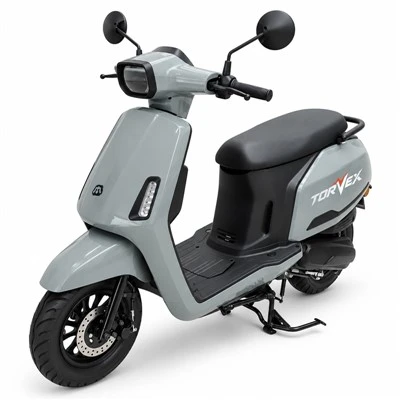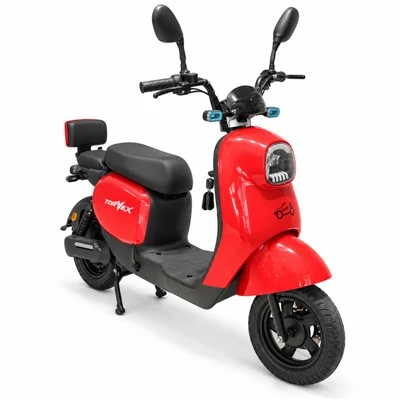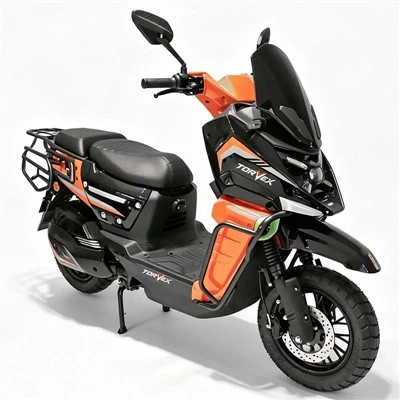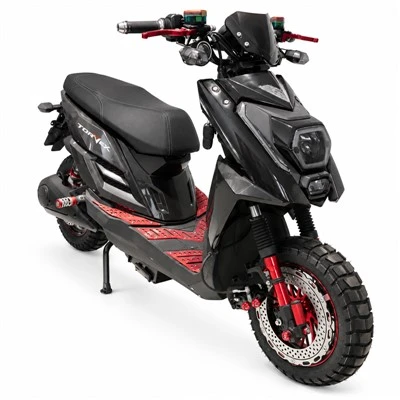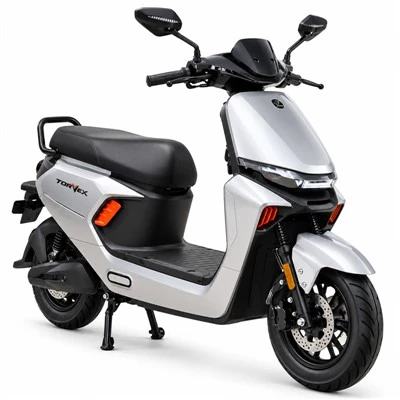
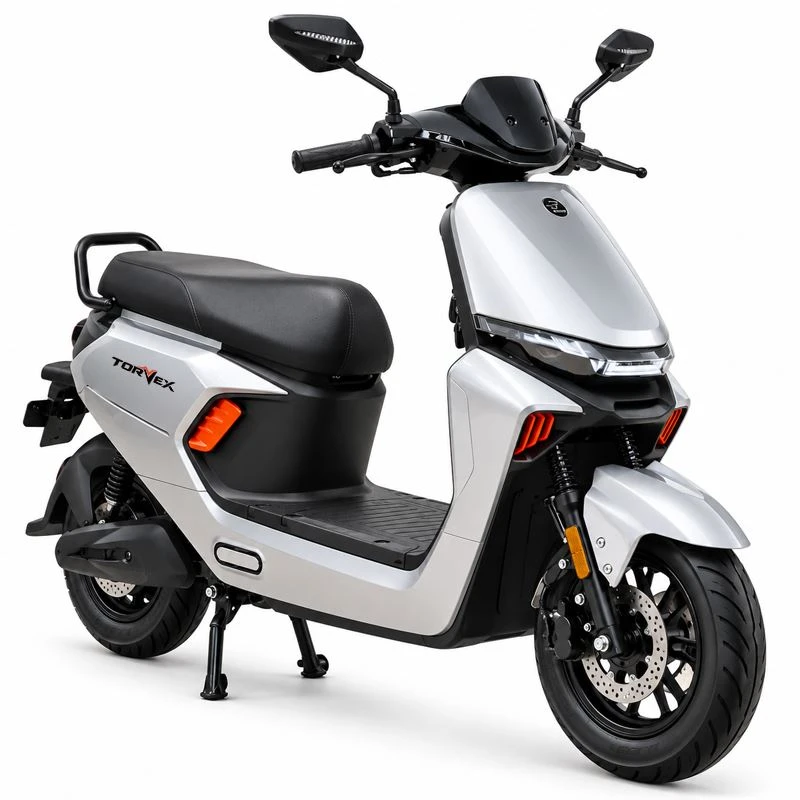

Shandong Tuowei Locomotive Co., Ltd. is one of the most reliable manufacturers and suppliers of 1000w high speed electric motorcycle in China. With a professional production team, we are able to meet the needs of the majority of our customers. Welcome to wholesale premium 1000w high speed electric motorcycle made in China here from our factory.
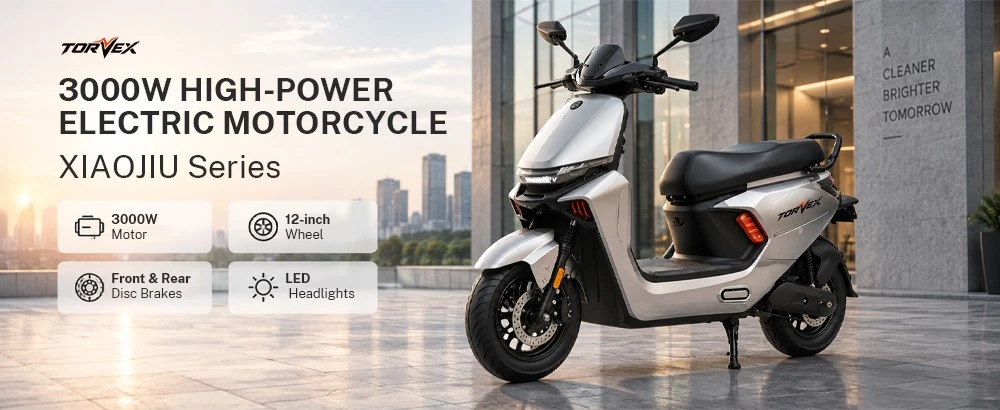
Product Overview
A 1000W High Speed Electric Motorcycle is a throttle-driven electric two-wheeler rated at 1000 watts continuous motor output and engineered to hold genuinely higher speeds rather than merely to reach them briefly. That objective makes it a different machine from a comparable-output scooter: at sustained speed, aerodynamic drag becomes the dominant energy cost, stability becomes a chassis requirement rather than a preference, and braking capacity becomes the specification that governs everything else. It sits in the powered two-wheeler registration and licence class in effectively every market, and it is aimed at riders covering longer distances on open roads, peri-urban commuters on faster routes, and operators whose users expect a machine that keeps up with traffic rather than one that is overtaken by it.
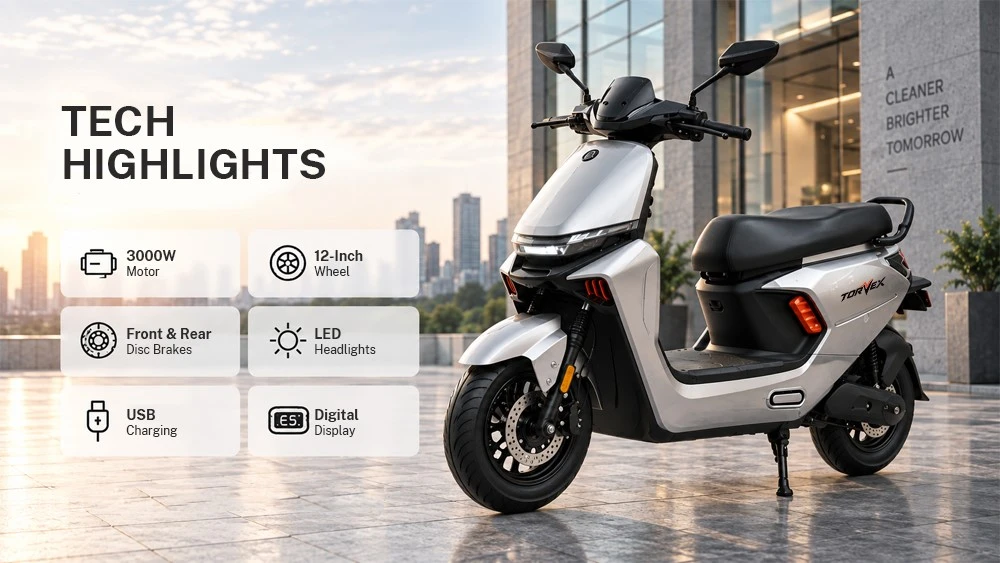
Speed Is an Energy Problem Before It Is a Motor Problem
The most useful thing a buyer can understand about a high-speed electric machine is where its energy actually goes. At walking pace, almost all of a vehicle's effort goes into overcoming rolling resistance and accelerating its own mass. As speed rises, that changes completely: aerodynamic drag grows with the square of speed, and the power needed to overcome it grows with the cube. Doubling the speed therefore requires roughly eight times the power to push the same machine through the same air.
This has two consequences that shape the whole specification. The first is that top speed and range are in direct tension - a machine ridden at its maximum will consume energy dramatically faster than the same machine ridden moderately, so a high-speed machine must carry a battery sized for the speeds its riders will actually hold, not for a test-condition figure. The second is that motor output beyond a certain point buys increasingly little speed for increasingly much energy, which is why the engineering focus on this platform is on sustaining speed efficiently - through gearing that keeps the motor in its efficient band, a riding position and bodywork that manage airflow, and a battery and controller able to deliver sustained current without voltage collapse - rather than on chasing a headline number.
Continuous Output and Thermal Stability at Sustained Speed
A high-speed machine holds its motor at high load for long periods, and that is the condition under which electric drivetrains are most stressed. A peak power figure describes what a motor produces for seconds before its windings heat; it says nothing about whether the machine can hold speed for half an hour on an open road. This platform is rated at 1000 watts continuous - the output it sustains indefinitely within its thermal limit - with a controller programmed to manage current before the motor exceeds that envelope rather than to let it overheat and cut out.
The mechanism is worth stating plainly, because it explains why cheap high-speed machines lose performance. Sustained winding heat degrades insulation and permanently weakens a hub motor's magnets, so a machine regularly run beyond its thermal capability does not fail dramatically - it quietly becomes slower over months, and the rider concludes the battery has aged when the motor has. Preventing that requires a motor with adequate copper and magnet mass for the rated output, a controller that manages current deliberately, and a battery capable of supplying the sustained current without excessive voltage sag. On this machine the three are specified together rather than assembled from separately sourced parts.
Battery: Discharge Capability Governs Whether the Speed Is Usable
On a high-speed machine, the battery specification that matters most is often not capacity but continuous discharge capability. Capacity determines how much energy is stored; discharge rating determines how much can be drawn at once. Sustained high-speed riding demands high continuous current, and a pack that cannot supply it will sag in voltage under load, trip its low-voltage protection and cut the machine out with energy still chemically present in the cells.
Riders experience that as a motorcycle that performs well for the first part of a journey and then loses power or stops, and it is one of the most damaging failure modes a brand can have, because it looks like a defect even though it is a specification mismatch. We therefore size the pack to the duty cycle - asking about the speeds riders actually hold, the distance per trip, the terrain and whether opportunity charging is available - and we quote a conservative planning figure rather than an optimistic one. Where a route genuinely requires more than one charge can deliver, we will say so and discuss a swap or mid-route charge rather than oversizing the pack into diminishing returns.
Chassis Stability: Straight-Line Composure at Speed
Stability ceases to be a comfort question once a machine holds higher speeds; it becomes the characteristic that determines whether the rider can use the performance at all. Two geometric quantities govern it. The first is trail - the distance by which the front tyre's contact point trails behind the point where the steering axis meets the ground. Trail creates a self-centring force: when the wheel deviates from straight ahead, the contact patch acting behind the steering axis generates a moment that returns it. Enough trail makes a machine track straight with minimal rider input; too little makes it nervous and demanding.
The second is weight distribution and centre of gravity. A battery mounted low in the frame lowers the centre of mass, which reduces the effort required to change direction and makes a machine feel lighter than it is, while a long enough wheelbase resists the pitching that unsettles a short machine over undulating surfaces. Together these give a high-speed electric motorcycle the quality riders describe as composure: the machine holds its line, is not disturbed by crosswinds or road camber, and does not require constant correction. That composure is what allows a rider to sustain speed comfortably rather than merely tolerate it, and on a machine built for distance it is worth more than a few kilometres per hour at the top end.
Braking: The Specification That Speed Makes Non-Negotiable
The energy a braking system must convert into heat rises with mass and with the square of speed, so a machine built to sustain higher speeds needs braking capacity that is specified for that condition rather than inherited from a slower model. This is not a matter of preference. Brakes sized for urban speeds that are asked to stop repeatedly from highway pace will overheat, fade, and eventually fail - and fade is progressive, so a rider discovers it at precisely the moment they need full performance.
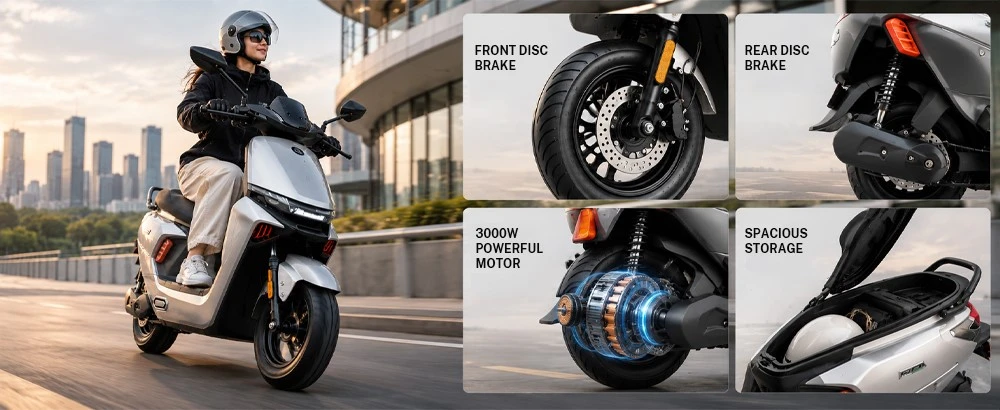
This platform therefore uses disc brakes front and rear, with rotor diameter and caliper specification selected for the machine's mass and the speeds it holds. A larger rotor does two things at once: it increases the lever arm through which the caliper acts, producing more braking torque for the same hand force, and it provides more area over which to dissipate heat, which is what resists fade over repeated stops. Pad compound is chosen for performance and durability at temperature rather than only for longevity. The supplied guidance covers using both brakes together and modulating for weight transfer, because the front contributes the majority of stopping force while the rear provides balance, and at higher speeds that balance matters more, not less.
Tyres, Wheels and the Contact Patch at Speed
At sustained speed, the tyre is the component that determines whether the machine's performance can be used at all. Speed rating matters first: a tyre is engineered for a maximum sustained speed, and one specified below the machine's capability is a safety defect rather than a cost saving. Load rating matters equally, because a machine carrying a rider, a battery and the dynamic loads of faster riding places more demand on the casing than an urban scooter does.
Wheel size and construction then determine how the machine behaves. A larger-diameter wheel rolls over surface irregularities rather than climbing them, resists deflection under braking and cornering loads, and provides a more stable contact patch at speed - which is why a high-speed machine uses a larger wheel than a compact city model rather than accepting the packaging convenience of a small one. Construction matters too: a stiffer carcass and a rim with adequate section resist the flexing that a soft wheel introduces when a rider commits to a line. Pressure is then a maintenance item rather than a preference, because an under-inflated tyre at sustained speed overheats, and overheating is what causes a casing failure.
Riding Position, Aerodynamics and Rider Fatigue
Sustained speed costs the rider energy as well as the battery, and the dominant factor is aerodynamic drag acting on the rider, who presents far more frontal area than the machine itself. A slightly forward-leaning posture reduces that area substantially, which at sustained speed translates directly into more range and less effort spent holding the machine against the wind. It also settles the rider's weight over the machine, which improves stability in a crosswind and reduces the buffeting that fatigues a rider over a long journey.
The trade is honest and worth stating to customers: a more committed posture is less comfortable at walking pace and in dense traffic than a fully upright one, and it places a little more weight through the wrists. On a machine intended for open-road and faster peri-urban routes, the trade favours the forward posture; on a machine whose entire life is stop-start city work, an upright machine is the better specification. We build both, and we would rather guide a distributor to the correct one than claim that a single geometry suits every route - the same reasoning we apply when advising on wheel and suspension specification elsewhere in the range.
Compliance: Registration, Licence and Equipment
A machine at this output and capability sits in the powered two-wheeler registration and licence class in effectively every market, requiring registration, insurance, a helmet, a minimum rider age and, in most jurisdictions, a licence category. That is not an obstacle to be worked around; it is the reason the machine may legally be ridden at the speeds it is built for. Buyers should be told this clearly at the point of sale, because a customer who discovers the requirement at a registration office becomes a complaint rather than a repeat buyer, and a distributor's reputation is built on the accuracy of what the showroom says.
The vehicle is therefore supplied equipped and documented for the destination. Lighting is a full road set - headlamp with a defined beam pattern, tail lamp, a brake lamp that brightens distinctly under braking, and direction indicators - because a machine travelling at speed must signal intent early and be unmistakable. A mirror, a horn and a speedometer are fitted; braking, lighting and any market-specific equipment are confirmed against local requirements before production. We would rather decline an order than ship a machine that cannot be registered, because a distributor who is burned once does not reorder.
Service, Running Cost and Fleet Use
Against a combustion motorcycle of comparable capability, the running-cost arithmetic is decisive. There is no fuel, no oil, no air filter, no spark plug, no exhaust, no coolant, no clutch and no gearbox oil to change; a full charge costs a small fraction of the equivalent distance in petrol, and electricity tariffs move far less than fuel prices, which makes cost per kilometre forecastable. For an operator setting pricing or a business forecasting fleet cost, that predictability is often worth more than the absolute saving.
Servicing reduces to tyres, brake pads, drive components, suspension and fastener checks, bearings and periodic battery care - all within the scope of a competent two-wheeler workshop and none requiring diagnostic computers for routine work. Because sustained speed accelerates wear, we state shorter inspection intervals for tyres and brakes than on an urban machine and include them in the maintenance schedule rather than leaving an operator to discover them. Wear items are specified in common, replaceable formats, so a machine is never grounded waiting on a proprietary part.
Manufacturing and Export Credibility
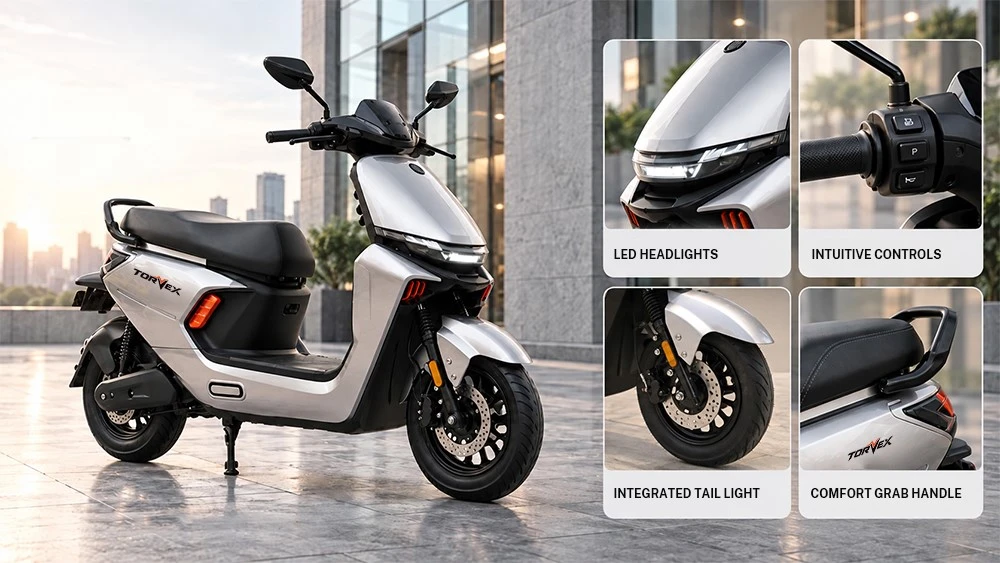
Torvex is manufactured by Shandong Tuowei Motorcycle Co., Ltd., established in 2000 and based in Zichuan Advanced Manufacturing Industrial City, Zibo, Shandong. Assembly covers frame welding and inspection, precision component fitting, motor and controller installation, wheel building, wiring and lighting installation, and end-of-line inspection. Battery packs are checked for cell balance, capacity and discharge performance before being matched to a vehicle, and every completed machine is tested for drive output, throttle response, braking performance, lighting and signalling, electrical circuits and a simulated running check before release for loading.
We hold full import and export qualifications and ship to markets across Southeast Asia, Africa, the Middle East, South America and Eastern Europe, with battery and charger configurations specified for the destination's voltage and plug standard. Lighting, mirrors, speedometer and any registration-dependent equipment are confirmed against destination requirements before production. OEM and ODM programmes cover body colour, seat material, decal design, logo application and accessory packages, with packing configured for efficient container loading.
Typical Applications
Open-road and highway commuting over longer distances
Peri-urban routes where sustained speed determines journey time
Riders replacing a combustion motorcycle for cost and simplicity
Delivery and courier operations on faster inter-district routes
Rental and tour fleets covering scenic or coastal roads

Call to Action
Supplying riders whose journeys are measured in distance rather than in stops? Source a machine engineered to hold speed. Torvex supplies the 1000W High Speed Electric Motorcycle with destination-specific lighting, battery and charger configuration, OEM/ODM colour, seat and branding programmes, and consolidated container loading. Tell us your annual volume, target retail price and the licence and registration class that applies in your market, and our export team will return a specification sheet, an FOB quotation and a recommended spare parts package - or arrange a live video walkthrough of the assembly line.
FAQ
Is the top speed figure the most important specification?
No, and buyers who lead with it are often disappointed later. Drag grows with the square of speed and the power needed to overcome it with the cube, so doubling speed needs roughly eight times the power. Two consequences follow: top speed and range are in direct tension, and output beyond a certain point buys little speed for much energy. We engineer for sustaining speed efficiently rather than for a headline number.
Why does sustained output matter more than peak output?
Because a high-speed machine holds its motor at high load for long periods. A peak figure describes what a motor produces for seconds before its windings heat; continuous rating describes what it sustains indefinitely. Sustained heat degrades insulation and permanently weakens magnets, so a machine run beyond its thermal capability becomes quietly slower over months - and the rider blames the battery.
Will the battery deliver the performance consistently?
That depends on continuous discharge capability rather than capacity alone. Sustained high-speed riding demands high current, and a pack that cannot supply it sags in voltage, trips its protection and cuts out with energy still in the cells. We size the pack to your duty cycle - speeds held, distance, terrain, charging access - and give a conservative planning figure rather than an optimistic one.
Is it stable at the speeds it reaches?
Yes, by design. Trail - the distance the contact patch trails behind the steering axis - generates the self-centring force that makes a machine track straight, and a low-mounted battery lowers the centre of mass so direction changes need less effort. Together these give the composure that lets a rider sustain speed comfortably rather than merely tolerate it.
Does it require a licence, registration or insurance?
Yes, in effectively every market. At this output and capability the machine sits in the powered two-wheeler class, requiring registration, insurance, a helmet, a minimum rider age and, in most jurisdictions, a licence category. We confirm the compliant configuration and required equipment before production, and would rather decline an order than ship machines that cannot be registered.
How does running cost compare with a petrol motorcycle?
Decisively lower and more predictable. There is no fuel, oil, air filter, spark plug, exhaust, coolant, clutch or gearbox oil; a full charge costs a small fraction of the equivalent petrol distance, and electricity tariffs move far less than fuel prices. Servicing reduces to tyres, brake pads, drive components and periodic battery care, with no diagnostic computer needed for routine work.
Hot Tags: 1000w high speed electric motorcycle, China 1000w high speed electric motorcycle manufacturers, suppliers, factory