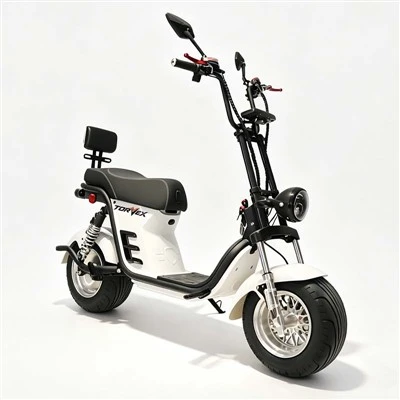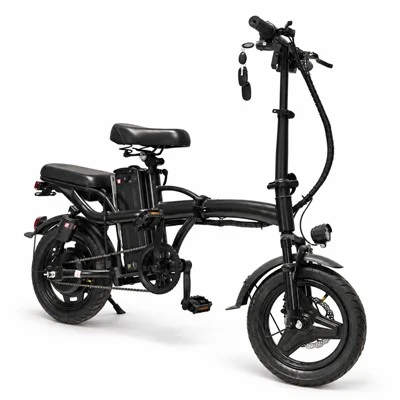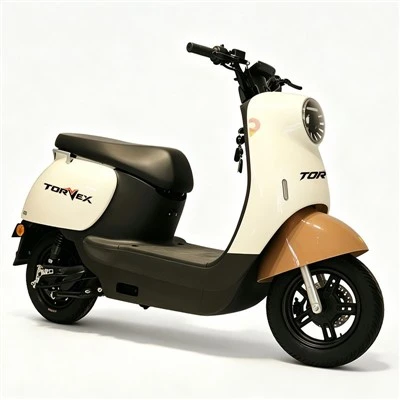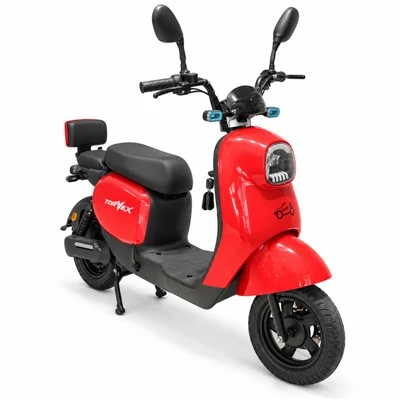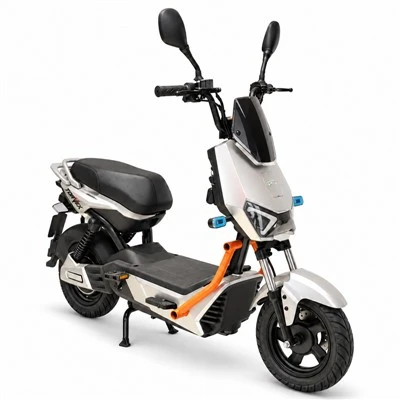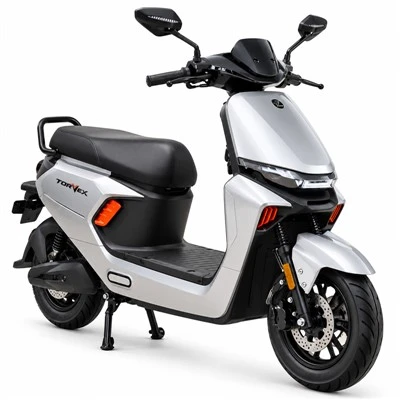
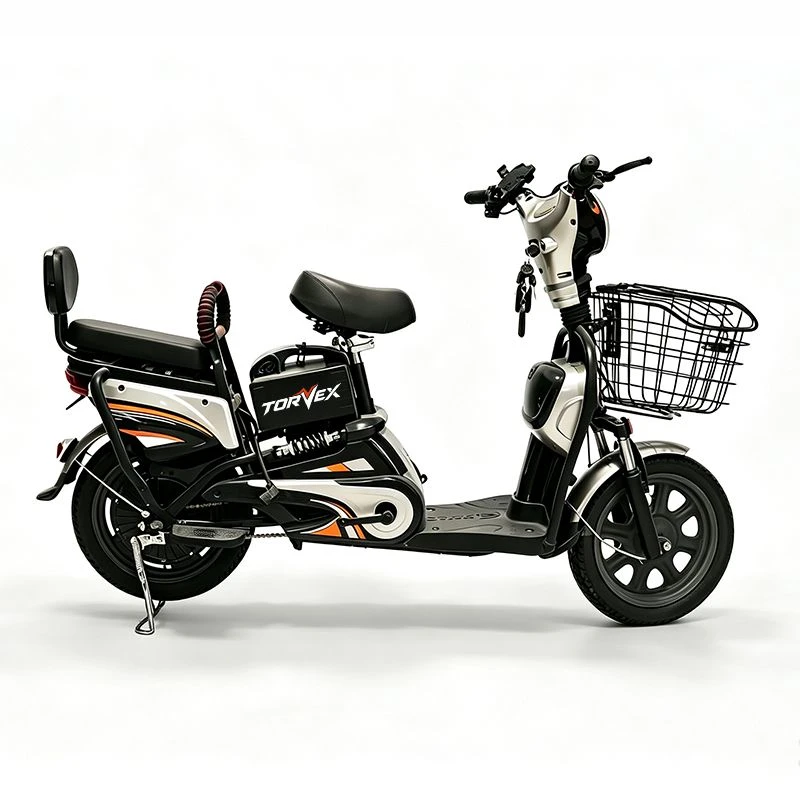

Shandong Tuowei Locomotive Co., Ltd. is one of the most reliable manufacturers and suppliers of 500w 14 inch electric moped in China. With a professional production team, we are able to meet the needs of the majority of our customers. Welcome to wholesale premium 500w 14 inch electric moped made in China here from our factory.
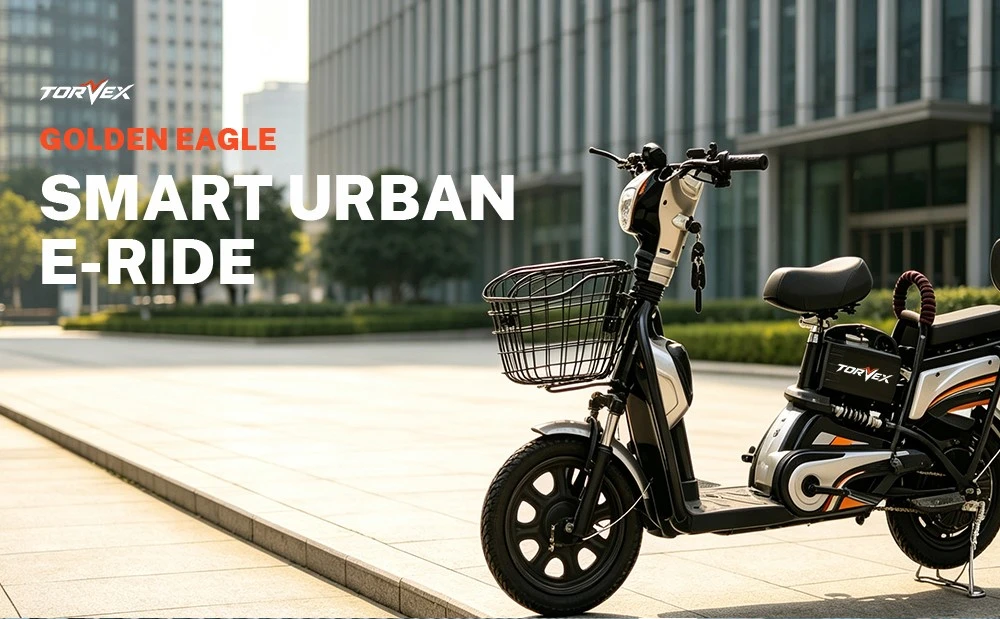
Product Overview
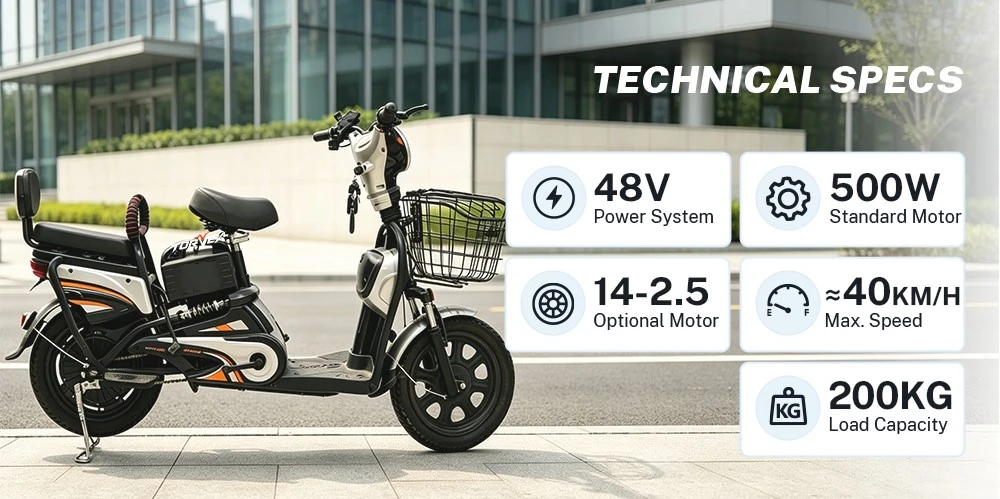
A 500W 14 Inch Electric Moped is a two-wheeled electric vehicle that occupies the space between an assisted bicycle and a scooter: a 500-watt continuous-rated electric drive motor, a rechargeable battery pack, fourteen-inch wheels, a step-through frame with a seat and floorboard rather than a saddle and pedals, and operation by throttle with or without a pedal-assist function depending on market. The distinction from an electric bicycle is fundamental rather than cosmetic - this machine is designed to move under motor power alone, without requiring the rider to contribute, and that single difference determines its legal classification, its use case and the buyer it suits.
Moped, Not Bicycle: Why the Difference Decides Everything
The most important thing a distributor can understand about this category is that it is regulated differently from an electric bicycle, and the reason is mechanical. A pedal-assist bicycle only provides power while the rider is pedalling, and it ceases to assist above a defined speed and under braking; the rider is still the primary source of propulsion. A moped drives the wheel from the motor under throttle control, so the rider need not pedal at all. Regulators draw the line precisely there, which is why a 500W electric moped commonly falls into a light vehicle category that may require registration, a helmet, minimum rider age and, in some jurisdictions, a licence or insurance - while a 350W pedal-assist bicycle does not.
That is not a disadvantage, and it should be presented as a specification rather than apologised for. The moped class exists because there is genuine demand for powered two-wheeled transport that does not require the rider to arrive exercised. Riders in work clothing, riders carrying loads, riders with physical limitations, riders in very hot or very humid climates and riders covering distances beyond comfortable cycling range all need a machine that does the work. For a distributor, this category opens a different buyer - not the cyclist, but the person who would otherwise use a bus, a shared ride or a second car. We confirm the compliant configuration for your market before quoting, because getting classification wrong is the fastest way to land a container that cannot be registered.
Why 500 Watts, and Why Continuous Rating Matters More Than Peak
Motor ratings in this industry are frequently quoted as peak figures, and that practice misleads buyers badly. A peak number describes what a motor will produce for a few seconds before it heats; what determines whether a machine climbs a flyover every day, carries a passenger up a gradient and pulls away from every junction without drama is the continuous rating - the output the motor can sustain indefinitely without exceeding its thermal limit. This machine is specified at 500 watts continuous, which is the number that governs real performance, and the controller is matched to it so that current is limited before the motor overheats rather than after.
Five hundred watts is also a deliberate threshold rather than an arbitrary one. It is above the ceiling that most markets apply to pedal-assist bicycles, which places the machine in the moped class and gives it the ability to move without pedalling; and it is below the thresholds at which many jurisdictions begin to apply motorcycle-grade requirements. Within that band it delivers what urban riders actually use: enough output to accelerate to traffic speed from a stop, to hold speed on an incline with a passenger aboard, and to do so repeatedly through a working day without thermal fade. Going higher buys top speed that city traffic never permits and costs battery, weight and regulatory simplicity.
Fourteen-Inch Wheels: Chosen for the Machine's Job
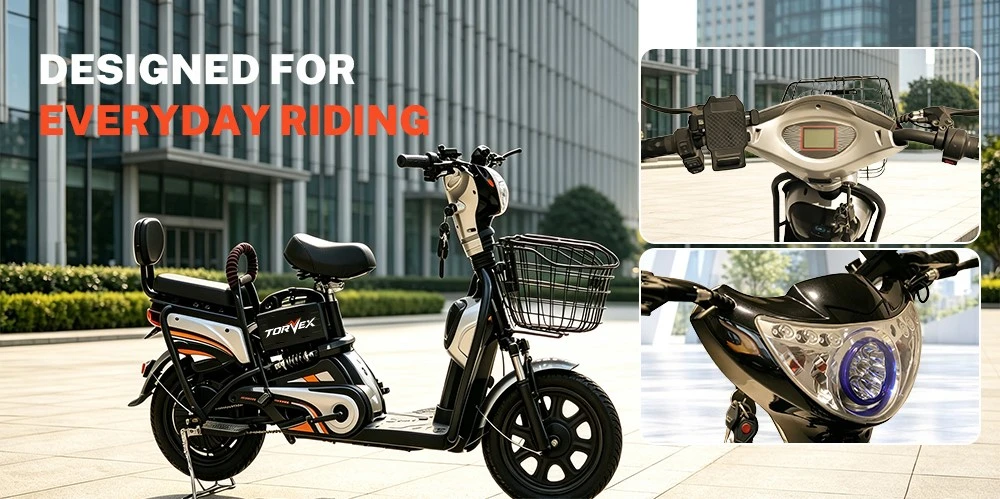
Fourteen-inch wheels are characteristic of the moped and scooter layout rather than the bicycle layout, and there is sound engineering behind the choice. The small diameter lowers the hub, which allows a low frame, a low seat and a flat floorboard between the rider's feet instead of a high crossbar. That gives the machine its defining practical quality: the rider steps through and sits down rather than swinging a leg over, which matters in ordinary clothing, with a passenger, or when carrying something in one hand.
Low wheels also lower the centre of gravity. Mass positioned low - battery, motor and rider's feet all near the deck - makes a short-wheelbase machine stable at low speed and easy to hold upright at a stop, which is the condition a rider spends most of an urban journey in. Mechanically, a smaller wheel yields more thrust per unit of motor torque, so the machine accelerates briskly away from lights rather than building speed gradually, and it does so with less energy spent spinning up rotational mass. The trade is the same one that applies to any small wheel: it climbs an edge rather than rolling over it, so sharp pothole rims and broken surfaces are felt more directly. This platform manages that with a wider tyre section and a compliant sidewall, and with suspension specified to the market's road conditions.
Battery, Real Range and Duty Cycle Honesty
Because the motor does all the work, range on a moped is determined by duty cycle far more sharply than on an assisted bicycle, and this is where honest numbers protect a distributor's reputation. Throttle-only operation, frequent stops, a passenger, an incline and low temperature each reduce distance, and they compound. A machine ridden gently on flat ground by one rider will comfortably exceed the same machine ridden hard, two-up, on a hilly route in winter. Publishing a single headline figure invites exactly the complaint that damages a brand in year one.
We therefore specify the pack for the duty rather than for the brochure, and we publish test conditions so your sales team can set expectations customers will actually meet. Cells and battery management are rated for the continuous discharge current that sustained throttle use demands, because a pack asked to deliver more current than it is designed for will sag in voltage, trip protection cut-outs and age prematurely. Charging is from a domestic socket, the pack is removable so a rider without a garage can charge it indoors, and chargers are specified to the destination's voltage and plug standard. For fleet and delivery buyers, the practical guidance is to size the battery from the longest shift rather than the average one, and to treat opportunity charging between runs as normal practice.
Braking, Suspension and Safety Equipment for a Powered Machine
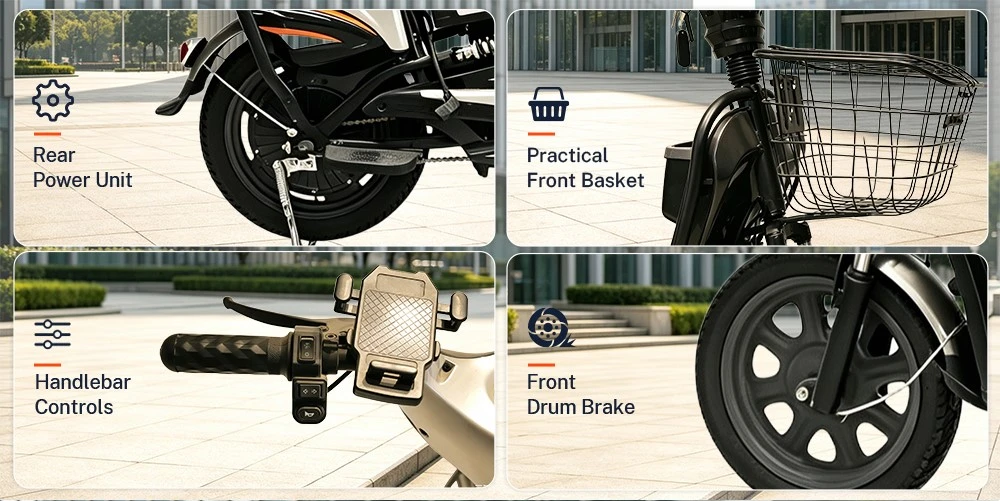
A machine that reaches and holds traffic speed under throttle and weighs more than a bicycle requires braking engineered for that condition, and disc brakes are the correct specification rather than an upgrade. A disc rotor mounted at the hub resists the water and grit that degrade a rim brake, and it delivers consistent lever feel on a long descent where a rim brake would heat the rim and fade. Crucially, braking on the two wheels is specified to work together: the front contributes the majority of stopping force, while the rear provides balance and low-speed control, and riders are trained - through the supplied manual - to use both rather than relying on one.
Suspension is specified to the destination rather than assumed. On a machine with small wheels and a short wheelbase, a telescopic front fork and rear shock units absorb the impacts that would otherwise be transmitted directly through the deck to the rider, and they keep both wheels in contact over broken surfaces, which is what allows braking and acceleration to work at all. Lighting is a full road set - headlamp with a defined beam pattern, tail lamp, brake lamp and indicators - because a powered machine mixes with motor traffic and must signal its intentions, not merely be visible. A mirror, a horn and, where the market requires it, a speedometer are included, because these are the items that determine whether a machine can be registered and ridden legally.
Carrying, Storage and the Practical Details of Daily Use
Moped buyers use the machine for errands rather than exercise, so load and storage provisions decide satisfaction. A rear rack or top box carries a bag, a shopping load or a delivery container; a front basket or a leg-shield hook takes the items a rider wants within reach; and a flat floorboard between the rider's feet carries a box or a case that could not be balanced on a pedal bicycle at all. A pillion seat and passenger footrests are provided where the market permits two-up riding, and a centre or side stand is specified so the machine can be parked and loaded without leaning against a wall.
Security is treated as specification rather than an afterthought, because a powered machine is a theft target in a way a bicycle is not. A steering lock, a keyed ignition and a battery lock are fitted, so the machine cannot be ridden away, started, or have its most valuable component removed, respectively. An underseat or lockable storage compartment gives the rider somewhere to leave a helmet and a charger. For delivery fleets, these are the features that determine whether a rider will leave the machine unattended for the ninety seconds a drop takes - which is the difference between a workable route and an impossible one.
Running Cost and the Case Against a Second Car
The commercial argument for this category is cost per trip, and it is strongest where a household or a business is comparing against a car. There is no fuel, no oil, no exhaust, no coolant, no spark plug and no air filter; a full charge costs a small fraction of the equivalent distance in petrol. Servicing reduces to tyres, brake pads, drive components, suspension checks and periodic battery care, all within the scope of a competent two-wheeler workshop and none requiring diagnostic computers. Parking is free or cheap in most cities, and a moped occupies a fraction of the space a car needs.
For a business user - a courier, a service technician, a sales representative covering a dense territory, a food delivery rider - the calculation is sharper still. A moped covers urban distances at or near car speed in congested conditions, because it is not bound by the queue, and it does so without fuel cost, congestion charging in the cities that apply it, or the parking search that consumes a large share of urban delivery time. Where a market taxes or restricts combustion two-wheelers, an electric moped frequently qualifies for exemption or incentive, and we will confirm the local position with you rather than assert it.
Manufacturing and Export Credibility
Torvex is manufactured by Shandong Tuowei Motorcycle Co., Ltd., established in 2000 and based in Zichuan Advanced Manufacturing Industrial City, Zibo, Shandong. Assembly covers frame welding and inspection, precision component fitting, motor and controller installation, wheel building, wiring and lighting installation, and end-of-line inspection. Battery packs are checked for cell balance and capacity before being matched to a vehicle, and every completed machine is tested for drive function, throttle response, braking performance, lighting and signalling, electrical circuits and a simulated running check before release for loading.
We hold full import and export qualifications and ship to markets across Southeast Asia, Africa, the Middle East, South America and Eastern Europe, with battery and charger configurations specified for the destination's voltage and plug standard. Lighting, mirrors, speedometer and any other registration-dependent equipment are confirmed against the destination's requirements before production. OEM and ODM programmes cover body colour, seat material, decal design, logo application and accessory packages such as top boxes, racks and baskets, with packing configured for efficient container loading.
Typical Applications
Urban commuting without arriving exercised or in work clothing
Food delivery, courier and last-mile logistics fleets
Service technicians and sales staff covering dense territories
Two-up household transport in towns and peri-urban districts
Shared and rental mobility schemes in congested cities

Call to Action
Entering the powered two-wheeler category? Source a machine built and documented for it. Torvex supplies the 500W 14 Inch Electric Moped with destination-specific lighting, battery and charger configuration, OEM/ODM colour, seat and branding programmes, and consolidated container loading. Tell us your annual volume, target retail price and the registration rules in your market, and our export team will return a specification sheet, an FOB quotation and a recommended spare parts package - or arrange a live video walkthrough of the assembly line.
FAQ
Does this need a licence, registration or insurance?
Frequently yes, and buyers should plan for it. Because the machine drives under throttle without requiring the rider to pedal, most jurisdictions classify it as a moped or light vehicle rather than an assisted bicycle, which typically brings minimum rider age, helmet and registration requirements, and sometimes licence or insurance obligations. Rules vary significantly by country, so send us your market and we will confirm the compliant configuration before quoting rather than after the containers ship.
How is a moped different from your 350W electric bicycles?
The difference is propulsion, not styling. Our 350W bicycle models only assist while the rider pedals and cut out at the assisted speed limit; this machine drives the wheel from the motor under throttle, so the rider need not pedal at all. That is what places it in a different legal class and what makes it the right choice for riders who need to arrive without having cycled, or who cover distances beyond comfortable cycling range.
Is 500W enough to carry a passenger or climb hills?
Yes, and the rating is the meaningful one - 500 watts continuous, which is what the motor sustains without overheating, rather than a brief peak figure. That is sufficient to accelerate to traffic speed from a stop, to hold speed on an incline with a passenger aboard, and to repeat that through a working day. Going higher buys top speed that city traffic rarely permits and costs range, weight and regulatory simplicity.
What is the realistic range per charge?
It depends more sharply on duty cycle than on an assisted bicycle, because the motor does all the work. Throttle-only riding, frequent stops, a passenger, gradients and low temperature each reduce distance and compound together. We publish range on a stated test basis and advise fleet buyers to size the battery from the longest shift rather than the average one, treating opportunity charging between runs as normal.
Can it be ridden by someone who does not cycle?
That is precisely the use case. There is no pedalling requirement, the step-through layout means the rider steps on and sits down rather than swinging a leg over, and the low centre of mass makes it easy to hold upright at a stop. A rider who would not consider a bicycle will usually ride this, which is why the category reaches a different buyer entirely.
What customisation and compliance support do you provide?
OEM and ODM programmes cover body colour, seat material, decal design, logo application and accessory packages including top boxes, racks and baskets. Lighting, mirrors, speedometer and any other registration-dependent equipment are confirmed against your market's requirements before production, and as a China-based electric moped supplier we supply manuals, parts catalogues and remote technical support with bulk orders.
Hot Tags: 500w 14 inch electric moped, China 500w 14 inch electric moped manufacturers, suppliers, factory