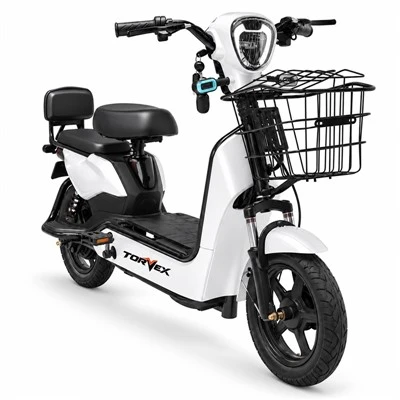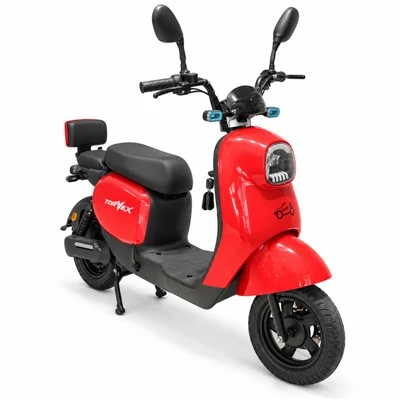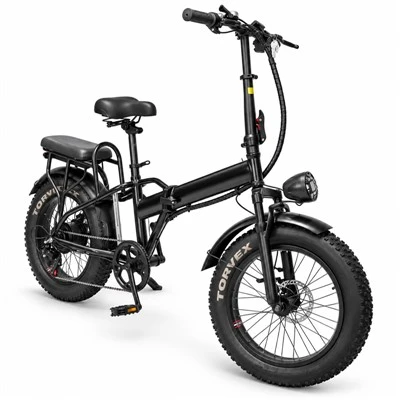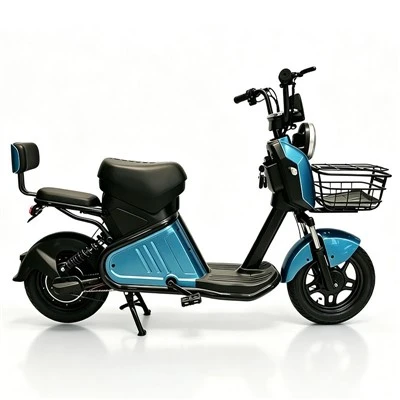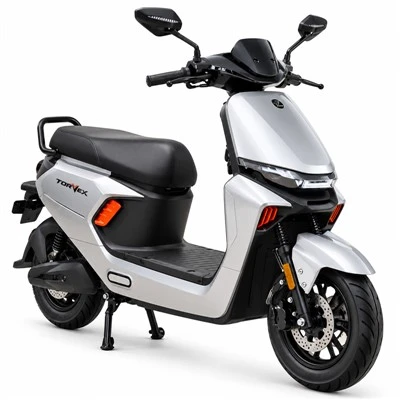

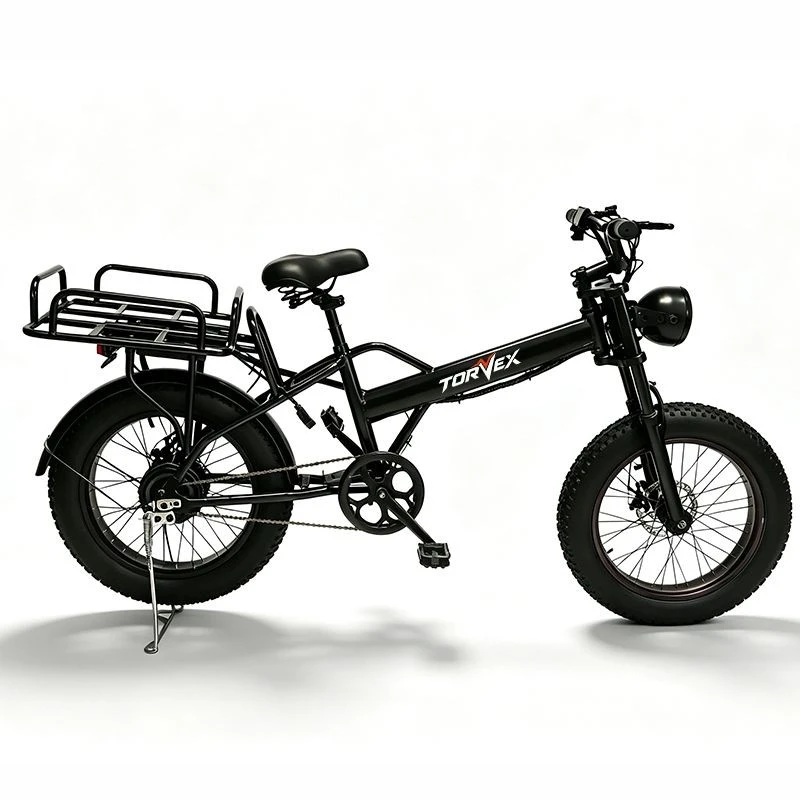
Shandong Tuowei Locomotive Co., Ltd. is one of the most reliable manufacturers and suppliers of 500w 20 inch folding electric bike in China. With a professional production team, we are able to meet the needs of the majority of our customers. Welcome to wholesale premium 500w 20 inch folding electric bike made in China here from our factory.
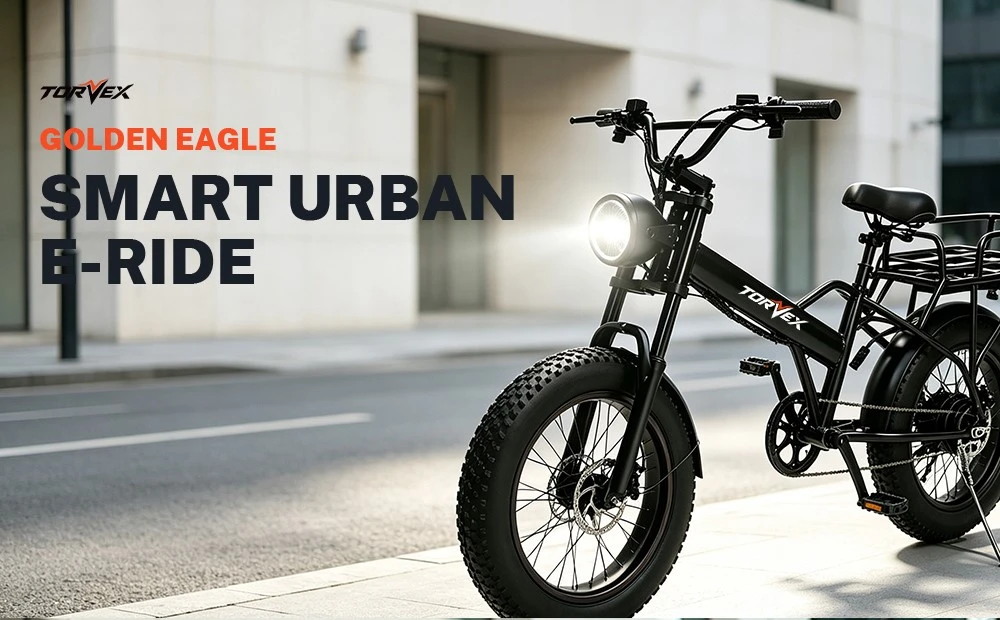
Product Overview
A 500W 20 Inch Folding Electric Bike is a pedal-assisted bicycle built on twenty-inch wheels with a frame that folds - typically at a mid-frame hinge - so the machine can be reduced to a fraction of its riding length for carrying, storage or transport. Motor output is 500 watts, and the battery, motor and controller are integrated into the frame rather than added to it. It occupies a specific position between two categories: it retains pedals and pedal-assist operation, which distinguishes it from a moped, while its power output and folding construction distinguish it from a conventional city bicycle. For riders whose journey combines cycling with a train, a bus or a car - or whose home has no garage - the folding function is not a feature but the reason for purchase.

Twenty Inches: The Wheel Size That Makes Folding Work
Wheel diameter determines how small a folding machine can become, and twenty inches is the size at which the concept becomes genuinely practical. A folding frame built around a full-size wheel folds into something still dominated by the wheels themselves; reduce the diameter and the folded package shrinks in every dimension at once - shorter, lower and narrower. That is what allows the machine to stand in a hallway cupboard, lie across a car boot, or fit beside a desk rather than requiring a dedicated parking space.
Twenty inches is also the size at which ride quality holds up. Smaller wheels accelerate more briskly, because a given motor torque produces more thrust at a smaller contact patch, and they allow a lower frame and a lower centre of gravity. But a very small wheel climbs an obstacle rather than rolling over it, and at sixteen inches and below that characteristic becomes pronounced on broken surfaces. Twenty inches is the point of balance: compact enough to fold into a genuinely small package, large enough to roll over a kerb lip, a drain cover and a moderately rough cycle path without transmitting every impact to the rider. It is the reason this is the dominant wheel size in the folding category rather than an arbitrary choice.
The Hinge: Where Folding Bicycles Succeed or Fail
On a folding machine, the hinge is the single most important component, and it is worth explaining why because it is the part buyers cannot evaluate from a photograph. A folding frame introduces a discontinuity into a structure that is otherwise continuous, and that discontinuity has to carry the same loads as the rest of the frame - the rider's weight, the bending load at the bottom bracket, and the dynamic loads generated when the machine hits an edge with a rider aboard. A hinge that is adequate when new and worn after a season produces a machine that creaks, flexes and eventually becomes unpleasant to ride.
Three design decisions determine whether a hinge lasts, and all three are visible to a careful buyer. The first is the latch mechanism: a cam-over or wedge action that clamps the joint tightly and can be adjusted for wear, rather than a pin that relies on friction and loosens with vibration. The second is whether the joint has a secondary safety catch, so that a partially closed latch cannot open in use - a feature that should be non-negotiable on any machine carrying a motor and a battery. The third is serviceability: bushings and pivot pins that can be replaced rather than a hinge that is integral to the frame, because a worn hinge on a non-serviceable design condemns the whole bicycle. We specify to all three, and we supply hinge spares with bulk orders.
Folding Sequence and the Difference Between Folded and Portable
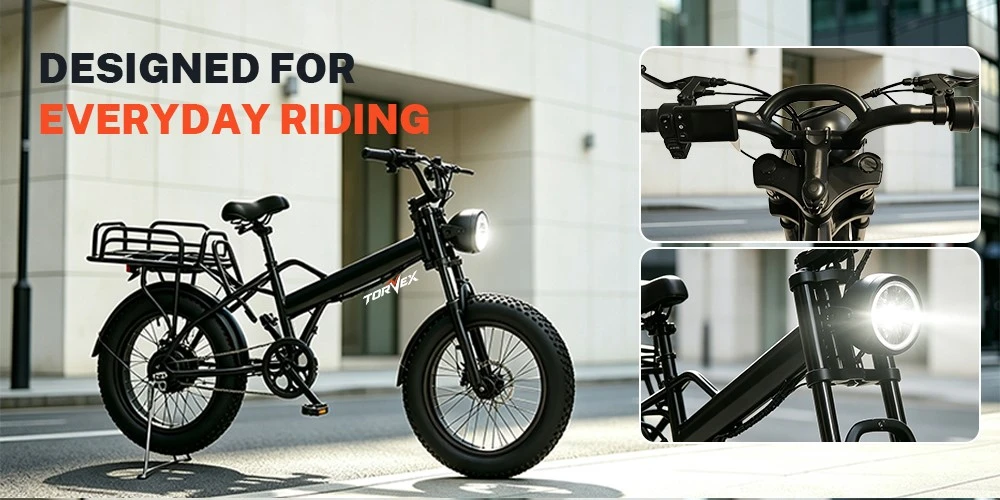
Marketing images show a folded bicycle; what matters to a rider is the sequence required to reach that state and what they then have to do with it. Two numbers matter more than any other, and both should be published: the time the fold takes and the folded dimensions. A machine that folds in fifteen seconds gets folded every day; one that takes two minutes and requires tools or a specific order of operations gets folded once and then left unfolded, which defeats the purpose of owning it.
Then there is the question nobody asks at the point of sale: what happens after the fold. A folded bicycle still weighs what it weighs, and carrying it through a station, up a stair or across a car park is the part riders actually struggle with. Two details change that experience decisively. The first is whether the machine rolls when folded - if the wheels line up, the rider wheels it rather than carrying it, and a twenty-five kilogram package on wheels is manageable in a way the same package in the arms is not. The second is whether there is a grab point: a section of frame shaped and positioned so the machine can be lifted without the rider's hands finding a hot motor, a chain or a sharp edge. Both are design decisions, both are cheap to specify, and both are absent on most of the market.
Why 500 Watts on a Folding Frame
Power on a folding machine serves a purpose quite different from the one buyers usually assume. A folder is heavier than an equivalent non-folding bicycle, because the hinge, the latch and the reinforcement around them add mass, and the rider is frequently carrying luggage or a change of clothes. It is also a machine used in exactly the conditions where assistance matters most: setting off from a standstill at a junction, accelerating across an intersection, and climbing from an underground car park or a station ramp. Five hundred watts provides the torque to do that cleanly with a loaded machine.
It is worth being clear about the regulatory position, because it determines how you sell the product. Five hundred watts sits above the ceiling most jurisdictions apply to pedal-assist bicycles, and the exact threshold - and whether a machine at this output requires registration, insurance or a licence - varies significantly between markets, and in some between states or provinces. In several territories a 500W machine sold as pedal-assist with a defined assisted speed limit is accepted; in others it is classified as a moped. We confirm the compliant configuration for your market before quoting and, where required, supply the speed-limited or lighting specification that allows it to be registered. This is the single specification most likely to strand a container, so we would rather resolve it early than discover it late.
Ride Quality: Compensating for a Small Wheel and a Hinged Frame
Two characteristics of a folding machine work against ride quality, and good design addresses both rather than accepting them. The first is the wheel: twenty inches rolls better than sixteen but still transmits more road texture than a full-size wheel. The second is the frame: a hinge introduces compliance into a structure that should be stiff, so a folding frame typically flexes more under load than an equivalent rigid one, which riders perceive as a slightly vague feel when accelerating or cornering hard.
The compensation for the first is tyre volume and pressure - a wider tyre with a taller sidewall provides the compliance the diameter cannot, and it is the single most effective adjustment available. The compensation for the second is reinforcement around the hinge and the bottom bracket, which is why we add material at those points rather than distributing it evenly. Where the market's roads justify it, a suspension fork and a suspension seatpost can be specified, and on a folding machine they earn their weight because the small wheel and the hinged frame both transmit more than a conventional bicycle would. Set against that, the trade is honest: a folder is never quite as stiff or as smooth as a non-folding machine of the same price. What it buys is the ability to take the bicycle where a non-folding one cannot go.
Gearing, Braking and Getting the Details Right
Gearing on a twenty-inch wheel needs to be specified for the wheel rather than carried over from a larger one. Because the smaller wheel turns more revolutions per minute at a given road speed, a drivetrain inherited from a twenty-six or twenty-nine inch bicycle leaves the rider spinning without enough ratio at the top end. This platform is geared so the assisted speed range sits in usable, comfortable ratios, and the drivetrain remains fully functional without power, so the machine can be ridden home under pedal alone if the battery is exhausted.
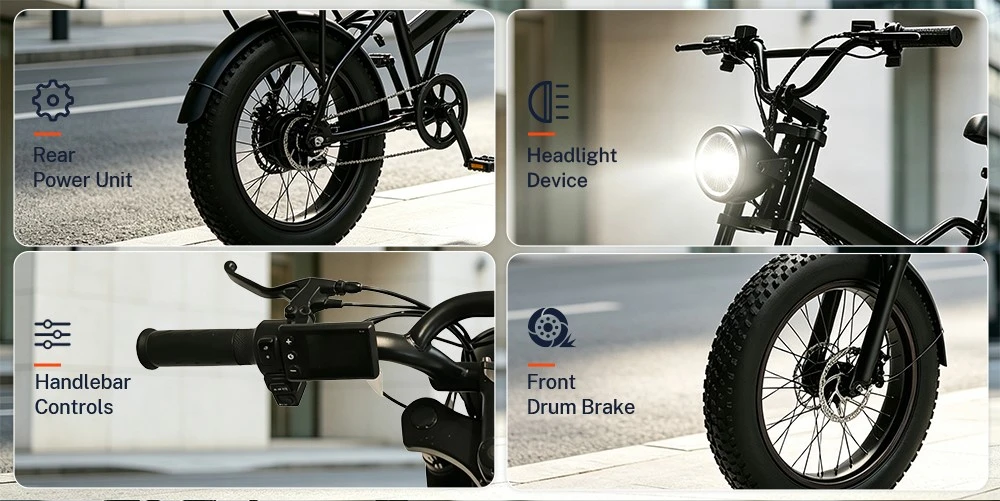
Braking is by disc brakes rather than rim brakes, and the reasoning is specific. A folding machine is ridden in the rain, folded wet, stored outdoors and carried in a vehicle; a rim brake's performance depends on a clean, dry, true rim and degrades immediately in those conditions. A disc rotor mounted at the hub is unaffected by a wet rim or a wheel slightly out of true after a kerb strike, and gives consistent lever feel. Lighting runs from the main battery, so the rider manages one charge rather than separate lamp batteries, and a reflector set and, where specified, rack and mudguard mounts make the machine usable as everyday transport rather than a novelty.
Security, Storage and the Practical Case for a Folder
Theft is the argument that sells folding bicycles more often than portability does, and it deserves to be stated plainly. A bicycle left locked on a street is a target; the same bicycle folded and placed under a desk, in an office corner or in a hallway is not. For a rider in a city with high bicycle theft, the ability to keep the machine with them removes the single biggest deterrent to owning a good one - and it removes the cost and inconvenience of a lock heavy enough to be worthwhile.
For mixed-mode commuting, the same logic applies to the middle of the journey. A rider cycling to a station faces a choice: leave the bicycle at the station, where it may not be there on the return, or take it with them, which a full-size machine makes impossible at peak hours. A folder resolves the problem outright - it comes onto the train, under the desk, into the boot. That is the use case this machine is built around, and it is why distributors in dense cities and in markets with strong rail commuting consistently find the category easier to sell than its specification sheet suggests.
Manufacturing and Export Credibility
Torvex is manufactured by Shandong Tuowei Motorcycle Co., Ltd., established in 2000 and based in Zichuan Advanced Manufacturing Industrial City, Zibo, Shandong. Assembly covers frame welding and hinge fitting, precision component fitting, motor and controller installation, wheel building and tensioning, and end-of-line inspection. Hinges and latches are inspected and cycle-tested, battery packs are checked for cell balance and capacity before being matched to a frame, and every completed bicycle is tested for drive function, braking, folding and latching operation, electrical circuits, lighting and a simulated running check before release for loading.
We hold full import and export qualifications and ship to markets across Southeast Asia, Africa, the Middle East, South America and Eastern Europe, with battery and charger configurations specified for the destination's voltage and plug standard. Power output, assisted speed limit and any lighting or registration-dependent equipment are confirmed against destination requirements before production. OEM and ODM programmes cover frame colour, saddle and grip specification, decal design, logo application and accessory packages such as racks, baskets and mudguards, with packing configured for efficient container loading.
Typical Applications
Mixed-mode commuting combining cycling with train, metro or bus
Apartment and office storage where no garage or bike room exists
Caravan, motorhome and boat owners carrying transport with them
Riders in cities with high bicycle theft rates
Rental, sharing and corporate fleets with limited storage space

Call to Action
Selling to riders who need a bicycle that goes where they go? Source one built around the fold rather than adapted to it. Torvex supplies the 500W 20 Inch Folding Electric Bike with destination-specific power, lighting, battery and charger configuration, OEM/ODM colour, saddle and branding programmes, and consolidated container loading. Tell us your annual volume, target retail price and the regulations that apply in your market, and our export team will return a specification sheet, an FOB quotation and a recommended spare parts package - or arrange a live video walkthrough of the assembly line.
FAQ
Does a 500W folding bike need registration or a licence?
It depends entirely on the market, and this is the specification most likely to strand a container. Five hundred watts sits above the ceiling most jurisdictions apply to pedal-assist bicycles; some territories accept it as pedal-assist with a defined assisted speed limit, others classify it as a moped requiring registration, insurance or a licence. We confirm the compliant configuration for your market before quoting and supply the speed-limited or lighting specification needed to register it.
How long does the fold take, and can it be rolled when folded?
Both questions matter more than the folded photograph. A fold that takes seconds gets used every day; one requiring tools or a specific sequence gets used once. We publish fold time and folded dimensions, and the wheels are specified to line up when folded so the machine can be wheeled rather than carried - a twenty-five kilogram package rolls manageably where the same package in the arms does not.
Is the hinge reliable over the long term?
It is the most important component on a folding bicycle and the one buyers cannot judge from a photograph. We specify a cam-over or wedge latch that clamps tightly and can be adjusted for wear, a secondary safety catch so a partially closed latch cannot open in use, and replaceable bushings and pivot pins rather than a hinge integral to the frame. Hinges and latches are inspected and cycle-tested before assembly.
Is the ride harsh because of the small wheels?
Twenty inches is the point of balance: compact enough to fold small, large enough to roll over a kerb lip or drain cover rather than climbing it, which is what happens at sixteen inches and below. Compliance is further provided by a wider, taller-sidewall tyre at correct pressure, and a suspension fork and seatpost can be specified where your roads justify it.
Can it be ridden if the battery runs out?
Yes. It is a pedal-assisted bicycle with a geared drivetrain specified for the twenty-inch wheel, so the rider can pedal it home without power. It is heavier than an unassisted folder and therefore harder work, but entirely manageable over urban distances - which is the reassurance first-time electric buyers most want to hear.
What customisation do you support for bulk orders?
OEM and ODM programmes cover frame colour, saddle and grip specification, decal design, logo application and accessory packages including racks, baskets and mudguards. As a China-based folding electric bike supplier, we can also specify battery capacity, gearing, brake type and whether suspension components suit your terrain, regulations and price point.
Hot Tags: 500w 20 inch folding electric bike, China 500w 20 inch folding electric bike manufacturers, suppliers, factory