
Shandong Tuowei Locomotive Co., Ltd. is one of the most reliable manufacturers and suppliers of 500w 7 speed folding electric bike in China. With a professional production team, we are able to meet the needs of the majority of our customers. Welcome to wholesale premium 500w 7 speed folding electric bike made in China here from our factory.
Product Overview
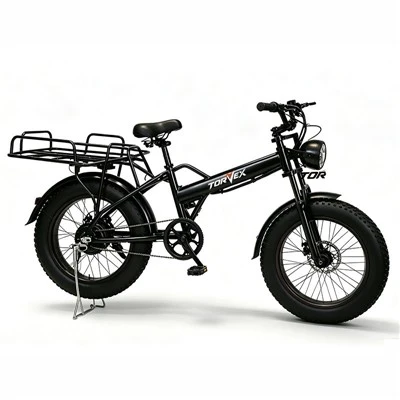
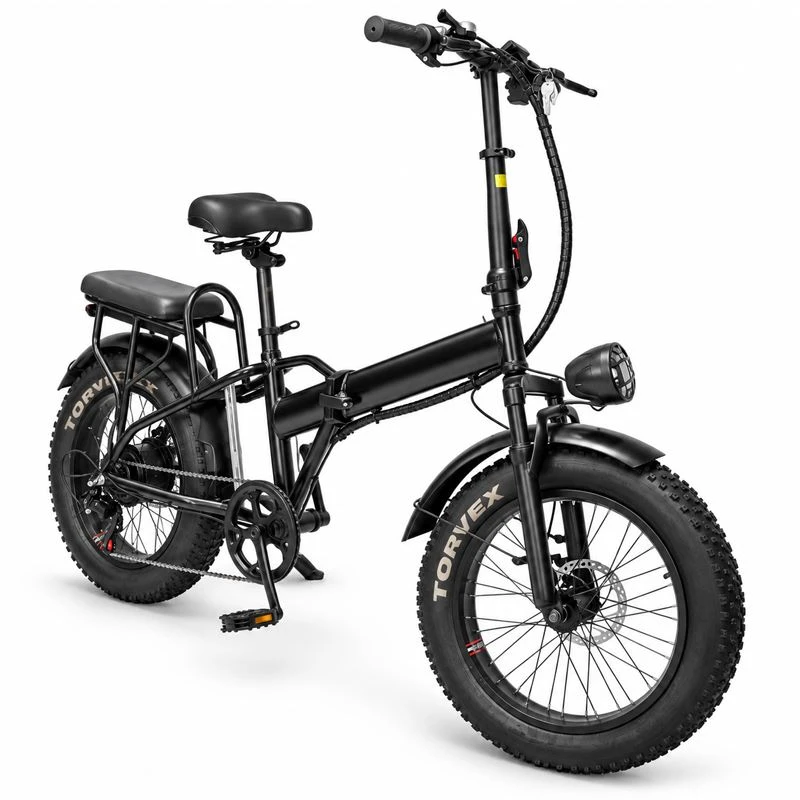
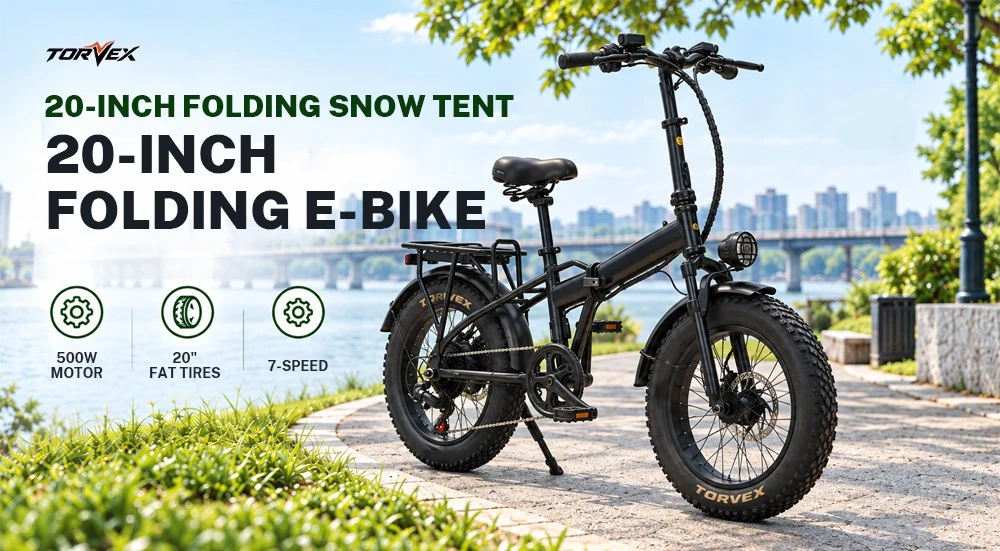
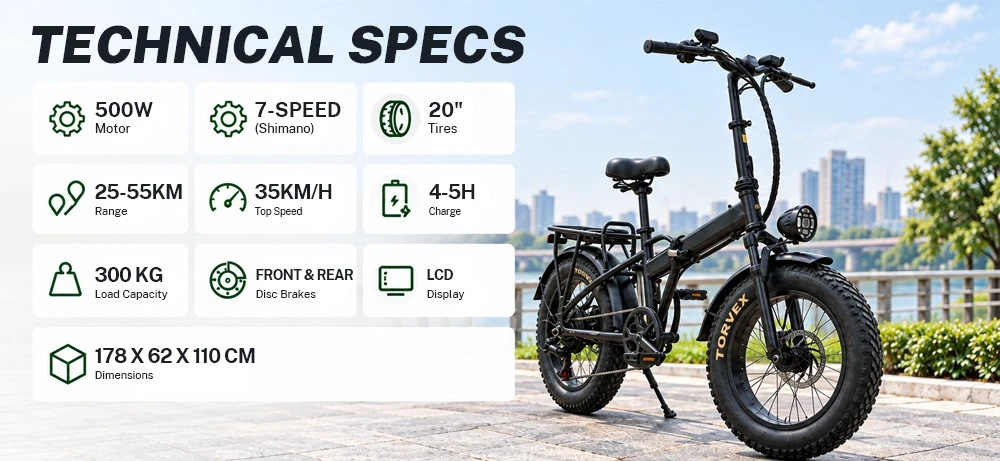
A 500W 7 Speed Folding Electric Bike is a pedal-assisted folding bicycle that combines a 500-watt drive motor with a seven-speed derailleur gear system and a frame that folds for carrying or storage. The defining feature is the drivetrain: where a single-speed folder offers one compromise ratio, seven gears give the rider a usable spread from low-speed climbing to open-road cruising. Paired with electric assistance, that spread solves the two problems that discourage people from owning an assisted folder - that it becomes heavy and unrideable when the battery is flat, and that one fixed ratio cannot serve both a hill start and a fast boulevard. It sits in the pedal-assist bicycle class where regulations allow, with 500W output and a defined assisted speed limit confirmed to your market before production.
What Seven Gears Actually Solve
Every single-speed bicycle is built around a compromise. The chosen ratio must be low enough for the rider to pull away from a standstill and climb, yet high enough not to leave them pedalling frantically on the flat. On a folding machine - which is heavier than a non-folding equivalent because of the hinge, the reinforcement and the motor - that compromise is more painful than on a light city bike. Pick a ratio for climbing and the machine feels breathless on the open road; pick one for cruising and every ramp becomes a struggle.
Seven gears remove the compromise. The rider selects a low ratio to move a laden folding machine away from a junction or up an underground car park ramp, and a high ratio to cruise comfortably at assisted speed. The motor supplies torque, but the gears decide how that torque is converted into road speed and how much of the effort the rider's own legs contribute. This is the practical meaning of a 7 speed folding electric bike: not more complexity for its own sake, but a drivetrain that can be matched to the road instead of the road being tolerated.
Cadence: The Number Riders Never Think About
There is a measure of cycling efficiency that almost no buyer considers and every experienced rider feels: cadence, the rate at which the cranks turn, typically expressed in revolutions per minute. Human legs produce power most efficiently, and with the least joint strain, inside a band of roughly sixty to eighty revolutions per minute. Below that band the rider is grinding - high force per stroke, heavy loading on the knees, rapid muscle fatigue. Above it the rider is spinning - the legs churn without producing useful force, heart rate climbs, and efficiency falls.
Gears exist to keep the rider inside that band as speed and gradient change, and this is as true on an electric machine as on an unassisted one. The motor contributes torque, but the rider still pedals, and the rider's own efficiency determines how much battery is spent and how tired they arrive. A 7 speed e-bike lets the rider hold a comfortable, sustainable cadence on the flat, on a bridge approach and into a headwind, rather than being forced into a single rhythm the route does not suit. For a fleet rider doing hundreds of kilometres a month, that difference shows up as less fatigue and lower energy consumption per trip.
Gear Range in Practice
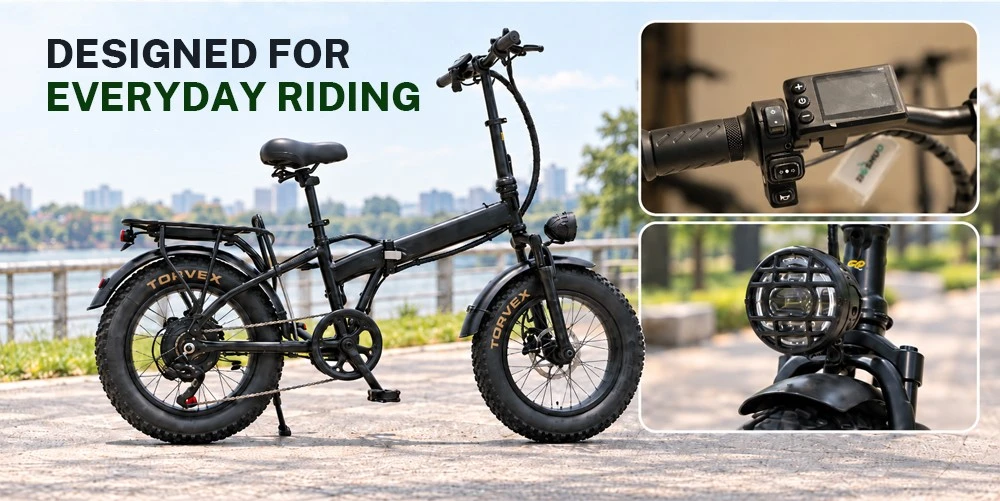
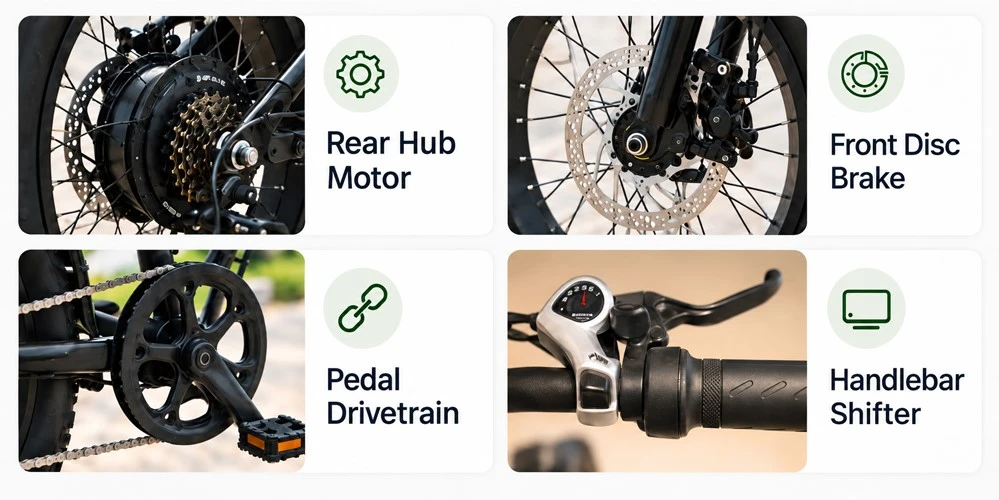
A seven-speed cassette gives a spread of ratios rather than a single one, and the practical value is best understood through the situations a folding commuter meets. The lowest gears are for starting: moving a machine with a motor, a battery and a change of clothes away from a standstill, or climbing the short, steep ramp out of a station car park. The middle gears cover the bulk of urban riding - pulling away from traffic lights, holding speed through a market street, crossing a flyover. The highest gears are for open boulevards, cycle paths and gentle descents, where the assistance and the rider's own effort combine to hold a genuine cruising pace.
Set against a single-speed machine, the difference is most obvious at the extremes. A single speed that is low enough to climb a ramp will leave the rider pedalling hard and going nowhere on a fast road; one tall enough to cruise will make every hill start a fight. Seven ratios let the machine be correct in both places. And because the rider can still pedal the bike home under any of them, the drivetrain also answers the objection every first-time electric buyer raises: what happens when the charge runs out.
Matching the Drivetrain to a Small Wheel
Folding machines use small wheels, and small wheels change the gearing requirement in a way that is frequently got wrong. A twenty-inch wheel has a smaller circumference than a conventional bicycle wheel, so at a given road speed it turns more revolutions per minute. If the drivetrain from a larger-wheeled bicycle is carried across unchanged, the result is a rider pedalling faster than is comfortable to hold the same speed - the familiar complaint that a small-wheel bike always feels as though it is spinning.
The correct response is to specify the chainring and cassette together for the wheel, which is what we do. A suitably sized chainring works with a seven-speed cassette to give a spread that keeps crank speed sensible at cruising pace while still providing genuinely low ratios for climbing. The result is a folding electric bike that does not feel frantic on the open road and does not feel impossible on a ramp. Gearing, wheel size and motor output are matched as a system rather than assembled from separately chosen parts - and that matching is what separates a machine that rides well from one that merely has the right numbers on a specification sheet.
Engineering a Drivetrain That Survives Folding
Folding introduces a problem that a conventional bicycle does not have: the frame is designed to be interrupted, and the drivetrain has to keep working across that interruption. Three failure modes appear on poorly engineered folding machines, and all three are worth knowing because they emerge after weeks of use rather than on the showroom floor.
The first is chain management. When the frame folds, the distance between the chainring and the rear sprocket changes; a drivetrain without adequate tension control drops the chain at the fold, or returns unfolded with poor tension and skips under load. The second is the gear cable. A folding joint puts a bend into the cable run, and a cable routed without regard for that bend will fatigue, fray or bind - producing shifting that degrades until it stops working altogether. The third is the rear derailleur, which sits at the most exposed point of the machine: lay a folder on its side and the derailleur is the part that hits the ground, bends its hanger and destroys the gear alignment.
We address all three by design. Chain tension is managed so that folding and unfolding does not disturb it, cable runs use flexible housing with a bend radius the joint can accommodate, and the derailleur is protected by the frame geometry when the machine is laid down, with a replaceable hanger so that damage is a short repair rather than a condemned bicycle. Hinges, cables and derailleurs are inspected and cycle-tested before any machine leaves the line.
Riding Without Power
An assisted folding bicycle is heavier than an unassisted one - motor, battery, hinge and reinforcement all add mass - and the most common anxiety a first-time buyer expresses is what happens if the battery is flat or the system fails. The answer is that this machine remains a bicycle, and a geared one. With seven ratios, a rider who has run out of charge can select a low gear and ride home at a sustainable effort instead of pushing a heavy folder up the last hill.
That reassurance has a commercial dimension as well. A customer who knows the machine cannot strand them is far easier to sell to, and a fleet operator who knows a flat battery means a slower ride rather than a recovery call can plan duty cycles with confidence. Routine care of the drivetrain - chain lubrication, cable adjustment, occasional derailleur indexing - is within the scope of any competent bicycle workshop, and we specify chain, cassette and derailleur in common, replaceable formats rather than proprietary ones.
Braking, Wheels and Everyday Use
Braking is by disc brakes rather than rim brakes, because a folding machine is ridden in the wet, folded damp and carried in vehicles, and a rim brake degrades as soon as the rim is wet or knocked slightly out of true. The wheels are twenty-inch, sized so the folded package stays genuinely small while still rolling over kerbs and drain covers rather than climbing them. The battery is removable and locks to the frame so it can be charged indoors, and lighting runs from the main pack so the rider manages one charge rather than separate lamp batteries. Assistance itself is metered from pedalling input with selectable levels, cutting out under braking and at the regulated assisted speed.
Single Speed or Seven: An Honest Recommendation
We build single-speed and seven-speed versions of this platform, and we would rather guide a distributor to the correct one than sell the more expensive model regardless. A single-speed folder is lighter, cheaper, has fewer parts to fail and needs less maintenance; it is the right specification for a flat city, short journeys, a price-sensitive market, and riders who will never face a serious gradient or a long distance.
A 7 speed version earns its extra cost where the route demands it: hilly or bridged cities, longer commutes, riders carrying loads, territories where riders worry about range, and any market where a customer expects to keep cycling if the assistance stops. The deciding question is the worst section of the route rather than the average one - if the rider will regularly meet a ramp, a hill or a headwind on an open road, seven gears are worth specifying. Where a distributor serves mixed conditions, stocking both and letting the route decide is usually the strongest position.
Manufacturing and Export Credibility
Torvex is manufactured by Shandong Tuowei Motorcycle Co., Ltd., established in 2000 and based in Zichuan Advanced Manufacturing Industrial City, Zibo, Shandong. Assembly covers frame welding and hinge fitting, precision component fitting, motor and controller installation, wheel building, drivetrain installation and gear indexing, and end-of-line inspection. Hinges and latches are inspected and cycle-tested, battery packs are checked for cell balance and capacity, and every completed bicycle is tested for drive function, braking, folding and latching operation, gear shifting through the full range, electrical circuits, lighting and a simulated running check before release for loading.
We hold full import and export qualifications and ship to markets across Southeast Asia, Africa, the Middle East, South America and Eastern Europe, with battery and charger configurations specified for the destination's voltage and plug standard. Power output, assisted speed limit and any lighting or registration-dependent equipment are confirmed against destination requirements before production. OEM and ODM programmes cover frame colour, saddle and grip specification, decal design, logo application and accessory packages such as racks, baskets and mudguards, with packing configured for efficient container loading.
Typical Applications
Hilly and bridged city commuting where gradients are part of the route
Mixed-mode commuting combining a train or bus with cycling at both ends
Longer suburban rides where a single ratio would feel limiting
Carrying loads, shopping or a change of clothes over varied terrain
Riders who want the reassurance of pedalling home without assistance

Call to Action
Supplying riders whose route has a hill in it? Source a folder with the right gears. Torvex supplies the 500W 7 Speed Folding Electric Bike with destination-specific power, lighting, battery and charger configuration, OEM/ODM colour, saddle and branding programmes, and consolidated container loading. Tell us your annual volume, target retail price and the regulations that apply in your market, and our export team will return a specification sheet, an FOB quotation and a recommended spare parts package - or arrange a live video walkthrough of the assembly line.
FAQ
Why choose seven gears over a single speed?
Because a single speed is always a compromise. One ratio must serve both a hill start and an open-road cruise, and on a heavier folding machine that compromise is more painful than on a light city bike. Seven ratios let the rider select a low gear to move away or climb a ramp and a high gear to cruise, which also keeps pedalling cadence comfortable - and that means less fatigue and lower energy use per trip.
Can I still ride it if the battery runs out?
Yes, and this is the reassurance most first-time electric buyers want. The machine remains a geared bicycle, so with a flat battery the rider selects a low gear and rides home at a sustainable effort instead of pushing a heavy folder. For fleet operators it means a flat battery is a slower ride rather than a recovery call.
How is the gearing matched to the small wheels?
A twenty-inch wheel turns more revolutions per minute at a given road speed, so a drivetrain carried over from a larger wheel would leave the rider pedalling faster than is comfortable. We specify the chainring and seven-speed cassette together for the wheel, keeping crank speed sensible at cruising pace while still providing genuinely low ratios for climbing.
Does folding damage the gears or the cables?
It can on poorly engineered machines, which is why we design against the three known failure modes. Chain tension is managed so folding does not drop the chain, cable housing uses a bend radius the folding joint can accommodate rather than fatiguing and fraying, and the rear derailleur is protected when the machine is laid down, with a replaceable hanger so damage is a short repair.
Is derailleur maintenance difficult for my dealer network?
No. Routine work is chain lubrication, cable adjustment and occasional indexing - all standard procedures for any competent bicycle workshop, with no diagnostic equipment required. Chain, cassette and derailleur are specified in common, replaceable formats rather than proprietary ones, so local workshops are never locked to a single parts source.
Does a 500W folding electric bike need registration or a licence?
It depends entirely on the market, and this is the specification most likely to strand a container. Five hundred watts sits above the ceiling many jurisdictions apply to pedal-assist bicycles; some territories accept it with a defined assisted speed limit, others classify it as a moped. We confirm the compliant configuration for your market before quoting.
Hot Tags: 500w 7 speed folding electric bike, China 500w 7 speed folding electric bike manufacturers, suppliers, factory